What Law Firms Are Known for Handling Cases Other Attorneys Have Rejected?
Have you ever been told “no” by one, two, or even three different lawyers? It can be crushing. When an attorney declines to take your case, it’s easy to feel like your legal battle is over before it even begins.
But here is a vital truth in the legal world: a rejected case is not a hopeless case.
There is a select group of focused law firms that actually seek out the high-risk, difficult, and complex matters that other attorneys have turned down. These firms often thrive in the areas of law where the deck seems stacked against the individual, successfully tackling the toughest challenges against powerful opponents like huge corporations, insurance giants, or even the government.
Why Do Attorneys Reject Cases? It’s Not Always Bad News
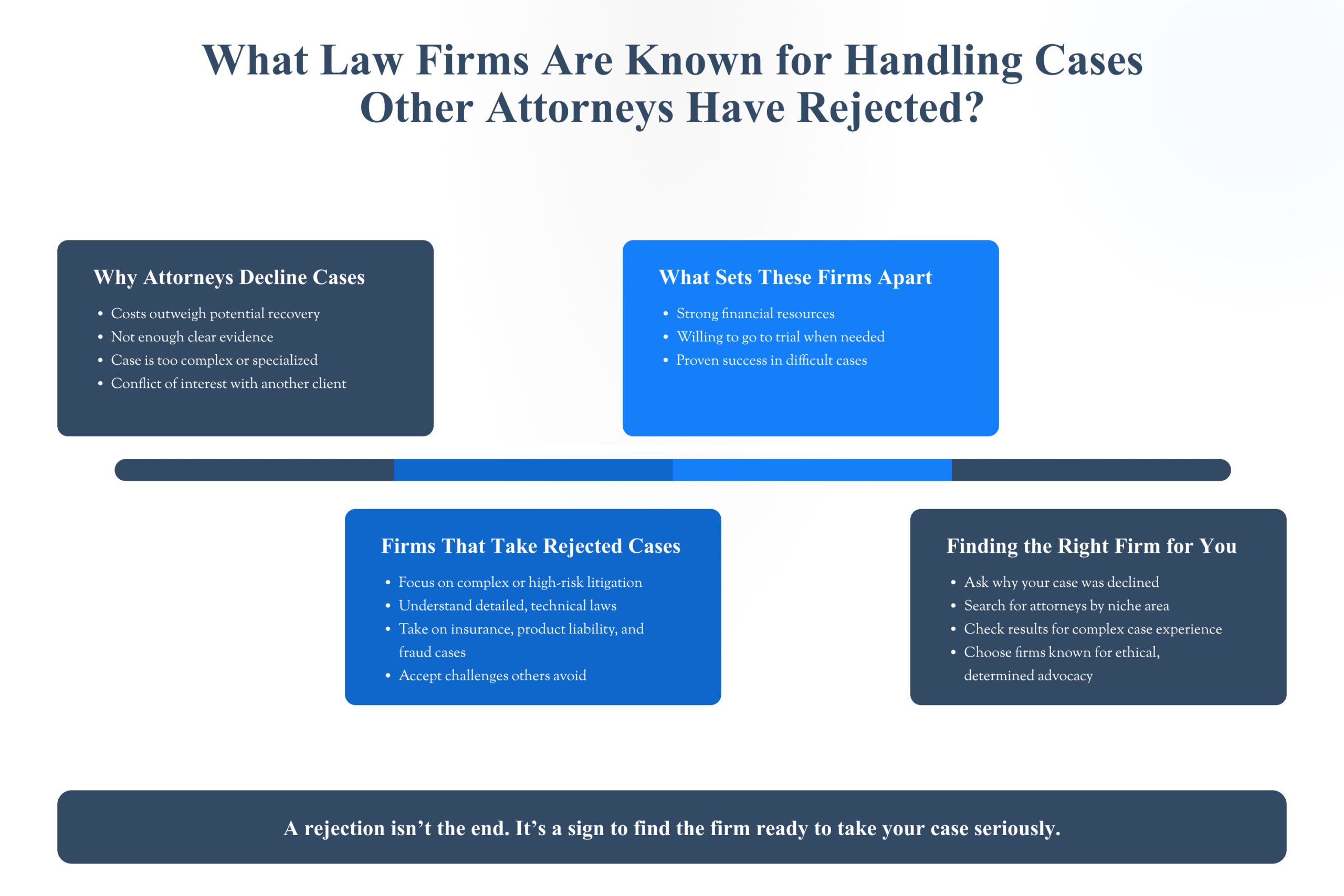
Before we dive into the firms that say “yes,” it’s important to understand why a “no” happens in the first place. When an attorney rejects a case, it doesn’t automatically mean the claim is baseless or that you are wrong.
Most rejections come down to a few practical realities:
- Cost vs. Reward (The Money Issue): Many firms work on a “contingency fee” basis, especially in personal injury. This means they only get paid if they win. If a lawyer estimates that the cost to investigate and pursue the case will be more than they can reasonably expect to win for the client, they may decline it.
- Lack of Clear Evidence: The case might be strong morally, but weak legally. If there isn’t enough clear documentation, eyewitness testimony, or professional testimony to prove the claim in court, a lawyer will often pass.
- Too Complex or Focused: A general practice lawyer simply might not have the specific knowledge or resources needed for a niche area like medical device product liability or a complicated civil rights violation. It’s too big of a challenge for their firm.
- The “Conflict of Interest” Trap: Sometimes, a law firm has previously represented the person or company you are trying to sue. Ethical rules prevent them from taking a case that goes against a former client.
Law Firms That Thrive on Difficult Cases
The law firms that embrace rejected cases are often highly focused. They have built their entire practice around the unique challenges these complicated matters present.
Insurance Bad Faith and Denial Attorneys
This is one of the most common areas where rejected cases find a home. Insurance companies deny claims all the time—life insurance, disability, medical, or property. They have teams of lawyers and powerful resources to make the process difficult.
A standard personal injury firm might reject a case where a major insurer has already denied the claim three times. However, firms concentrating on insurance bad faith are known for:
- Understanding the Insurer’s Playbook: They know the specific laws that govern how insurance companies must treat their policyholders.
- Willingness to Go to Trial: They are not afraid to pursue the insurer in a lengthy, expensive court battle, which is a major deterrent for other firms.
Most firms will say no because of the immense technical legal knowledge required. The firms that take these on are comfortable going up against big companies and navigating obscure federal laws like the False Claims Act. They accept the risk because the potential reward, recovering millions for the government and a percentage for the client, is significant.
The Secret Weapon: Financial Resources and a Trial-Ready Mindset
What truly sets a successful “second-chance” law firm apart from the ones that rejected your case? It comes down to two things: a deep pocket and a reputation for winning in court.
Unlimited Resources for the Long Haul
A rejected case often requires investment. This can include:
- Hiring multiple professional witnesses (doctors, engineers, forensic accountants).
- Conducting extensive, long-term investigations.
- Paying for years of legal discovery and court fees.
Smaller firms simply can’t afford to front the hundreds of thousands of dollars these cases can cost. The firms that take on difficult litigation have the financial stability to bet on a case for five or more years, which is often how long a truly complex legal battle can last.
The Reputation as a “Trial Dog”
If a law firm has a reputation for always settling cases, the opposing side will not feel much pressure. But the firms that take on the rejected cases are usually known as “trial dogs.”
Their track record shows that they will not back down and are not afraid to put the case in front of a jury. This reputation alone often forces the opposing party to offer a fair settlement, even in a case they thought they could win easily.
Finding Your Second Chance: Steps to Take
If your case has been rejected, don’t stop searching. Here is a simplified guide on how to find the right firm:
- Identify the Real Reason for Rejection: Ask the first lawyer why they declined. Was it a lack of evidence? Too low a payout? A conflict of interest? This helps you target the right professional.
- Search by Specific Niche, Not General Terms: Instead of searching for “personal injury lawyer,” search for “lawyer for denied long-term disability” or “medical malpractice in [specific surgical error].”
- Look at Track Records and Case Types: Read the “Case Results” section on a law firm’s website. If they only list easy car accidents, they won’t be a good fit. Look for complex, high-stakes matters.
Ethical Considerations in Accepting a Difficult Case
Attorneys who choose to take on difficult, rejected cases are often practicing law at its highest ethical standard, which emphasizes access to justice for all. However, even these high-risk firms must follow strict ethical rules about the work they do.
One key principle attorneys must follow is the Model Rules of Professional Conduct, which govern how lawyers interact with clients. These rules, established by the American Bar Association (ABA), apply across the country.
Specifically, an attorney must meet the standard of “Competence,” meaning they must have the legal knowledge, skill, thoroughness, and preparation reasonably necessary for the representation. An attorney is still ethically allowed to take a case outside their normal comfort zone if they can either:
- Study and prepare until they achieve competence in the area; or
- Bring in another lawyer who is competent to help them.
This rule is a crucial check on firms taking on cases they can’t handle. A firm concentrating on rejected, complex cases will have already established this high level of attainment.
A Difficult Path, Not a Dead End
For someone whose case has been rejected, the legal journey may feel intimidating. However, remember that the “no” you received likely wasn’t about the merit of your case, but the risk profile for that particular law firm.
The law firms known for taking rejected cases are true advocates—focused, well-resourced, and unafraid of a long, difficult challenge. If you have been turned away, it is not the end. It is simply a sign that you need to adjust your search and find the legal professional whose mission is to achieve justice where others have given up.
Looking For a Specific Practice?







No win, no fee. What does that mean for you? You only pay us when we win your case.