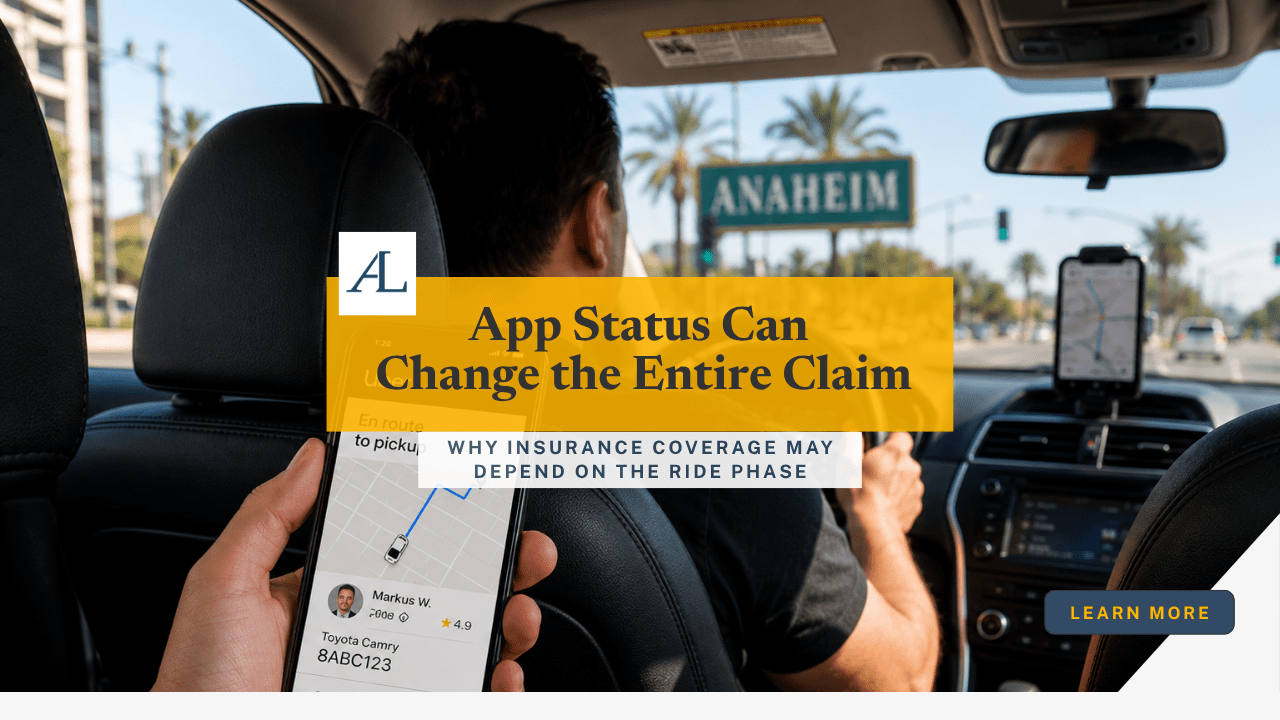
Rideshare accidents often create insurance questions that do not exist in ordinary traffic collisions. Whether the driver was actively transporting a passenger, waiting for a ride request, or using the vehicle for personal reasons may significantly affect what insurance coverage applies after the crash. In many cases, Uber or Lyft accident app status insurance coverage in Anaheim CA becomes one of the most disputed parts of the entire claim.
Unlike traditional taxi services, rideshare drivers move between different insurance phases throughout the day depending on whether the app was on, whether a ride had been accepted, and whether a passenger was currently inside the vehicle. Each phase may involve different insurance policies, different coverage limits, and different liability questions.
Passengers, other drivers, bicyclists, and pedestrians often assume rideshare coverage automatically applies the moment an Uber or Lyft logo appears on the vehicle. Unfortunately, insurance disputes frequently become much more complicated once multiple policies and app activity timelines enter the picture.
Insurance companies may also disagree about whether the driver was actively working at the time of the collision. In some situations, rideshare companies, personal insurers, and third-party carriers may each attempt to limit or deny responsibility while coverage questions remain unresolved.
At Avrek Law, we help injured individuals understand how rideshare app activity, insurance records, and trip documentation may affect claims after serious collisions involving Uber or Lyft vehicles.
📞 Call 866-598-5548, start a chat, or request a free case review today. You don’t pay unless we win.
The Driver’s App Status at the Time of the Crash
Rideshare insurance coverage often depends heavily on exactly what the driver was doing inside the app when the collision occurred. Determining the ride phase may become one of the first major issues insurance companies investigate.
Riders and passengers can also review California transportation network company regulations through the California Public Utilities Commission: https://www.cpuc.ca.gov/
App off and driving personally
If the rideshare driver was not logged into the app at all, the situation may initially resemble an ordinary personal auto accident. In these cases, the driver’s personal insurance policy may become the primary source of coverage.
However, disputes sometimes arise when drivers claim the app was turned off even though trip activity, location data, or app records suggest otherwise. Uber or Lyft accident app status insurance coverage in Anaheim CA sometimes becomes complicated because the exact moment the app was activated or deactivated is unclear immediately after the crash.
Drivers occasionally move in and out of app activity quickly throughout the day, especially near busy areas like Disneyland, Anaheim Resort District hotels, Angel Stadium, or major event venues where rideshare demand changes constantly.
Insurance companies may later review app login history, GPS data, trip receipts, timestamp records, cellphone activity, and platform communication logs to determine whether the driver was truly off duty at the time of the collision.
App on while waiting for a ride request
When a driver is logged into the rideshare app and waiting for a ride request, limited rideshare insurance coverage may apply in addition to the driver’s personal policy.
This period sometimes creates the most disputed insurance situations because personal insurers may argue the vehicle was being used commercially while rideshare companies may point to more limited contingent coverage.
Uber or Lyft accident app status insurance coverage in Anaheim CA often becomes especially complicated during this waiting period because multiple insurers may initially dispute which policy applies first.
The location of the vehicle may also become important. Drivers waiting near hotels, airports, entertainment districts, or event venues may remain logged into the app continuously while searching for passengers.
Insurance companies frequently review Uber or Lyft accident app status insurance coverage in Anaheim CA very closely because even small differences in app activity may affect which policy applies after the collision.
En route to pick up a passenger or actively transporting a passenger
Coverage generally increases once the driver accepts a ride request or begins actively transporting a passenger. During these phases, larger rideshare insurance policies may become available depending on the circumstances of the crash.
Passengers injured during active trips often assume insurance coverage will be straightforward. In reality, disputes may still arise involving driver negligence, multiple vehicles, uninsured drivers, comparative fault, injury severity, or policy exclusions.
Uber or Lyft accident app status insurance coverage in Anaheim CA may therefore remain heavily contested even when a passenger was actively inside the vehicle at the time of the collision.
Trip timing records, route history, pickup information, and app screenshots sometimes become extremely important in establishing exactly which coverage phase applied when the accident occurred.
How App Status May Affect Insurance Questions
Rideshare collisions frequently involve overlapping insurance questions that do not exist in ordinary crashes. The driver’s app status may affect not only which policy applies, but also the amount of coverage potentially available afterward.
Personal auto insurance vs. rideshare platform coverage
Most personal auto policies were not originally designed to cover commercial rideshare activity. Because of this, insurers sometimes deny portions of claims if the driver was using the vehicle for rideshare purposes when the crash occurred.
At the same time, rideshare companies may argue certain coverage tiers apply only during specific ride phases. Uber or Lyft accident app status insurance coverage in Anaheim CA therefore often depends on reconstructing exactly what the driver was doing within the app seconds before the collision occurred.
Some drivers also carry supplemental rideshare endorsements through personal insurers, creating additional layers of potential coverage and additional opportunities for insurers to dispute responsibility.
In many situations, personal insurers investigate whether the rideshare driver disclosed commercial driving activity properly before the collision occurred. Those investigations sometimes create additional delays while carriers determine whether portions of the policy remain enforceable.
Coverage questions for passengers, drivers, and people in other vehicles
Different categories of injured individuals may also face different insurance questions after a rideshare crash.
Passengers inside the rideshare vehicle may have different coverage options than other drivers, bicyclists, pedestrians, or rideshare drivers themselves.
Uber or Lyft accident app status insurance coverage in Anaheim CA may also affect whether passengers, pedestrians, bicyclists, or drivers in other vehicles pursue claims through personal coverage, rideshare policies, or both.
Insurance companies may evaluate comparative fault, vehicle ownership, app status, injury timing, trip activity, and policy exclusions all at the same time while determining available coverage.
Passengers sometimes assume rideshare coverage automatically guarantees full payment of medical expenses or lost wages. In reality, insurance carriers frequently continue investigating liability questions long after the collision itself.
Policy limits and exclusions that require verification
Insurance policies often contain exclusions, coverage limitations, reporting requirements, and layered coverage rules that require careful review after a rideshare collision.
Even when rideshare coverage clearly applies, disputes may still arise regarding policy limits, excess coverage, uninsured motorist claims, underinsured motorist coverage, bodily injury allocations, or property damage limits.
Uber or Lyft accident app status insurance coverage in Anaheim CA may therefore require reviewing multiple policies simultaneously before the full insurance picture becomes clear.
Because these disputes frequently involve corporate insurance carriers, preserving documentation early may become extremely important.
Evidence That Can Help Confirm the Ride Phase
Determining app status often requires more than simply asking the driver what happened. Digital records, timestamps, and rideshare platform data frequently become critical during the investigation process.
Trip receipts, timestamps, and app screenshots
Trip receipts may help establish pickup time, drop-off time, route history, fare activity, driver information, and passenger confirmation.
Screenshots showing active trip information immediately after the collision may also become valuable evidence later if app status disputes develop.
Uber or Lyft accident app status insurance coverage in Anaheim CA sometimes depends heavily on these digital records because they help establish exactly which ride phase existed at the moment of impact.
Because rideshare apps update continuously during trips, preserving screenshots quickly may become important before app information changes or becomes harder to retrieve later.
Driver profile, license plate, route, and pickup/drop-off details
Passenger screenshots, app confirmations, driver profile records, and pickup locations may also help confirm rideshare activity.
Route information sometimes becomes especially important if the collision occurred while approaching a pickup, transporting a passenger, waiting near a destination, or navigating around heavy Anaheim traffic areas.
Insurance companies may later compare app route data against police reports, GPS records, and witness statements during claim evaluation.
In some disputes, location data may help clarify whether the driver had already accepted a ride request or was still waiting for a passenger at the time of the crash.
Platform reports, police reports, and insurance correspondence
Rideshare platforms sometimes generate internal incident reports after collisions involving active trips. Police reports and insurance communications may also contain statements regarding app activity or ride status.
Unfortunately, these records do not always align perfectly. Uber or Lyft accident app status insurance coverage in Anaheim CA may become disputed when drivers, passengers, and insurers each describe the ride phase differently after the crash.
Because rideshare companies maintain much of the underlying app data internally, preserving passenger screenshots and ride confirmations early may become extremely important.
Common Disputes in Uber and Lyft Accident Claims
Insurance disputes after rideshare crashes often extend far beyond ordinary fault arguments.
The driver says they were not working at the time
Drivers sometimes claim they were off duty or using the vehicle personally when the collision occurred. In other situations, app activity records may later suggest the driver remained available for rideshare requests at the time of impact.
Uber or Lyft accident app status insurance coverage in Anaheim CA may therefore depend heavily on digital records that are not immediately available at the scene itself.
These disputes sometimes become especially important when serious injuries are involved and multiple insurers begin disputing responsibility for medical expenses or long-term damages.
Multiple insurers deny or delay responsibility
Personal insurers, rideshare carriers, and third-party insurers may each initially dispute coverage responsibility after the crash.
These delays sometimes leave injured individuals uncertain about medical bill coverage, vehicle repairs, lost income, available policy limits, or overall claim status.
Sorting through overlapping policies often takes far longer than most injured passengers or drivers initially expect.
In some cases, insurers continue investigating Uber or Lyft accident app status insurance coverage in Anaheim CA for weeks while determining which policy may ultimately become primary.
Passengers and third-party drivers receive conflicting information
Passengers, pedestrians, bicyclists, and other drivers sometimes receive conflicting explanations regarding which insurance policy actually applies.
Uber or Lyft accident app status insurance coverage in Anaheim CA may become especially confusing when multiple injured parties attempt to pursue claims under different portions of the available coverage simultaneously.
In many situations, Uber or Lyft accident app status insurance coverage in Anaheim CA remains disputed for weeks while multiple insurance companies investigate app records and trip activity.
Speaking with an experienced Anaheim Uber accident lawyer may help injured individuals understand how rideshare app records, insurance policies, and liability questions may affect the claim. In many situations, these cases also overlap with issues commonly handled by an Anaheim personal injury lawyer, particularly when multiple insurers dispute responsibility after a serious collision.
The Ride Phase May Affect the Entire Insurance Claim
Rideshare accident claims often become more complicated once multiple insurance carriers begin disputing app activity, ride phase timing, and available coverage. Even passengers who were clearly inside the vehicle at the time of the collision sometimes encounter delays or conflicting explanations regarding which policy applies.
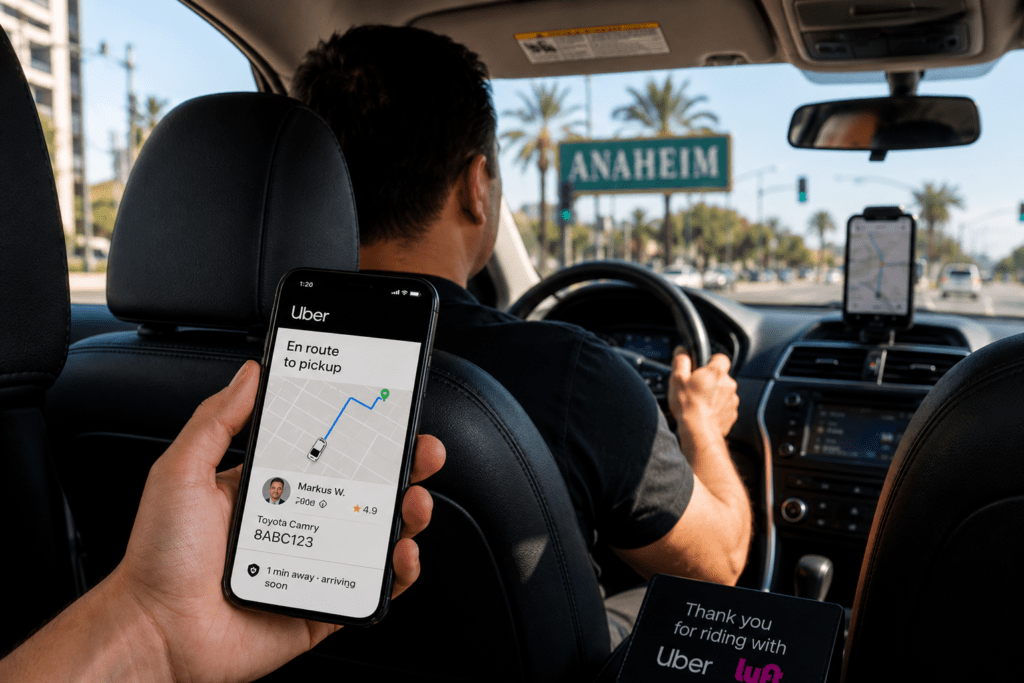
Uber or Lyft accident app status insurance coverage in Anaheim CA may depend heavily on preserving trip records, screenshots, timestamps, and insurance communications before important digital evidence becomes harder to access.
Avrek Law helps injured passengers, drivers, pedestrians, and other motorists evaluate rideshare insurance disputes after serious Uber and Lyft collisions throughout Anaheim.
📞 Call 866-598-5548, start a chat, or request a free case review today.