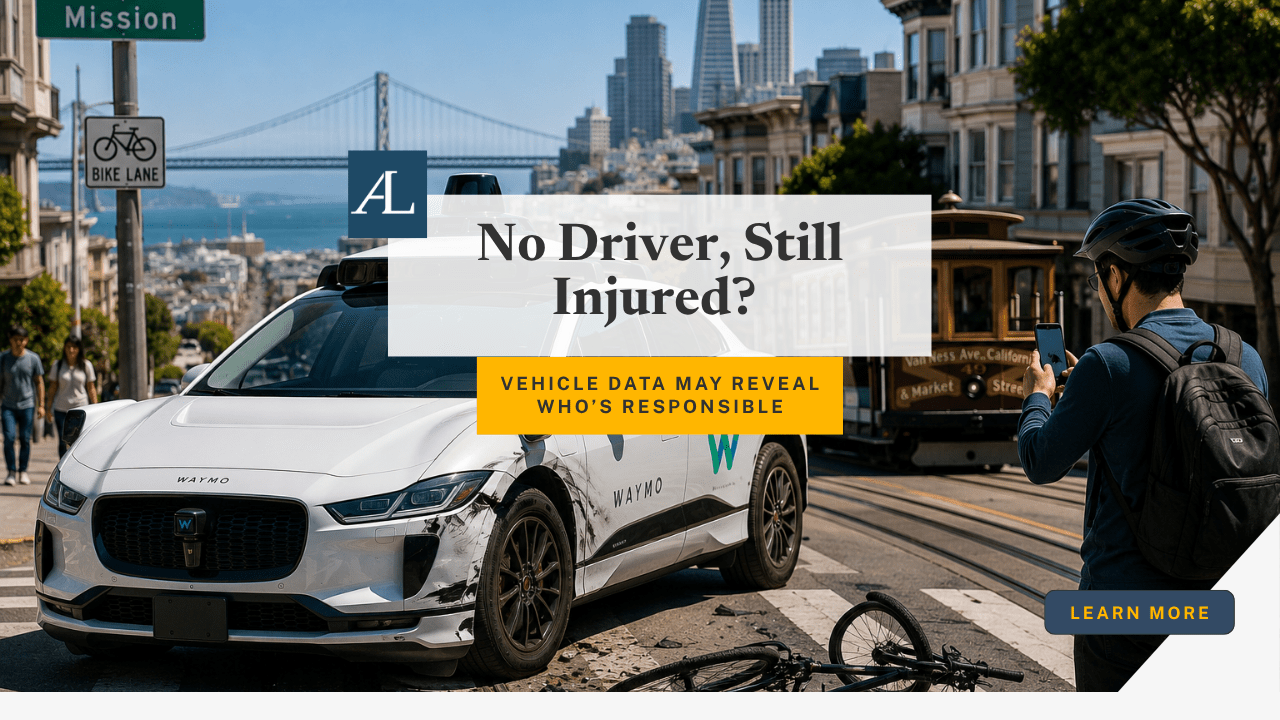
San Francisco driverless rideshare collision claim cases can feel confusing because there may be no human driver to question, no driver statement to compare, and no ordinary explanation like distracted driving, speeding, or failure to check a blind spot. A passenger may be injured during a robotaxi ride, pickup, drop-off, sudden stop, curbside maneuver, collision with another vehicle, door incident, or crash involving a pedestrian, cyclist, scooter rider, or rideshare vehicle.
San Francisco is one of the most active cities for driverless rideshare service. Waymo announced that Waymo One opened to everyone in San Francisco in June 2024, allowing riders to hail rides through the app, and described its service as operating 24/7 across the city. That means more passengers, drivers, cyclists, pedestrians, and insurers may be involved in situations where a crash happens but the claim does not fit the usual rideshare playbook.
A San Francisco driverless rideshare collision claim may involve app screenshots, trip receipts, pickup and drop-off records, vehicle data, passenger support messages, company incident reports, nearby camera footage, medical records, police reports, and communications from multiple insurers. The injured person may not be able to access the most important evidence alone because much of it may be controlled by the autonomous vehicle operator, another driver’s insurer, a nearby business, or a public agency.
When a driverless rideshare crash leaves you injured, choosing the right legal representation matters. An experienced San Francisco rideshare accident lawyer at Avrek Law Firm can act quickly to preserve digital records, identify responsible parties, and pursue compensation that reflects the full impact of the injury.
Call 866-598-5548, start a chat, or request a free case review today. There are no upfront fees, and you don’t pay unless we win.
Why a San Francisco Driverless Rideshare Collision Claim Is More Complex Than a Regular Rideshare Crash
A San Francisco driverless rideshare collision claim is more complex than a traditional Uber, Lyft, or taxi crash because the usual fault questions may not apply in the same way. In a standard rideshare accident, the investigation may focus on what the driver did, whether they were logged into the app, whether they accepted a ride, whether they were distracted, and whether their insurance coverage applies. In a driverless rideshare case, the investigation may focus on autonomous vehicle operation, company data, route behavior, remote support, pickup instructions, passenger safety procedures, and whether another road user caused or contributed to the crash.
The California Public Utilities Commission states that it has authorized drivered and driverless autonomous vehicle passenger service programs to provide prearranged transportation in autonomous vehicles with or without a safety driver. CPUC also explains that driverless AV passenger service involves vehicles without a driver in the vehicle and requires communication between passengers and remote operators during passenger service.
There May Be No Human Driver Statement
In a normal crash, the driver may explain what they saw, when they braked, whether they checked mirrors, or why they changed lanes. In a robotaxi crash, the injured passenger may not have that kind of driver statement. There may be no one in the driver’s seat and no personal account from a person operating the vehicle.
That does not mean there is no evidence. A San Francisco driverless rideshare collision claim may rely on trip data, vehicle records, app communications, passenger support logs, route details, sensor-related records, nearby cameras, and witness statements. These records can help answer questions that a human driver would normally answer.
The challenge is access. The injured person may have screenshots and medical records, but the autonomous vehicle operator may control the technical records. That is why early evidence preservation is so important.
Passenger Safety Plans and Company Records May Matter
CPUC explains that applicants in California’s driverless AV passenger service programs must submit Passenger Safety Plans that outline how they plan to protect passenger safety. CPUC also notes that AV deployment program applicants must obtain an Autonomous Vehicle Deployment Permit from the California DMV.
In a San Francisco driverless rideshare collision claim, those safety procedures may matter. The claim may involve questions such as whether the passenger received clear pickup or drop-off instructions, whether the vehicle stopped in a safe location, whether the passenger could contact support, whether a remote operator responded appropriately, and whether the company followed its own procedures after the incident.
These questions are different from a standard rideshare crash. They focus on systems, policies, data, and company controls rather than only one driver’s conduct.
Another Driver May Still Be Responsible
Not every robotaxi crash is caused by the autonomous vehicle. Another driver may rear-end the driverless vehicle, sideswipe it, run a red light, turn across its path, open a door into it, or strike a passenger entering or exiting the vehicle. A cyclist, scooter rider, delivery driver, rideshare driver, or commercial vehicle may also be involved.
A San Francisco driverless rideshare collision claim should therefore review every possible party. The autonomous vehicle data may help show the robotaxi’s position, speed, route, and movement before impact. Another driver’s dashcam footage or insurance records may show their role. Nearby business footage may reveal what happened before the passenger realized they were injured.
The absence of a human driver in the robotaxi does not automatically decide fault. The full sequence must be investigated.
Evidence Passengers Should Preserve After a Driverless Rideshare Accident
A San Francisco driverless rideshare collision claim can be strengthened in the first few hours after the incident. A passenger may be shaken, injured, or unsure whether the event should be reported. Even so, preserving records early can prevent major problems later.
Save App Screenshots, Trip Receipts, and Vehicle Details
Passengers should save screenshots of the ride request, pickup location, drop-off location, trip receipt, route map, vehicle identification, fare details, support messages, cancellation notices, and any post-incident communications. These records may help prove when the ride happened, where the vehicle stopped, whether the passenger was inside the vehicle, and what the app showed at the time.
In a San Francisco driverless rideshare collision claim, app records can become as important as driver information in a regular crash. They may help establish whether the ride was active, whether the passenger was entering or exiting, and whether the incident occurred at pickup, during travel, or at drop-off.
Passengers should save copies outside the app when possible. Screenshots, emails, and downloaded receipts may remain available even if the app display changes later.
Photograph the Vehicle, Scene, and Pickup or Drop-Off Area
If it is safe, passengers should photograph the vehicle, any other vehicles involved, visible damage, license plate or identifying details, curb area, traffic lanes, crosswalks, bike lanes, nearby signs, road conditions, debris, and visible injuries. Photos should also show whether the vehicle stopped in a traffic lane, loading zone, curbside area, driveway, intersection, or rideshare pickup point.
A San Francisco driverless rideshare collision claim may involve pickup or drop-off conditions, not only a moving collision. A passenger may be injured because the vehicle stopped in an unsafe place, because another driver struck the vehicle near the curb, or because the passenger had to step into traffic.
Scene photos can help explain why the location was unsafe and whether the passenger had a reasonable path.
Identify Witnesses and Nearby Camera Sources
Witnesses may include pedestrians, cyclists, other passengers, nearby drivers, valet workers, restaurant employees, hotel staff, security guards, delivery drivers, or rideshare drivers. Their statements may help explain what happened before impact, whether the vehicle stopped suddenly, whether another car caused the crash, or whether the passenger was entering or exiting safely.
San Francisco streets often have nearby cameras. Businesses, apartment buildings, hotels, restaurants, public transit vehicles, dashcams, delivery vehicles, and security systems may capture the incident. A San Francisco driverless rideshare collision claim may require fast preservation requests because footage can be overwritten quickly.
Even a partial video can be valuable if it shows the vehicle’s location, traffic flow, passenger movement, or another driver’s conduct.
Reporting a Driverless Rideshare Collision in California
A San Francisco driverless rideshare collision claim may involve ordinary crash reporting, insurance reporting, company support reports, and autonomous vehicle safety reporting. These reports do not replace a legal claim, but they can help create a documented timeline.
California DMV Autonomous Vehicle Incident Reporting
The California DMV provides an Autonomous Vehicle Incident Form for people who want to submit feedback or report an incident involving an autonomous vehicle operating on California public roads. The DMV also directs people to NHTSA for automated vehicle safety complaints.
In a San Francisco driverless rideshare collision claim, a DMV report may help document that the incident occurred. Passengers should still preserve app records, medical documentation, support communications, and photographs because a DMV report alone may not prove the full injury claim.
NHTSA Automated Driving Crash Reporting
NHTSA says its Standing General Order requires identified manufacturers and operators to report certain crashes involving vehicles equipped with automated driving systems or SAE Level 2 advanced driver assistance systems. NHTSA explains that the order is intended to provide timely and transparent crash notifications involving ADS and Level 2 ADAS vehicles.
This can matter in a San Francisco driverless rideshare collision claim because autonomous vehicle crash reporting may create records beyond what a passenger can see. However, NHTSA also cautions that data limitations exist and that reported crash data should not automatically be treated as statistically representative of all crashes.
Company Support Reports and Claim Numbers
Passengers should save every support message, email, claim number, phone log, chatbot transcript, and written response from the autonomous vehicle company or any insurer. These records may show when the incident was reported, what information was requested, and whether the company acknowledged a safety issue or opened a claim.
A San Francisco driverless rideshare collision claim may become harder if the passenger relies only on phone calls. Written records are easier to organize and compare against later insurer statements.
Who May Be Liable After a San Francisco Driverless Rideshare Crash?
A San Francisco driverless rideshare collision claim may involve several possible defendants or insurance sources. The responsible party depends on what caused the injury.
The Autonomous Vehicle Operator or Related Company
If the driverless vehicle’s operation, route behavior, stop location, braking, door function, passenger instructions, or support response contributed to the injury, the autonomous vehicle operator or related entities may need to be investigated.
This does not mean the company is automatically responsible for every incident. It means the company may control critical records. A San Francisco driverless rideshare collision claim may require trip logs, passenger support notes, incident reports, vehicle operation data, maintenance records, safety procedures, and communications with insurers.
Without early preservation, those records may be difficult for the injured passenger to obtain.
Another Driver, Cyclist, Scooter Rider, or Commercial Vehicle
Another road user may cause the crash. A driver may hit the robotaxi, crowd it, turn into it, or strike a passenger entering or exiting. A delivery driver may block the pickup location. A cyclist or scooter rider may collide with an open door or curbside maneuver. A commercial vehicle may sideswipe the autonomous vehicle in traffic.
In that situation, the claim may involve both the robotaxi records and the other party’s insurance. A San Francisco driverless rideshare collision claim should review all available policies before accepting one insurer’s version of fault.
A Property Owner or Pickup Location Operator
Some injuries happen during pickup or drop-off rather than during travel. A passenger may be injured because the vehicle stopped near an unsafe curb, blocked bike lane, driveway, construction zone, hotel entrance, valet lane, or crowded loading area.
A San Francisco driverless rideshare collision claim may therefore overlap with premises liability or curbside management issues. A hotel, restaurant, apartment building, parking operator, event venue, or property owner may need review if the pickup area contributed to the injury.
The key questions are who controlled the location, whether the hazard was foreseeable, and whether safer pickup or drop-off procedures should have been used.
Medical Documentation After a Driverless Rideshare Injury
A San Francisco driverless rideshare collision claim must document the injury as carefully as the technology. Insurance companies may argue that the crash was minor, that the vehicle data does not support the injury, or that symptoms came from something unrelated.
Seek Medical Care Quickly
Passengers should seek medical care after a crash, sudden stop, impact, fall, door incident, or curbside injury. Symptoms may include neck pain, back pain, headaches, dizziness, shoulder injuries, hip pain, knee pain, numbness, anxiety, or concussion symptoms.
Medical records help connect the injury to the incident. Emergency records, urgent care notes, imaging, specialist referrals, physical therapy, prescriptions, and work restrictions may all become important.
Track Delayed Symptoms
Some injuries are not obvious immediately. A passenger may feel shaken at first but develop pain later. Headaches, stiffness, dizziness, back pain, sleep disruption, and anxiety may appear after the ride ends.
A San Francisco driverless rideshare collision claim should include a clear timeline of symptoms. Pain journals, appointment calendars, medication records, and follow-up notes can help explain how the injury developed.
Save Work and Daily-Life Records
The claim may include missed work, reduced hours, medical appointments, transportation costs, childcare help, and daily limitations. A passenger who cannot drive, work, sleep, exercise, or care for family normally should document those changes.
Insurers may focus heavily on vehicle data. The injury claim must also show how the incident affected the person’s life.
Frequently Asked Questions About a San Francisco Driverless Rideshare Collision Claim
Can I file a claim if I was injured in a driverless rideshare vehicle?
Yes. You may have a claim if you were injured during a driverless rideshare ride, pickup, drop-off, sudden stop, collision, door incident, or curbside event. A San Francisco driverless rideshare collision claim may involve the autonomous vehicle operator, another driver, a property owner, or multiple insurance policies.
Who is responsible if there is no human driver?
Responsibility depends on what caused the injury. The autonomous vehicle operator may be involved if vehicle operation, stop location, passenger instructions, or company procedures contributed. Another driver or road user may also be responsible if they caused the crash.
What evidence matters most after a robotaxi crash?
Important evidence may include app screenshots, trip receipts, vehicle identification, route records, support messages, scene photos, medical records, witness information, nearby camera footage, and insurance communications.
Should I report an autonomous vehicle incident?
Reporting may help create a record. The California DMV provides an AV Incident Form for autonomous vehicle incidents on California public roads, and NHTSA accepts automated vehicle safety complaints. These reports should be combined with medical records, app evidence, and legal evidence.
Do I need a lawyer for a driverless rideshare accident?
Yes. These claims can involve company-controlled data, technical records, multiple insurers, and unfamiliar liability questions. A San Francisco rideshare accident lawyer can preserve evidence, identify responsible parties, and protect you from early settlement pressure.
Call or Contact Avrek Law Firm 24/7 for a Free Consultation and Pay Nothing Unless We Win
A San Francisco driverless rideshare collision claim can involve app data, autonomous vehicle records, passenger support communications, camera footage, medical documentation, and insurance disputes. These cases are not always handled like ordinary rideshare claims because there may be no human driver statement and much of the strongest evidence may be digital.
Avrek Law Firm helps injured passengers investigate driverless rideshare crashes, preserve trip records, identify all available coverage, and challenge insurers when they try to shift responsibility or minimize injuries.
Speaking with a San Francisco rideshare accident lawyer may help you understand what evidence should be preserved after a robotaxi collision or passenger injury. These cases may also overlap with issues handled by a San Francisco personal injury lawyer, especially when injuries are serious, fault is disputed, or multiple companies may be involved.
If you or someone you love was injured during a driverless rideshare ride, pickup, or drop-off in San Francisco, Avrek Law Firm is ready to help.
- 📩 Submit a request through our online form
- 📞 Call 866-598-5548 now to speak with our team
- 💬 Start a live chat for immediate assistance
There are no upfront fees, and you don’t pay unless we win.