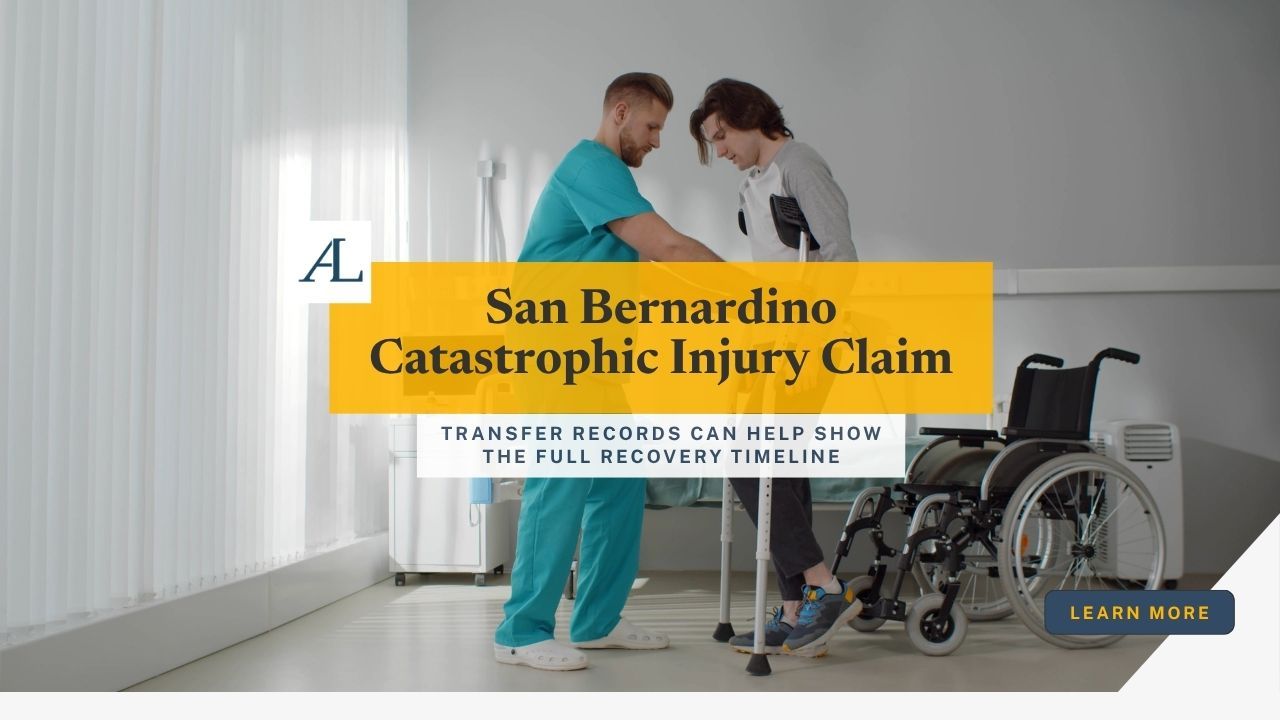
A San Bernardino catastrophic car accident hospital transfer rehabilitation records claim can become complicated quickly because the injured person may receive care in more than one hospital, rehab center, or specialist facility. A severe crash can start with emergency transport, move into trauma care, continue through surgery or ICU treatment, and then shift into inpatient rehabilitation or outpatient therapy. Each time the patient moves, important details can be added, changed, shortened, or left out of the record.
That matters because catastrophic injury claims are built on continuity. If one facility describes the injury one way and another facility uses slightly different language, the insurer may later argue that the diagnosis changed, the restrictions were unclear, or the future treatment plan is uncertain. A San Bernardino catastrophic car accident hospital transfer rehabilitation records claim should therefore be organized from the beginning so the injured person and family can understand what happened, where the records are stored, and how each transfer fits into the recovery timeline.
When a severe crash leaves you or someone you love facing a long recovery, choosing the right legal representation matters. An experienced San Bernardino catastrophic injury lawyer at Avrek Law Firm can help preserve records, identify all responsible parties, track insurer communications, and pursue the compensation needed for treatment, rehabilitation, and future care.
Call 866-598-5548, start a live chat, or request a free case review today. There are no upfront fees, and you do not pay unless we win.
How Medical Transfers Can Create Gaps or Inconsistencies in the Record
A San Bernardino catastrophic car accident hospital transfer rehabilitation records case often involves a chain of medical settings rather than one continuous chart. That chain may begin with ambulance transport, continue through an emergency department, move into a trauma unit, and then shift into a different hospital or rehab facility for stabilization and recovery. Every transfer creates a chance for records to be summarized, abbreviated, or interpreted by a new provider who was not present at the earlier stage.
Those gaps matter because insurance companies often look for inconsistency. If the trauma hospital records one set of symptoms, the transfer summary highlights only a few issues, and the rehab center focuses on different limitations, the insurer may claim the records do not line up. That is why transfer summaries should be preserved with the rest of the medical file. They help explain why care changed and what each facility knew at the time.
Ambulance and Interfacility Transfer Summaries
Ambulance reports and interfacility transfer summaries are often the first records that show how serious the injury was. In a San Bernardino catastrophic car accident hospital transfer rehabilitation records case, those documents may note vital signs, mental status, pain complaints, visible trauma, spinal precautions, oxygen needs, or the reason the patient had to be moved. If the patient was transferred because a hospital did not have the right specialist, bed, or equipment, that detail can matter later.
Transfer summaries also help show continuity between facilities. They may explain which injuries were suspected before transfer, which medications were given, and which specialists needed to take over. If a patient moved from one emergency department to another hospital or from acute care to rehab, the transfer summary can help bridge those records.
Imaging, Test Results, and Specialist Notes Sent Between Facilities
A major issue in a San Bernardino catastrophic car accident hospital transfer rehabilitation records claim is whether imaging and test results were shared correctly between facilities. CT scans, MRIs, X-rays, lab results, consult notes, and physician impressions may be copied into the receiving facility’s chart or referenced only briefly in a transfer note. If those records are not tracked carefully, the insurer may later say the severity of the injury was unclear.
Specialist notes are also important. A neurosurgeon, orthopedic surgeon, neurologist, or trauma specialist may describe the injury differently from the rehab team. That does not mean the record is wrong. It often means each provider focused on a different stage of recovery. A strong claim should keep the specialist notes together so the injury story remains complete.
Changes in Diagnoses, Restrictions, or Treatment Recommendations
Diagnoses and restrictions may change as the patient moves from one facility to another. In a San Bernardino catastrophic car accident hospital transfer rehabilitation records claim, one provider may initially suspect a fracture, spinal injury, or brain trauma, while another later confirms the diagnosis or adds new limitations. A rehab provider may then focus on mobility, independence, and discharge planning rather than the original trauma label.
Those changes can be important because insurers may try to use them against the injured person. If the first facility described the injury broadly and the rehab facility later used more specific language, the insurer may claim the original diagnosis was overstated. That is why it is useful to keep the transfer records, specialist notes, and updated treatment recommendations together.
Building a Complete Timeline Across Multiple Care Settings
A San Bernardino catastrophic car accident hospital transfer rehabilitation records claim should be built around a timeline, not a stack of disconnected notes. The goal is to show what happened from the crash scene to the hospital to rehab and then to outpatient follow-up. A clear timeline helps the family understand what care was provided, what remains unfinished, and how the injury changed over time.
Without a complete timeline, the insurer may focus on only one stage of care and ignore the rest. A person who was hospitalized for days, moved to rehab, and then sent home with restrictions does not have a simple claim. The full timeline must reflect the medical reality.
Trauma Care, Surgeries, and Intensive Treatment
Trauma care and surgeries are often the first major entries in a San Bernardino catastrophic car accident hospital transfer rehabilitation records case. The records may show ICU care, orthopedic surgery, neurosurgery, spinal precautions, wound care, respiratory support, or other critical interventions. Those details are important because they show the severity of the crash and explain why the patient could not simply go home after the emergency room visit.
If the patient had surgery before transfer, that operation and the recovery instructions should be preserved with the rest of the file. If the patient remained in intensive treatment before moving to rehab, the notes should show what treatment was still ongoing at the time of transfer.
Inpatient Rehabilitation, Outpatient Therapy, and Follow-Up Specialists
Inpatient rehabilitation is a major part of many San Bernardino catastrophic car accident hospital transfer rehabilitation records claims. Rehab teams may work on walking, balance, transfer skills, dressing, feeding, communication, cognition, or daily independence. The rehabilitation records often show what the patient could and could not do at each stage.
Outpatient therapy and follow-up specialists matter too. Physical therapy, occupational therapy, speech therapy, pain management, neurology, orthopedics, and other specialists may continue the recovery process long after the hospital discharge. A claim should preserve those records because they show that the injury did not end when the patient left the original hospital.
Medication, Medical Equipment, and Assistive Device Records
Medication records and medical equipment records are essential in a San Bernardino catastrophic car accident hospital transfer rehabilitation records claim. A patient may need pain medication, blood thinners, muscle relaxants, seizure medication, mobility aids, wheelchairs, walkers, braces, hospital beds, or home assistance equipment. Those items help show the level of impairment and the need for continuing care.
The claim should also preserve orders, invoices, and follow-up notes for any equipment used during or after the transfer. If a rehab provider recommended assistive devices for home use, that recommendation helps support the claim’s future care component.
Documenting the Non-Medical Effects of Facility Transitions
A San Bernardino catastrophic car accident hospital transfer rehabilitation records claim is not only about medical bills. Families often face travel, lodging, transportation, caregiving, and home-adjustment costs because the injured person is moving from one facility to another or recovering far from home. Those non-medical costs can be significant, especially after a severe crash.
A complete claim should show how the injury affected the whole household, not just the patient’s chart.
Family Travel, Lodging, and Transportation Expenses
When a patient is transferred between hospitals and rehab facilities, family members may need to travel long distances to visit, deliver belongings, attend meetings, or coordinate discharge planning. In a San Bernardino catastrophic car accident hospital transfer rehabilitation records claim, those expenses can include fuel, parking, hotel stays, meals, rideshares, and time off work.
If the patient was transferred to a facility outside the family’s normal travel area, the costs may increase quickly. Even short trips can become expensive when repeated over weeks or months. These records help show how the injury affected more than the person in treatment.
Missed Work and Caregiving Schedule Changes
Caregiving schedules often change drastically after a catastrophic crash. A San Bernardino catastrophic car accident hospital transfer rehabilitation records claim may include records showing missed shifts, adjusted work hours, family caregiving, childcare changes, or time spent coordinating care. If one family member had to leave work early, reduce hours, or take unpaid time to help the injured person, that is part of the crash’s impact.
The claim should preserve calendars, work notes, caregiver schedules, and any communication showing who helped with transportation, medication, daily tasks, or decision-making. That evidence helps show the injury disrupted the household, not just the patient.
Preparing the Home for Discharge or Reduced Mobility
Home preparation is another part of a San Bernardino catastrophic car accident hospital transfer rehabilitation records claim. Families may need to rearrange rooms, install ramps or railings, add bathroom equipment, move furniture, or prepare a ground-floor living space. The home may need to be adapted for wheelchairs, walkers, or limited mobility.
Those changes may be temporary or permanent, but either way they should be documented. Receipts, photos, contractor invoices, and supply records can help prove the extent of the recovery burden after discharge.
Insurance Disputes That May Arise During a Long Recovery
Insurance companies often dispute catastrophic injury claims because the medical timeline is long, the losses are large, and the records may come from several different facilities. A San Bernardino catastrophic car accident hospital transfer rehabilitation records claim may involve questions about whether the current care is still related to the original crash, whether future treatment is necessary, or whether the prognosis is clear enough for settlement.
Those disputes can make the family feel pressure to settle early, especially when expenses are mounting. That is why it helps to keep the treatment record organized from the start.
Questions About Acute Care Versus Future Treatment Needs
Insurers often want to separate acute care from future care. In a San Bernardino catastrophic car accident hospital transfer rehabilitation records claim, they may accept that emergency treatment was necessary but question whether rehab, future surgery, therapy, or home modifications are really connected to the collision. They may also argue that a later transfer reflects a different problem rather than the original trauma.
A clear timeline helps answer those questions. If the records show the patient moved from acute care into rehab because the injuries were severe, the claim can better support future treatment needs. If specialists recommend continued care, those notes should be preserved carefully.
Delays Related to Placement, Authorization, or Provider Changes
Delays are common in a San Bernardino catastrophic car accident hospital transfer rehabilitation records claim. The patient may wait for a rehab bed, for authorization from an insurer, for a specialist consult, or for placement in a facility that can handle the injuries. Insurers may later use those delays to suggest the treatment was not urgent or not necessary.
That argument can be misleading. Delays may happen because the right facility was full, because transportation had to be arranged, or because the patient needed stabilization before moving. Transfer records help explain those delays so they are not misread later.
Settlement Discussions Before the Long-Term Prognosis Is Clear
One of the biggest risks in a San Bernardino catastrophic car accident hospital transfer rehabilitation records claim is settlement pressure before the long-term prognosis is clear. The family may not yet know whether surgery will be needed, whether the patient will regain independence, or whether more rehabilitation will be required. If the insurer wants to resolve the claim before those issues are understood, the offer may be too low.
A catastrophic claim should not be valued only on the first hospital bill. It should reflect the full course of treatment, the likely future needs, the impact on work and family life, and the cost of the home and transportation changes required by the injury.
Frequently Asked Questions About a San Bernardino Catastrophic Injury Claim
Why do hospital transfer and rehabilitation records matter so much?
In a San Bernardino catastrophic car accident hospital transfer rehabilitation records claim, those records show how the injury moved through the health care system and why each facility became involved. They help connect emergency care, surgery, rehab, and follow-up treatment into one timeline.
What if different hospitals use different language?
That is common. One facility may describe the injury differently from another because the providers were treating different stages of recovery. The key is preserving all the records together so the insurer cannot isolate one note and ignore the rest.
Can a rehab record prove the injury was severe?
Yes. Rehab records can help show limited mobility, dependence on assistive devices, cognitive problems, or ongoing therapy needs. Those notes may support the severity of the claim and the need for future care.
What kinds of non-medical costs should be tracked?
Track travel, lodging, parking, fuel, missed work, caregiver time, childcare changes, home modifications, medical supplies, and transportation costs. Those expenses can be part of the overall recovery burden in a catastrophic claim.
How long do I have to file a claim in California?
Many California injury claims are subject to a two-year deadline under California Code of Civil Procedure Section 335.1. If the crash involved a public vehicle or public entity, shorter notice requirements may apply.
Do I need to report the crash to the DMV?
If anyone was injured or if property damage was over $1,000, California DMV says the crash should generally be reported within 10 days using the SR-1 form. You can review that requirement here: California DMV SR-1 Accident Reporting.
What does rehabilitation mean in a severe crash case?
The MedlinePlus Rehabilitation page explains that rehabilitation can help people regain or improve abilities needed for daily life after injury and may involve a team of providers. That is often exactly what happens after a catastrophic crash.
Do I need a lawyer for a catastrophic transfer and rehab claim?
Yes, especially when the injury involves multiple hospitals, rehab facilities, specialists, or major home and work changes. A San Bernardino catastrophic injury lawyer can help organize the records, track insurer communications, and pursue compensation for the full recovery period.
Call or Contact Avrek Law Firm 24/7 for a Free Consultation and Pay Nothing Unless We Win
A San Bernardino catastrophic car accident hospital transfer rehabilitation records claim can become difficult when care moves between facilities, the prognosis is still changing, or the insurer questions whether later treatment is related to the crash. These cases often depend on careful recordkeeping, transfer summaries, rehab notes, family expense records, and a complete understanding of the recovery timeline.
Avrek Law Firm helps injured people and families after serious motor vehicle crashes throughout San Bernardino. Our team can move quickly to preserve evidence, organize hospital and rehab records, coordinate with insurers, and pursue compensation for medical bills, lost income, future care, and the full effect of the injury.
If you or someone you love was injured in a severe crash and transferred between hospitals and rehabilitation facilities in San Bernardino, Avrek Law Firm is ready to help.
Call 866-598-5548, start a chat, or complete our online form today for a free, no-obligation consultation. There are no upfront fees, and you do not pay unless we win.
Serving the San Bernardino Community
Avrek Law Firm represents injured people throughout San Bernardino and surrounding Inland Empire communities. Local context matters in a San Bernardino catastrophic car accident hospital transfer rehabilitation records claim because the crash location and treatment locations often shape the records, the transfer path, and the insurance issues.
A crash near Downtown San Bernardino, the 10, 215, or 210 corridors, Highland Avenue, Waterman Avenue, Baseline Street, hospitality centers, industrial areas, or freeway interchanges may lead to trauma care, interfacility transfers, and rehab placement decisions that should be documented early. If the patient was moved between facilities, the timeline should show where the care started, where it continued, and what each provider said about recovery.
A San Bernardino catastrophic injury lawyer can help make sure those records are organized before they are lost, and a San Bernardino car accident lawyer can help track the insurance issues that follow a serious crash and long recovery.
- 📩 Submit a request through our online form
- 📞 Call 866-598-5548 now to speak with our team
- 💬 Start a live chat for immediate assistance
There are no upfront fees, and you don’t pay unless we win.