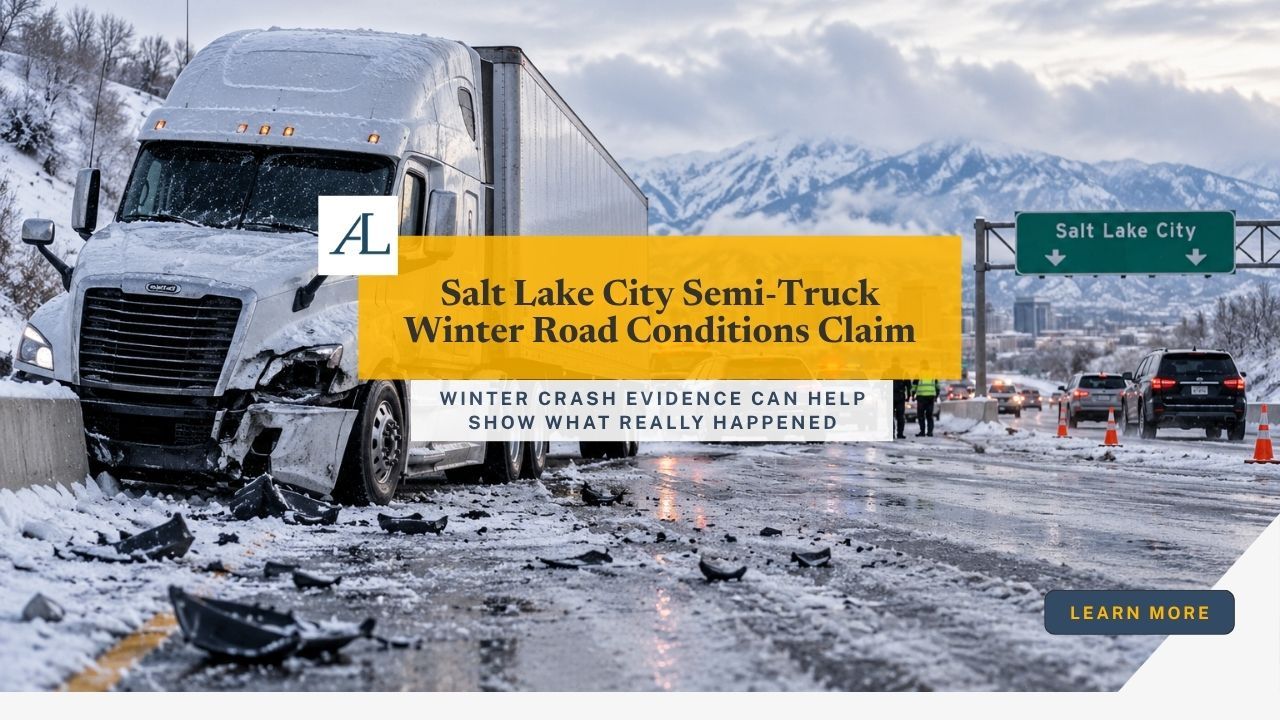
A Salt Lake City semi truck accident winter road conditions claim can become complicated quickly because snow, ice, slush, wind, and reduced visibility may all affect how a commercial truck moves and stops. That does not mean winter weather automatically explains the crash. Utah’s winter driving guidance says drivers should slow down, increase following distance, and avoid quick stops, starts, and turns when roads are wet, snowy, or icy. You can review that guidance in the Utah Winter Driving Guide. FMCSA also warns commercial drivers to increase following distance in adverse conditions, which matters in any Salt Lake City semi truck accident winter road conditions claim because braking distance can change dramatically in snow and ice.
When a crash like this leaves you injured, choosing the right legal representation matters. An experienced Salt Lake City truck accident lawyer at Avrek Law Firm can help preserve evidence, identify liable parties, and pursue the compensation you deserve.
Call 866-598-5548, start a live chat, or request a free case review today. There are no upfront fees, and you do not pay unless we win.
Why weather does not resolve every crash question
A Salt Lake City semi truck accident winter road conditions claim often turns on more than the weather report. Winter conditions can make a roadway harder to navigate, but the claim still has to answer basic questions: Was the truck too fast for conditions? Was the following distance too short? Did the driver brake too late? Did the driver enter the roadway too aggressively? Did traffic slow, stop, or change lanes in a way the truck driver should have anticipated?
That is why a Salt Lake City semi truck accident winter road conditions claim should not be reduced to “the roads were bad.” The truck driver still had to adapt to visibility, surface conditions, and traffic movement. If the driver failed to do that, weather may explain the difficulty but not excuse the decision.
Truck speed, following distance, braking, and lane movement
Speed and spacing are central in a Salt Lake City semi truck accident winter road conditions claim. A loaded tractor-trailer needs much more room to stop than a passenger vehicle, and FMCSA guidance says truck drivers should increase following distance in adverse conditions. If the truck was moving too fast for the road conditions, braking too late, or changing lanes without enough room, that evidence can outweigh a general “the weather caused it” explanation. The FMCSA Following Too Closely guidance is especially relevant when a truck rear-ends traffic during winter weather.
Driver decisions before entering the affected roadway
A Salt Lake City semi truck accident winter road conditions claim should also examine what the driver did before entering the roadway. Did the driver merge too quickly? Did they commit to a lane before being sure it was clear? Did they continue at a speed that would be fine in dry weather but unsafe on snow or ice? Utah Highway Patrol’s winter driving guide specifically advises slowing down, using less than the posted speed limit when conditions are wet, snowy, or icy, and avoiding sudden maneuvers. That guidance matters in any Salt Lake City semi truck accident winter road conditions claim because winter roads demand more caution, not less.
Whether traffic was slowing, stopped, or changing lanes
Traffic flow can change the whole claim. In a Salt Lake City semi truck accident winter road conditions claim, the truck may have struck vehicles that were already slowed by a curve, merge, hill, signal, or roadside hazard. If traffic was changing lanes or stopping suddenly, the truck driver still had a duty to respond safely. Weather may have made the situation harder, but it does not automatically make the crash unavoidable.
That is why the claim should compare the truck’s path to the movement of the surrounding vehicles. If the truck failed to adjust to traffic that was already slowing, the winter conditions argument becomes much weaker.
Trucking records that may provide additional context
A Salt Lake City semi truck accident winter road conditions claim should not rely only on the weather conditions or the driver’s verbal explanation. Trucking records often show whether the driver had enough time, enough distance, and enough equipment to handle the road safely. Those records may also show whether the carrier was pushing unrealistic schedules or failing to maintain the truck properly.
Electronic logs, telematics, and dispatch communications
Electronic logs, telematics, and dispatch communications can help explain a Salt Lake City semi truck accident winter road conditions claim because they may show how long the driver had been on duty, what route was being followed, and whether the driver was under delivery pressure. If the truck was already behind schedule, the records may show whether the driver was rushing or taking risks to keep moving.
Those records can also help confirm the truck’s movement before impact. Speed, brake input, and route data may show whether the driver slowed for winter conditions or continued at a pace that was too aggressive for the road.
Brake, tire, inspection, and maintenance materials
Maintenance records are especially important in a Salt Lake City semi truck accident winter road conditions claim because winter weather puts extra stress on brakes, tires, and traction. If the truck had worn tires, poor brake performance, bad lights, or other maintenance issues, those problems may have made the crash worse or made the truck less controllable.
If the truck was not equipped properly for the conditions, that can matter. Utah’s traction-law information explains that roadways can have snow tire or chain-up requirements during winter storms, and drivers are expected to pay attention to signs, messages, and official notices. If a carrier ignored those requirements, that can support a Salt Lake City semi truck accident winter road conditions claim.
Route planning, delivery timing, and driver qualification records
A Salt Lake City semi truck accident winter road conditions claim may also depend on route planning and timing. If the carrier scheduled the driver through winter weather without enough delay time, or if the driver was sent into conditions the company should have known were dangerous, those records may matter. Driver qualification files can also show whether the company trained the driver to handle winter roads, chain-up requirements, or adverse-weather braking.
If a carrier knew the route would be risky and still pressed ahead, that may help show the crash was not just “weather,” but a preventable choice.
Scene and weather evidence to preserve
A Salt Lake City semi truck accident winter road conditions claim can turn on what the road looked like in the moments after the crash. Snow, slush, and ice can be cleared quickly by traffic, plows, or road crews. The earlier the scene is documented, the better the chance of proving whether the road conditions truly caused the crash or whether the truck’s movement was the larger problem.
Road surface photos, tire marks, debris, and vehicle positions
Road surface photos should be one of the first pieces of evidence in a Salt Lake City semi truck accident winter road conditions claim. The images should show snow cover, ice patches, slush, wet pavement, tire marks, debris, lane markings, final vehicle positions, and whether the truck left a long braking trail or skidded before impact.
Those details can help show whether the driver reacted appropriately. They can also help explain whether the truck was traveling too fast for the conditions or following too closely.
Dashcams, traffic cameras, witnesses, and first responder records
Video is often powerful in a Salt Lake City semi truck accident winter road conditions claim. Dashcams, traffic cameras, business surveillance, and witness video may show how traffic was moving before the crash and whether the truck began to skid, jackknife, or strike another vehicle. First responder records may also document weather, road conditions, and early statements made at the scene.
Utah Highway Patrol provides a portal for official accident reports and records, which can help preserve the official crash file for a Salt Lake City semi truck accident winter road conditions claim. You can review those records here: Utah Highway Patrol Crash Reports.
Road treatment, closure, or condition information
Road treatment and closure information can also matter in a Salt Lake City semi truck accident winter road conditions claim. UDOT notes that roads may be treated with salt brine, salt, or other materials depending on winter conditions, and that some routes may have traction requirements posted through signs, message boards, or official channels. If the roadway was under treatment, partially closed, or subject to traction restrictions, that may help explain what the driver knew or should have known. You can review Utah’s traction information here: Utah Traction Law and UDOT’s winter snow-removal information here: UDOT Snow Removal.
Insurance disputes when the carrier attributes the crash to weather
A Salt Lake City semi truck accident winter road conditions claim often becomes an insurance dispute because the carrier may want to blame snow, ice, black ice, or visibility instead of the truck driver’s choices. That strategy can be misleading if the truck was following too closely, braking too late, or traveling too fast for the road.
Whether driver or equipment evidence is being overlooked
If the insurer focuses only on weather, a Salt Lake City semi truck accident winter road conditions claim may miss important evidence about the truck itself. Bad tires, faulty brakes, poor maintenance, loading problems, or a driver who failed to adjust speed can all make a winter crash worse. A winter storm is not a defense if the truck was not prepared for the storm.
Competing accounts from multiple commercial or passenger vehicles
Multi-vehicle crashes can create competing stories. In a Salt Lake City semi truck accident winter road conditions claim, one driver may say traffic stopped suddenly while another says the truck never slowed enough. Another vehicle may have been pushed into the collision after the first impact. The claim should focus on the sequence of impacts, not just the first description from the insurer.
Early settlement contact before trucking records are produced
A quick settlement offer can be risky in a Salt Lake City semi truck accident winter road conditions claim because the trucking records may not yet be produced. If the insurer wants to settle before electronic logs, maintenance materials, dashcam footage, or weather-related records are reviewed, the offer may be too low. That is why the case should be investigated fully before settlement discussions close the door.
Frequently Asked Questions About a Salt Lake City Semi-Truck Accident Claim
Does winter weather excuse a truck crash?
No. Winter weather can contribute to a crash, but it does not automatically excuse unsafe speed, following distance, or braking decisions. Utah’s winter driving guidance and FMCSA guidance both emphasize adjusting to road conditions.
What evidence matters most after a winter truck crash?
Road surface photos, tire marks, vehicle positions, dashcam video, traffic-camera footage, witness statements, electronic logs, maintenance records, and the official crash report are often the most useful forms of evidence.
Can the truck company be responsible, not just the driver?
Yes. The carrier may be responsible if it pushed the driver onto a risky route, failed to train the driver, or failed to maintain the truck properly. Trucking records can help show that.
What if the road was icy?
Ice matters, but the key issue is whether the driver adjusted speed, spacing, and braking to match the conditions. Utah guidance says not to brake suddenly on wet or icy roads, and to keep control by slowing down and leaving more room.
How do I get the official crash report?
Utah Highway Patrol says official accident reports and records can be requested through its secure portal. You can review the records page here: Utah Highway Patrol Crash Reports.
Do I need a lawyer for this kind of claim?
Yes, especially if the insurer is blaming weather while trucking records, maintenance history, or driver data have not yet been reviewed. A Salt Lake City truck accident lawyer can help preserve the evidence and deal with the carrier.
Call or Contact Avrek Law Firm 24/7 for a Free Consultation and Pay Nothing Unless We Win
A Salt Lake City semi truck accident winter road conditions claim can become difficult when the insurer says the weather caused everything, the trucking records are not yet produced, or the crash scene has already changed. These cases often depend on fast evidence preservation, including vehicle data, maintenance records, road surface photos, traffic-camera footage, witness statements, and the official crash file.
Avrek Law Firm helps injured people after serious commercial truck crashes throughout Salt Lake City and the surrounding area. Our team can move quickly to preserve evidence, identify every liable party, communicate with insurers, and pursue compensation for medical bills, lost income, pain and suffering, and long-term recovery needs.
If you or someone you love was injured in a Salt Lake City winter truck crash, Avrek Law Firm is ready to help.
Call 866-598-5548, start a chat, or complete our online form today for a free, no-obligation consultation. There are no upfront fees, and you do not pay unless we win.
Serving the Salt Lake City Community
Avrek Law Firm represents injured people throughout Salt Lake City and surrounding communities. Local context matters in a Salt Lake City semi truck accident winter road conditions claim because the roadway, storm pattern, and trucking route often shape the evidence.
A crash on I-15, I-80, I-215, State Street, 700 East, or other busy Salt Lake corridors may involve black ice, stop-and-go traffic, lane changes, snowplow activity, and traction issues that should be documented quickly. If the crash happened near a canyon route, interchange, or commercial delivery corridor, the driver’s choices before impact may matter even more.
A Salt Lake City truck accident lawyer can help make sure the evidence is preserved before it is lost, and a Salt Lake City personal injury lawyer can help document the full impact of the injuries on work, mobility, and daily life.
- 📩 Submit a request through our online form
- 📞 Call 866-598-5548 now to speak with our team
- 💬 Start a live chat for immediate assistance
There are no upfront fees, and you don’t pay unless we win.