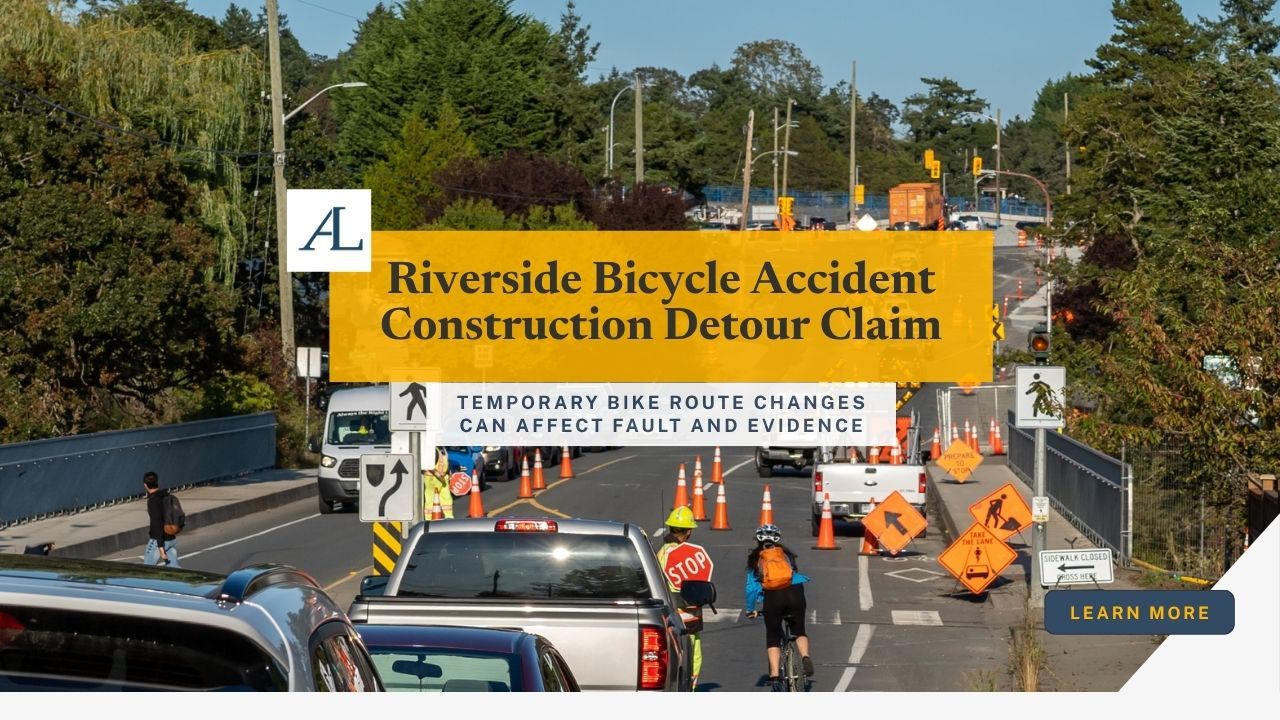
A Riverside bicycle accident construction detour claim can become complicated quickly when a bike lane is closed, traffic is rerouted, and cyclists are forced to share space with turning vehicles or construction traffic. Temporary barriers, cones, lane shifts, and new signs can change a cyclist’s normal route in seconds, and those changes can create disputes about visibility, right of way, and which driver or entity created the danger. The outline for this blog focuses on temporary traffic changes, work-zone evidence, and the records needed to show how the crash happened.
When a bike crash leaves you injured, choosing the right legal representation matters. An experienced Riverside bicycle accident lawyer at Avrek Law Firm can help preserve evidence, document the crash scene, and pursue the compensation you deserve. California law also gives bicyclists the rights and duties of vehicle drivers in most roadway situations, which is one reason the exact detour setup can matter so much in these claims.
Call 866-598-5548, start a live chat, or request a free case review today. There are no upfront fees, and you do not pay unless we win.
How Temporary Traffic Changes Can Alter a Cyclist’s Travel Path
A Riverside bicycle accident construction detour claim often starts with a simple question: where was the cyclist supposed to ride after the work zone changed the roadway? A detour may remove a bike lane, narrow the travel lane, redirect riders around barriers, or merge bikes into traffic that was not designed for both vehicles and cyclists at the same time. That can place the rider in a lane they would not normally use and create conflict with drivers who do not expect to see a cyclist there.
California Vehicle Code section 21200 says that a person riding a bicycle upon a highway has the rights and is subject to the same traffic provisions applicable to a driver of a vehicle, with limited exceptions for rules that cannot logically apply to bicycles. That makes the detour design and the cyclist’s actual route especially important in a Riverside bicycle accident construction detour claim, because the question is not only what the cyclist did, but whether the temporary setup forced the cyclist into a risky path.
Bike Lane Closures, Cones, Barriers, and Merged Traffic
Bike lane closures are one of the most common reasons a Riverside bicycle accident construction detour claim becomes disputed. A rider may be sent around cones, temporary barriers, lane shifts, or a narrowed shoulder while traffic continues moving beside them. If the work zone is not clearly marked, a driver may not realize the cyclist has been pushed into the lane or may turn across the rider’s path without enough space.
Merged traffic can be especially dangerous because it changes the usual spacing between bicycles and vehicles. If the cyclist was routed into a lane shared with turning cars, delivery trucks, or construction vehicles, the crash may be tied to the detour design as much as to any single driver’s conduct. That is why photos and scene documentation should be taken quickly before the work zone changes again.
Temporary Signs and Markings That May Be Difficult to Interpret
Temporary signs and markings can be confusing in a Riverside bicycle accident construction detour claim. A rider may see a detour sign, but not know whether to merge left, continue straight, dismount, or use a temporary bike path around the work area. Drivers may also misunderstand the signage and turn or enter an area where a cyclist is still traveling.
If a sign is faded, blocked, moved, or placed too close to the lane shift, that detail may matter later. The detour may have been technically posted, but still not clear enough to protect cyclists. This is why the signage should be photographed from the rider’s viewpoint and from the driver’s viewpoint if it is safe to do so.
Conflicts Between Cyclists, Turning Drivers, and Construction Vehicles
Conflicts often happen when a cyclist, a turning driver, and a construction vehicle are all trying to use the same altered roadway. In a Riverside bicycle accident construction detour claim, the cyclist may have been following the only available route while a driver was focused on traffic, a work truck was entering or leaving the area, or a utility vehicle was parked in a way that blocked the view.
Those conflicts can create sudden movements, lane encroachments, or blind spots. The crash may look like a simple bike-versus-car collision, but the construction setup can be the real reason the collision happened. The work-zone layout should be reviewed carefully before blame is assigned.
Evidence to Preserve Before the Work Zone Changes
A Riverside bicycle accident construction detour claim depends heavily on what the detour looked like at the moment of the crash. Work zones change quickly. Cones are moved, signs are updated, asphalt is laid down, and barriers are removed or repositioned. If no one documents the scene early, the insurer may later argue that the cyclist must have chosen the wrong route or that the work zone was already clear.
The outline for this blog emphasizes preserving photos, video, work logs, traffic-control records, and witness accounts before the detour changes.
Photos and Video of Barriers, Signs, Lane Width, and Sightlines
Photos and video should show the barriers, signs, lane width, and sightlines at the time of the crash in a Riverside bicycle accident construction detour claim. A narrow lane, a sudden merge, or a barrier that blocks visibility can explain why the cyclist and driver could not see each other until it was too late. If the rider was forced close to traffic, that should be documented from multiple angles.
Sightlines matter because a construction detour may place the cyclist around a curve, behind a barrier, or in a position where a driver has only a brief chance to react. A few photographs may later become some of the strongest evidence in the entire claim.
Available Traffic-Control Plans, Work Logs, and Project Records
Traffic-control plans, work logs, and project records can be valuable in a Riverside bicycle accident construction detour claim because they may show who designed the detour and how the lane configuration was supposed to function. If the detour was controlled by a contractor, utility company, city agency, or another entity, those records may help identify who was responsible for the setup.
If the actual detour on the day of the crash did not match the plan, that difference may matter. A plan may look safe on paper while the real-world setup created confusion, obstruction, or unexpected lane sharing. Those records should be preserved before the project moves to the next phase.
Witness Accounts From Workers, Drivers, Cyclists, and Nearby Businesses
Witness accounts can help explain the work zone in a Riverside bicycle accident construction detour claim. Workers may know how long the detour had been in place, whether signs were moved, or whether the area was hard to navigate. Drivers and other cyclists may have seen the rider enter the lane, the vehicle turn, or the work truck block visibility. Nearby business employees may have watched the crash and can describe what happened before emergency responders arrived.
The sooner witnesses are contacted, the better. People leave the area, forget details, or assume someone else will provide the information. Their statements can help reconstruct the scene before the detour changes.
Bicycle, Device, and Injury Records That May Support the Claim
A Riverside bicycle accident construction detour claim is not only about the roadway. It is also about the bicycle, the rider’s equipment, the digital route history, and the injuries that followed. A detour crash can damage the bike, helmet, lights, and protective gear, and those items may help show the force of the impact and the rider’s position at the time of collision.
Because many cyclists now use GPS devices, cycling apps, or phone-based route tools, digital evidence may also help explain how the rider entered the work zone and what route was being followed. That evidence can be especially useful when the insurer argues the cyclist “should have known” a different route was required.
Bike Damage, Helmet Damage, Lighting, and Reflective Gear
Bike damage can support a Riverside bicycle accident construction detour claim by showing the angle and severity of the impact. Bent wheels, damaged forks, cracked frames, broken handlebars, torn grips, and damaged pedals may help show how the cyclist was struck or forced off balance. Helmet damage can be equally important because it may reflect the force of the collision and the rider’s head position.
Lighting and reflective gear should also be documented. If the cyclist was using front lights, rear lights, reflective clothing, or helmet reflectors, those details may help rebut claims that the rider was hard to see. The bicycle and gear should be photographed before repairs are made or items are discarded.
GPS Route History, Cycling App Data, and Camera Footage
GPS route history and cycling app data can be useful in a Riverside bicycle accident construction detour claim because they may show the rider’s path before the crash, the speed of travel, and the time of the collision. If the rider was following a detour route or had to deviate because of construction, those records may help explain why they were in that location.
Camera footage from a helmet, bike-mounted camera, or nearby surveillance may also help. A short video clip can show the barriers, lane shifts, and driver movement leading up to the crash. That footage may be more persuasive than a later statement about what the work zone looked like.
Medical Treatment, Missed Work, and Transportation Replacement Costs
Medical records should document the injuries that followed a Riverside bicycle accident construction detour claim. The rider may have suffered fractures, road rash, shoulder injuries, wrist injuries, neck pain, back pain, head trauma, or soft tissue injuries. Follow-up care may include emergency treatment, imaging, therapy, specialist visits, and activity restrictions.
Missed work and transportation replacement costs should also be tracked. If the cyclist could not ride, drive, or commute normally after the crash, the claim may include lost wages, missed shifts, rideshare costs, temporary transit costs, or bike replacement expenses. Those losses help show the wider impact of the injury.
Responsibility Questions in a Construction-Detour Bicycle Crash
Responsibility in a Riverside bicycle accident construction detour claim may involve more than the driver who struck the cyclist. The detour itself may have been controlled by a contractor, roadway agency, utility company, or another entity that created the lane shift, barrier layout, or visibility issue. That makes the claim more complicated than a typical bicycle-versus-car case.
The outline for this blog focuses on how driver conduct, work-zone control, and insurance blame-shifting can affect the case.
Driver Conduct Within the Temporary Lane Configuration
A driver still has duties in a Riverside bicycle accident construction detour claim. Even if the lane was temporary, the driver should still watch for cyclists, obey the posted markings, and avoid turning or changing lanes without checking the area carefully. If the driver entered a shared lane, cut across a rerouted path, or failed to yield where the cyclist was lawfully traveling, that may support liability.
The fact that a detour existed does not excuse unsafe driving. The driver’s conduct must be judged in the real-world conditions created by the work zone.
Which Entity Controlled the Traffic Setup or Work Area
The entity that controlled the traffic setup can be important in a Riverside bicycle accident construction detour claim. If the work zone was managed by a contractor, city department, utility company, or another third party, that party may have had responsibility for signage, lane markings, barriers, and safe routing. If the setup was confusing or unsafe, the claim may extend beyond the driver.
Records such as work logs, traffic-control plans, and project documents can help identify who controlled the area. Those records should be preserved before the work shifts again.
Insurance Attempts to Blame the Cyclist’s Route, Speed, or Visibility
Insurance companies often try to blame the cyclist’s route, speed, or visibility in a Riverside bicycle accident construction detour claim. They may say the rider chose the wrong side of the lane, was traveling too fast, or should have seen the construction earlier. Those arguments should be checked against the detour signs, route changes, and actual visibility at the scene.
California law generally gives bicyclists the rights and duties applicable to vehicle drivers on the highway, which is why the exact lane configuration matters and why a cyclist should not be blamed simply for riding where the detour directed them.
Deadlines and Reporting After a Riverside Bicycle Accident
A Riverside bicycle accident construction detour claim should be reviewed quickly because evidence and legal deadlines can move on different timelines. The scene can change long before a claim is filed, and a bicycle crash can create both vehicle damage and injury reports that need to be handled early.
If the crash caused injury or more than $1,000 in property damage, California DMV says an SR-1 report must generally be filed within 10 days, and that report is required in addition to any police or insurance report. You can review that requirement here: California DMV SR-1 Accident Reporting.
If the matter proceeds as a civil injury claim, California’s general two-year limitations rule in Code of Civil Procedure section 335.1 is an important deadline to keep in mind. You can review the statute here: California Code of Civil Procedure Section 335.1.
Frequently Asked Questions About a Riverside Bicycle Accident Claim
Can a construction detour affect who is at fault?
Yes. In a Riverside bicycle accident construction detour claim, the detour may explain why the cyclist was in a shared lane, why visibility was limited, or why a driver had to react to a changed route. The crash may involve the driver, the detour controller, or both.
What should I save after a bike crash in a work zone?
Save photos, video, bike damage, helmet damage, lights, reflective gear, GPS data, app screenshots, witness names, medical records, work notes, and any paperwork related to the detour. Those items can be key evidence in a Riverside bicycle accident construction detour claim.
What if the work zone was already changed when I went back?
That happens often. Work zones move fast, which is why photographs and records should be collected immediately. If the detour changed after the crash, the original setup may still be provable through videos, witness statements, and project records.
Do e-bikes count the same way as bicycles?
In many California roadway situations, bicyclists have the same rights and duties as drivers, and an e-bike rider may still need to be evaluated under the bicycle rules that apply on the highway. The exact facts matter, so the bike type and route should be documented carefully.
How long do I have to file a claim?
Many California personal injury claims are subject to the two-year period in Code of Civil Procedure section 335.1. If a public entity or roadway-maintenance issue is involved, shorter notice rules may also apply.
Do I need a lawyer for a detour-related bicycle crash?
Yes, especially if the work zone changed, video needs to be preserved, or more than one party may have controlled the traffic setup. A Riverside bicycle accident lawyer can help organize the claim and preserve the proof before it disappears.
Call or Contact Avrek Law Firm 24/7 for a Free Consultation and Pay Nothing Unless You Win
A Riverside bicycle accident construction detour claim can become difficult when the bike lane has been closed, the work zone has shifted, and multiple parties may have contributed to the crash. These cases often depend on fast evidence preservation, detour photos, traffic-control records, GPS data, witness statements, and a clear understanding of who controlled the lane configuration.
Avrek Law Firm helps injured cyclists and e-bike riders after serious crashes throughout Riverside and the Inland Empire. Our team can move quickly to preserve evidence, document injuries, review the detour setup, and pursue compensation for medical bills, lost income, pain and suffering, and long-term recovery needs.
If you or someone you love was injured in a Riverside work-zone bicycle crash, Avrek Law Firm is ready to help.
Call 866-598-5548, start a chat, or complete our online form today for a free, no-obligation consultation. There are no upfront fees, and you do not pay unless we win.
Serving the Riverside Community
Avrek Law Firm represents injured cyclists and e-bike riders throughout Riverside and surrounding communities. Local context matters in a Riverside bicycle accident construction detour claim because the work zone, traffic pattern, and camera sources often shape the evidence.
A crash near Downtown Riverside, University Avenue, Magnolia Avenue, Arlington Avenue, Van Buren Boulevard, La Sierra, Mission Grove, or near the 91, 60, 215, or 15 corridors may involve different detour patterns, construction crews, or traffic-control changes. If the route shifted around a barrier, sidewalk closure, or lane merge, the setup should be documented before it changes again.
A Riverside personal injury lawyer can help organize the evidence, and a Riverside bicycle accident lawyer can help identify who controlled the temporary route and whether the cyclist was forced into a dangerous travel path.
- 📩 Submit a request through our online form
- 📞 Call 866-598-5548 now to speak with our team
- 💬 Start a live chat for immediate assistance
There are no upfront fees, and you don’t pay unless we win.