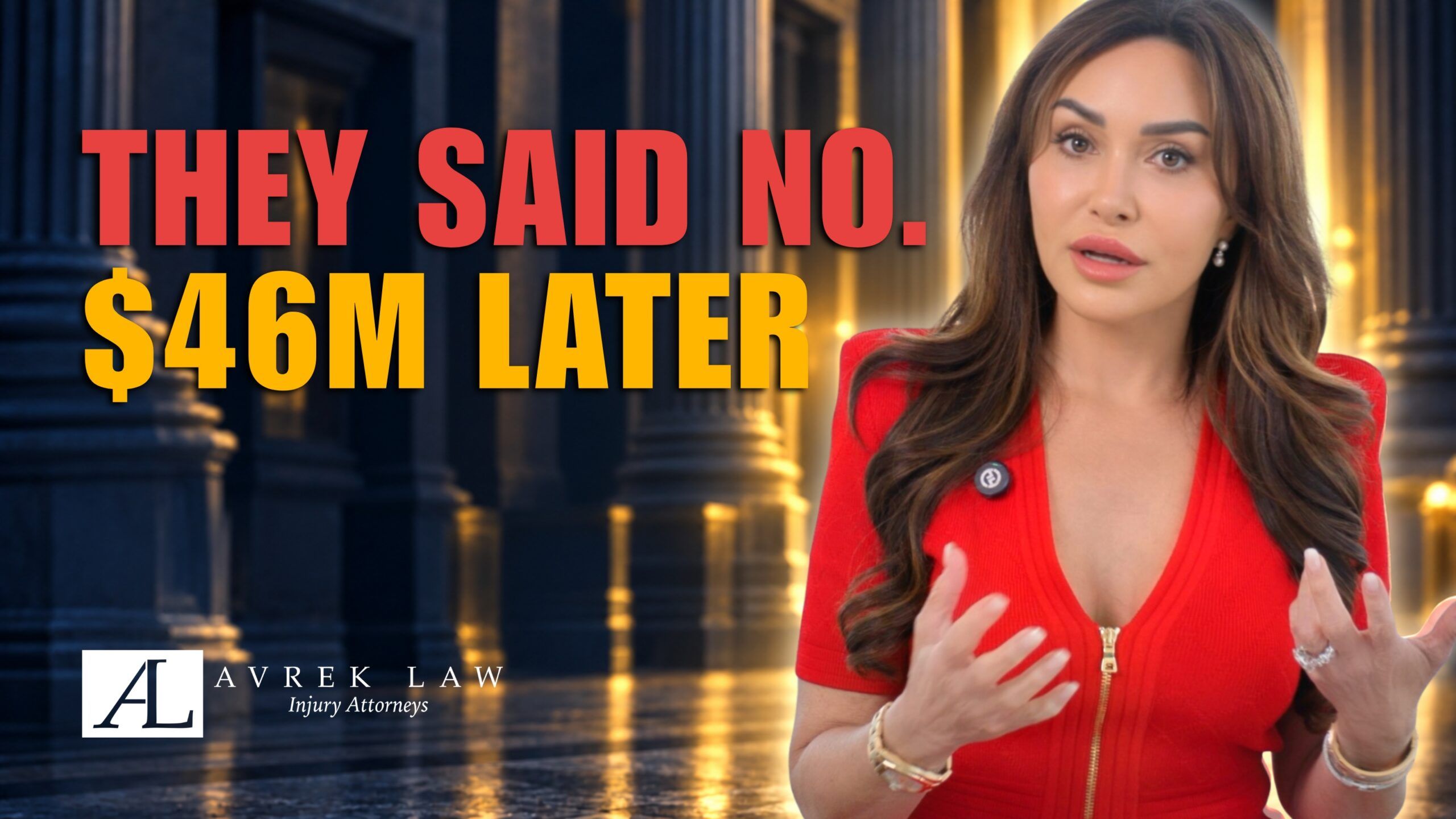
A rejected personal injury case does not necessarily mean there is no legal claim worth investigating. Sometimes an attorney declines representation because the available insurance appears limited, responsibility is unclear, or the circumstances require resources beyond what the firm can provide. For an injured person already facing medical bills and uncertainty, that rejection can feel like the end of the road. Yet an initial assessment may not account for every contributing factor, every potentially responsible party, or evidence that has not yet been uncovered.
For Maryam Parman, Founder of Avrek Law, some of the most memorable cases of her career began with precisely that kind of doubt. In the video above, she shares three experiences involving a seriously injured motorcyclist, a young mother named Roxanna, and a man who suffered catastrophic injuries while escaping a burning rental truck. Each case presented challenges that could have discouraged further action, but closer investigation revealed circumstances that changed how the claims were evaluated.
“Some of the strongest cases began with doubt,” Maryam explains.
These stories continue the conversation from the first two installments of Mary’s video series. In What Insurance Companies Don’t Want You to Know After a Car Accident, she explains how insurers begin evaluating claims immediately. Her second article, How Personal Injury Settlements Work (And Why the First Offer Is Rarely the Best), examines how settlement value develops through evidence, medical documentation, and negotiation. This third installment shows how those principles played out in three real cases that initially appeared much more limited than they ultimately proved to be.
At Avrek Law, the firm reports recovering more than $2 billion for clients nationwide. The following stories are individual examples Maryam discusses from her experience, not predictions of what another case may recover. Their importance lies not only in the reported settlement amounts but also in the decisions, investigations, and personal relationships that shaped the legal work behind them.
Why a Rejected Personal Injury Case May Deserve Another Look
A serious accident does not always arrive with an obvious explanation of who should be held responsible. Police officers may identify the driver who caused a collision, but their investigation may not address every condition that contributed to the crash. An insurance adjuster may identify the available liability policy, but that policy may not be the only potential source of recovery. Even the injured person may assume there is no case because they believe their own actions contributed to what happened.
When a personal injury case is rejected by a lawyer, the reason for that decision matters. Some attorneys may believe there is insufficient evidence to establish negligence, while others may be concerned about insurance coverage, litigation expenses, or the complexity of identifying additional responsible parties. A rejection is not a legal ruling, and another attorney may evaluate the circumstances differently. That does not mean every declined case has hidden value, but it does mean that understanding why the case was turned down can help an injured person decide whether obtaining a second opinion is worthwhile.
Maryam describes meeting clients who initially believe they have little or no chance of pursuing a successful claim. Some have been told that the other driver has limited insurance. Others have spoken with attorneys who declined to represent them. For someone already dealing with serious injuries and financial uncertainty, those experiences can make the prospect of continuing feel overwhelming. The assumption that nothing more can be done may become just as influential as the accident itself.
What interests Maryam is what may be missing from that initial understanding. She describes taking a closer look at the injuries, the circumstances surrounding the accident, and the decisions made by everyone potentially involved. Rather than treating the first explanation as the final answer, she considers whether the evidence supports additional questions about responsibility.
That approach is especially important in cases involving commercial vehicles, dangerous road conditions, or catastrophic injuries. Responsibility may extend beyond the person who appears to have caused the immediate impact. A business responsible for maintaining a vehicle, a company controlling a work zone, or another party whose negligence contributed to the incident may need to be investigated. Identifying that possibility does not automatically establish liability, but it can change the direction of the investigation.
For injured people, the distinction matters because the seriousness of an injury and the amount of available insurance are not necessarily the same thing. A devastating accident may involve an at-fault driver with relatively little coverage, while additional responsible parties or insurance policies may exist. Understanding those possibilities requires examining the circumstances rather than assuming the first available policy defines the entire claim.
When an initial evaluation leaves important questions unanswered, speaking with an experienced personal injury lawyer can help determine whether additional evidence, responsible parties, or legal options deserve further investigation.
The Motorcycle Accident That Began With a $50,000 Insurance Policy
Maryam recalls representing a motorcyclist who suffered serious injuries when a driver made a left turn directly in front of him. At first, the collision appeared to be a relatively straightforward case of a driver failing to yield. The available automobile liability policy was only $50,000, a figure that presented a significant concern given the severity of the motorcyclist’s injuries.
For someone facing extensive medical treatment and potentially lasting physical limitations, that amount could have appeared to define the practical limits of the claim. The driver’s conduct seemed to explain the collision, and the driver’s insurance appeared to establish the available financial recovery. It would have been easy to focus exclusively on those two facts and conclude that the case had little room to develop.
However, the collision occurred near a construction area, and Maryam wanted to understand whether the roadway conditions had contributed to what happened. Rather than limiting the investigation to the driver’s actions, she began examining how the construction zone had been maintained and whether the necessary safety precautions were in place.
As Maryam recalls asking during the investigation:
“Was the road properly locked and properly maintained? Well, no, it wasn’t.”
That question led the legal team to examine the construction company’s potential responsibility. According to Mary’s account, the investigation uncovered problems with the roadway conditions that had not been addressed in the initial assessment. The case ultimately resulted in a recovery exceeding $25 million.
The significance of this case extends beyond the settlement amount. It demonstrates how an accident that initially appears limited by one driver’s insurance policy may involve additional legal considerations. Identifying those possibilities requires examining the complete circumstances of the collision rather than assuming the first explanation is the final one.
How Road Construction Can Change an Accident Investigation
Construction zones create conditions that require drivers, motorcyclists, and pedestrians to adjust to changes in the roadway. Temporary lane configurations, altered traffic patterns, barriers, equipment, and warning signs can all affect how safely people navigate an area. When a collision occurs near active construction, understanding the actions of the drivers involved is important, but it may not be sufficient to explain everything that contributed to the accident.
The Federal Highway Administration’s work zone safety resources provide information about the safety considerations associated with road construction and temporary traffic-control environments. Those considerations may become relevant when investigators examine whether warning signs, barriers, traffic controls, or roadway conditions contributed to a collision.
In a motorcycle accident, the consequences of an unsafe roadway can be particularly severe. Motorcyclists have less physical protection than occupants of passenger vehicles, and unexpected changes in road conditions can leave very little time to respond. Where construction activity may have contributed to a crash, the investigation may need to address the design and operation of the work zone, the responsibilities of the entities involved, and whether the conditions complied with applicable safety requirements.
The existence of construction does not automatically make a construction company responsible for an accident. Liability depends on the facts, the duties owed, whether those duties were breached, and whether the alleged failures contributed to the injuries. In Mary’s case, however, examining the construction area revealed circumstances that the initial focus on the turning driver had not captured.
This is why someone injured in a serious motorcycle collision may benefit from speaking with an experienced motorcycle accident lawyer. Beyond examining the driver’s actions, an attorney can investigate whether roadway conditions, construction companies, or other parties contributed to the crash. A thorough investigation can help determine which legal claims and sources of recovery may be available.
Mary’s account also illustrates an important lesson from the earlier article about how personal injury settlements work: settlement discussions are influenced by the evidence supporting liability and the parties legally responsible for the harm. When that understanding changes, the scope of the claim may change as well.
Roxanna’s Story: The Case That Changed Maryam Personally
Of the three cases Maryam discusses, Roxanna’s story carries particular emotional significance. Roxanna was riding in the back seat of a vehicle driven by someone who was under the influence. The driver struck a truck parked along the roadside, and afterward, both the driver and the front-seat passenger fled. Roxanna remained in the back seat, bleeding and seriously injured.
“One case that really personally changed me as an attorney was Roxanna’s case,” Maryam shares in the video.
The police report identified the impaired driver as responsible for the collision, but Maryam’s understanding of the case deepened when she met Roxanna’s family. She recalls speaking with Roxanna’s sister and brother and learning about her two children. Those conversations brought the consequences of the accident into sharper focus. Roxanna was not simply an injured passenger whose medical expenses needed to be evaluated. She was a mother whose injuries affected the people who depended on her.
Maryam describes making the case personal because she wanted to understand what could be done to help Roxanna recover and provide for her family. That commitment shaped how she approached the claim, including her willingness to examine the circumstances more closely and consider the available legal options.
According to Maryam, the case ultimately resulted in a settlement exceeding $7 million. What makes the story especially meaningful is not simply the financial recovery, but the relationship between attorney and client. Understanding Roxanna’s responsibilities, her injuries, and the effect on her children helped Maryam appreciate what was at stake beyond the legal documents.
Why the Human Impact of an Injury Matters
A police report can help establish how an accident happened, but it cannot fully explain what an injury means to the person who experienced it. It does not necessarily describe the responsibilities someone has at home, the work they can no longer perform, or the ways their family may need to adapt during recovery.
For a parent, serious injuries may affect the ability to care for children, participate in everyday routines, or maintain the income that supports a household. Medical records can document diagnoses and treatment, while employment records can help establish financial losses. Understanding how an injury affects family responsibilities and daily life may require more detailed conversations and supporting evidence.
Those consequences matter when evaluating damages in a personal injury case. Depending on the applicable law and the facts, compensation may account for medical expenses, lost income, future care, pain and suffering, and other legally recoverable losses. The purpose of documenting those effects is not to exaggerate the injury, but to ensure that the claim accurately reflects what the person has experienced.
Maryam’s account of Roxanna’s case demonstrates why a personal approach can be important to legal representation. An attorney may understand the technical requirements of a claim while still needing to learn how the accident has changed a particular client’s life. Those details can influence which evidence is gathered, which experts are consulted, and how the consequences of the injury are explained during negotiations.
For Roxanna, the case was not only about identifying the driver who caused the crash. It was also about understanding the injuries she suffered and the needs of the family depending on her. Maryam’s description of meeting Roxanna’s relatives makes clear why the case remained memorable long after the settlement was reached.
The Rental Truck Fire That Other Attorneys Had Turned Down
The third case Maryam describes involved a man who rented a truck to move his belongings. While driving on the freeway, the vehicle caught fire, forcing him to make an immediate decision to protect his life. He jumped from the burning truck and suffered catastrophic injuries.
When the circumstances were initially reviewed, the man’s decision to jump became the focus. Maryam recalls that other attorneys had declined the case because they believed he was responsible for his own injuries.
“He jumped out of the truck. He’s responsible.”
That was the reasoning Maryam describes encountering. However, she believed the circumstances required a closer examination. Rather than focusing exclusively on the man’s reaction to the fire, she wanted to understand why the truck had caught fire and whether the dangerous condition could have been prevented.
The investigation involved examining the vehicle’s condition and retaining experts to evaluate the circumstances surrounding the fire. According to Maryam, that work revealed problems involving the truck’s maintenance and condition. What initially appeared to be a case centered on the driver’s actions became an investigation into whether the rental vehicle had been properly maintained.
Maryam reports that the case ultimately resulted in a settlement exceeding $40 million, despite having been rejected by other attorneys.
The outcome illustrates why an injured person’s response to an emergency should be considered within the circumstances that created the danger. A decision made in seconds to escape a burning vehicle cannot necessarily be evaluated without examining the events that made that decision necessary. In this case, the investigation into the vehicle itself became central to understanding the claim.
Why a Driver’s Reaction Does Not Tell the Whole Story
When a person reacts to an emergency, the decisions they make may appear very different when reviewed afterward. Someone escaping a burning vehicle has little time to weigh every possible consequence. The immediate concern is survival, and the available choices may all involve serious risks. An investigation that focuses only on the resulting injury can overlook the circumstances that made those choices necessary.
In cases involving vehicle fires or mechanical failures, determining responsibility may require examining maintenance histories, inspection records, repair practices, and the condition of the vehicle before the incident. Expert analysis may help establish whether a mechanical defect or maintenance failure contributed to the emergency. The relevant legal questions depend on the evidence, including whether a party owed a duty of care, whether that duty was breached, and whether the failure caused or contributed to the injuries.
These issues are especially important when commercial or rental vehicles are involved because responsibility may extend beyond the person operating the vehicle. Depending on the facts and applicable law, maintenance providers, vehicle owners, manufacturers, or other businesses may need to be considered. Identifying those possibilities requires more than simply reviewing the driver’s account of what happened.
Maryam’s investigation of the rental truck fire illustrates why expert involvement can be important in catastrophic injury cases. Technical evidence may reveal problems that would not be apparent from a police report or the injured person’s initial description. When those findings change the understanding of how an accident occurred, they can also change which parties may be legally responsible.
The outcome in this case was unusual, and it should not be treated as representative of what another person might recover. What makes the story significant is that the client had reportedly been turned away before the investigation uncovered additional evidence. The initial assessment was not necessarily the complete assessment.
How Overlooked Liability Can Change a Personal Injury Case
Although Mary’s three cases involved very different accidents, they share an important investigative theme. In the motorcycle collision, attention initially centered on the driver who made the left turn and the limited insurance coverage available. In Roxanna’s case, the police report identified an impaired driver, but Maryam wanted to understand the full circumstances and consequences of the injuries. In the rental truck fire, attention focused on the driver’s decision to jump, while the condition of the vehicle itself required further investigation.
Each case demonstrates why identifying the immediate cause of an injury is not always the same as identifying every potentially responsible party. A driver may cause a collision, but unsafe roadway conditions may also have contributed. An injured passenger may have a claim involving circumstances that require a broader investigation than the police report provides. A person escaping a dangerous vehicle may have suffered injuries because of conditions that existed before the emergency began.
The California Courts Self-Help Center provides guidance on personal injury cases, including the importance of identifying potentially responsible parties and supporting claims with evidence. Those principles help explain why an investigation may need to extend beyond the most obvious person involved. The goal is not to assign responsibility to as many parties as possible. It is to determine, through evidence, which parties may have contributed to the injury and whether the law provides a basis for holding them accountable.
For someone dealing with a serious accident, this distinction can affect the entire direction of the claim. A case that appears limited by one driver’s insurance may involve additional coverage or responsible parties. A collision that initially seems straightforward may require expert analysis to explain what happened. A decision made during an emergency may need to be understood in the context of the danger that preceded it.
These personal injury case stories show why Maryam places so much emphasis on understanding the full circumstances before reaching conclusions about a claim.
Why Maryam Parman Believes Personal Injury Cases Require a Personal Approach
There is a difference between understanding the legal facts of an accident and understanding what the accident has done to someone’s life. Medical records can establish diagnoses, treatment plans, and physical limitations. Financial records can document lost income and expenses. Accident reports can help reconstruct what happened. Yet those documents may not fully explain how an injured person is managing daily responsibilities or what recovery means for the people who depend on them.
Maryam’s description of Roxanna’s case makes that distinction especially clear. Meeting Roxanna’s family changed the way she personally connected with the case. Learning about her children and the people who depended on her gave the legal work a human dimension that could not be captured by a settlement figure alone.
In the video, Maryam emphasizes the importance of looking closely at the whole story. That approach involves listening to the injured person, understanding their circumstances, and considering whether the available evidence accurately reflects the consequences of the accident. It also means being willing to investigate questions that may initially seem secondary but could prove important to establishing responsibility.
The value of that approach is not that every case will produce an extraordinary recovery. Most personal injury claims will not resemble the three cases Maryam discusses, and no attorney can guarantee a particular outcome. The value lies in making sure important questions are considered before decisions are made about the case.
For clients facing serious injuries, working with an experienced personal injury attorney can provide an opportunity to have those questions evaluated. Legal representation may involve preserving evidence, identifying responsible parties, consulting appropriate experts, and assessing the full extent of legally recoverable damages. Just as importantly, it should involve understanding the individual whose life has been affected.
What to Do When Another Attorney Turns Down Your Injury Case
Being turned down by an attorney can leave someone unsure whether continuing is worthwhile. Before assuming the claim has no merit, it can help to understand why the attorney declined representation. Some firms may have concerns about proving negligence, while others may be unable to take on the costs or complexity of a particular investigation. The reason matters because it can help identify whether another evaluation would provide useful information.
If possible, retain copies of the accident report, photographs, medical records, insurance correspondence, and any other documentation already gathered. These materials can help another attorney understand the circumstances without having to reconstruct every detail from memory. If a previous firm obtained expert reports or other evidence, ask whether those materials can be made available and whether any conditions apply to their release.
Time is also important. A decision to seek another opinion should not be delayed indefinitely because legal filing deadlines continue to apply even when an attorney declines a case. In California, many personal injury lawsuits are generally subject to a two-year limitations period, although exceptions and substantially shorter government-claim deadlines may apply. The California Courts’ guidance on personal injury filing deadlines provides useful background, but the deadline for a particular claim should be evaluated individually.
When speaking with another attorney, explain what you were told about the case and identify any unresolved questions. If the first assessment focused on limited insurance coverage, it may be useful to ask whether other potentially responsible parties have been considered. If liability was disputed, ask what evidence would be necessary to evaluate the disagreement. The purpose of seeking another opinion is not to obtain a guaranteed positive answer, but to understand whether the existing assessment adequately addressed the circumstances.
For someone whose injuries resulted from a collision, speaking with an experienced car accident lawyer can help clarify whether further investigation is appropriate. An attorney can review the available evidence, examine potential liability, and explain whether additional responsible parties or insurance coverage should be considered.
Frequently Asked Questions About Rejected Personal Injury Cases
Can I still have a personal injury case if another attorney rejected it?
An attorney’s decision not to accept a case does not necessarily mean that no valid claim exists. Law firms consider many factors when deciding whether to provide representation, including the available evidence, the complexity of the investigation, potential damages, litigation expenses, and whether the matter fits their practice. Another attorney may reach a different assessment after reviewing additional information or identifying questions that were not addressed during the first consultation.
Maryam’s rental truck case illustrates this possibility. According to her account, other attorneys had declined the case because they focused on the driver’s decision to jump from the burning vehicle. Further investigation revealed problems involving the truck’s condition and maintenance. Although not every rejected claim will have a similar outcome, obtaining another legal evaluation may help clarify whether additional evidence or legal considerations deserve attention.
How soon should I seek a second opinion after a lawyer declines my case?
It is generally wise to seek another evaluation promptly, particularly when the accident occurred some time ago or when important evidence may be difficult to preserve. Legal deadlines do not automatically stop because an attorney declines representation, and some claims require notice or other action well before a lawsuit can be filed.
The appropriate deadline depends on the jurisdiction, the type of claim, and the parties involved. For example, claims against government entities may involve different procedures from claims against private individuals or businesses. Speaking with another attorney promptly can help determine which deadlines may apply and whether any immediate action is necessary.
What documents should I bring to another personal injury attorney?
The most useful documents are those that help explain how the accident happened, what injuries resulted, and what steps have already been taken. Accident reports, photographs, witness information, medical records, insurance correspondence, and employment documentation can provide a starting point. If another attorney previously reviewed the case, any written explanation of that assessment may also be helpful.
You do not need to have every document before requesting a consultation. However, providing an accurate account of the accident and explaining what information remains unavailable can help the attorney determine whether further investigation is appropriate. Avoid altering original photographs, recordings, or other evidence, and preserve copies of relevant communications whenever possible.
What if the at-fault driver has very little insurance?
Limited insurance coverage can create serious concerns when an accident causes substantial injuries. The available liability policy may not be sufficient to address medical expenses, lost income, future treatment, and other damages. However, the amount of coverage held by the most obvious at-fault driver does not always establish the total amount potentially available from every legally responsible party.
Depending on the circumstances, an investigation may identify additional parties whose conduct contributed to the accident or other insurance coverage that may apply. This does not happen in every case, and the existence of serious injuries alone does not establish additional liability. A careful evaluation can help determine whether the claim has been limited appropriately or whether further questions remain unanswered.
Can a construction company be responsible for a motorcycle accident?
A construction company or another entity responsible for roadway work may face liability if evidence establishes that its negligence contributed to an accident. Construction areas can involve temporary traffic patterns, altered lanes, barriers, equipment, and warning signs. If those conditions are improperly maintained or create an unreasonable danger, they may become relevant to determining how a collision occurred.
Responsibility is not automatic simply because an accident happened near construction. Investigators must examine the conditions, the duties of the parties involved, and whether an alleged failure contributed to the injuries. In some circumstances, responsibility may involve contractors, subcontractors, or government entities, making it particularly important to identify the applicable legal requirements and deadlines.
Can a rental truck company be responsible if its vehicle catches fire?
Potentially. A rental vehicle fire may raise questions about the vehicle’s condition, inspection history, maintenance practices, or possible defects. Determining whether a rental company or another party is legally responsible requires investigating what caused the fire and whether any negligent conduct contributed to the incident.
Relevant evidence may include maintenance records, inspection histories, repair documentation, and expert findings about the origin of the fire. Depending on the circumstances, responsibility could involve a rental company, maintenance provider, manufacturer, or another party. The existence of a fire does not automatically establish negligence, but it may justify a technical investigation when serious injuries occur.
Does jumping from a dangerous vehicle automatically make the injured person responsible?
No. A person’s actions during an emergency must be evaluated in context. If someone faces an immediate threat, such as a vehicle fire, their response may need to be considered alongside the circumstances that created the danger. The fact that a person jumped from a vehicle does not, by itself, establish that they were legally responsible for the resulting injuries.
Depending on the jurisdiction and evidence, questions about reasonable conduct, causation, and comparative fault may arise. An investigation may need to determine whether the emergency was caused by a vehicle defect, inadequate maintenance, or another party’s negligence. The legal analysis should consider the conditions the person faced at the time rather than relying exclusively on hindsight.
Why do personal injury attorneys sometimes hire experts?
Complex injury claims may involve technical or medical questions that cannot be answered through ordinary witness testimony alone. Accident reconstruction specialists, engineers, vehicle experts, medical professionals, and other qualified specialists may help explain how an incident occurred or how an injury affects a person’s life.
In a vehicle fire case, technical analysis may help identify the origin of the fire and determine whether maintenance or mechanical problems contributed. In a serious motorcycle accident, an expert may examine roadway conditions, traffic controls, or collision dynamics. Expert involvement does not guarantee a particular result, but it can provide evidence needed to evaluate disputed issues more thoroughly.
Can I pursue a personal injury claim if I am unsure who caused the accident?
Uncertainty about responsibility does not necessarily prevent someone from seeking legal guidance. Some accidents involve conflicting witness accounts, incomplete reports, or circumstances that require additional investigation. In other cases, the person who appears responsible at first may not be the only party whose conduct contributed to the injury.
An attorney can evaluate the available information and consider whether further investigation is appropriate. The goal is to determine whether the evidence supports a legally recognized claim, not to assume responsibility without proof. Identifying the cause of an accident may require examining events that occurred before the immediate collision or injury, particularly when vehicles, businesses, or unsafe conditions are involved.
Why These Cases Stayed With Maryam Parman
For Maryam Parman, the significance of these cases goes beyond the amounts recovered. Each represents a moment when the available information could have led to an early conclusion, but further investigation revealed questions that deserved attention. The work required more than reviewing an accident report or identifying an insurance policy. It required understanding the circumstances surrounding the injury and the person whose future had been affected.
Roxanna’s case, in particular, illustrates why that personal understanding matters. Maryam’s conversations with her family helped her appreciate the responsibilities Roxanna carried and the consequences of her injuries. The case became memorable not only because of the legal challenges involved, but because Maryam understood what the outcome could mean for a mother and her children.
Not every investigation uncovers additional liability, and not every case leads to an extraordinary recovery. Some claims remain difficult because the evidence does not support negligence or because legally available compensation is limited. The importance of a careful evaluation is that it allows those conclusions to be reached with a fuller understanding of the circumstances rather than relying on assumptions alone.
For Maryam, these experiences reinforce why she approaches personal injury representation as both legal work and a personal responsibility. Behind every accident report is someone whose life may have changed permanently. Taking the time to listen, examine the evidence, and ask the questions that have not yet been answered is part of understanding what that person has experienced.
Connect With Avrek Law Today
If you have been seriously injured and another attorney has declined your case, that does not necessarily mean you have no legal options. A closer examination of the accident, available evidence, and potentially responsible parties may reveal circumstances that deserve further investigation.
At Avrek Law, Maryam Parman and our experienced legal team help injured individuals understand their rights and explore their options for pursuing compensation. With more than $2 billion recovered for clients nationwide, our firm understands why every case deserves careful attention before conclusions are reached.
Contact Avrek Law today for a free, no-obligation consultation.
📩 Online Form: Submit a request through our online form.
📞 Call Now: Call 866-598-5548 to speak with our team.
💬 Live Chat: Start a live chat for immediate assistance.
There are no upfront attorney fees, and you don’t pay unless we win.