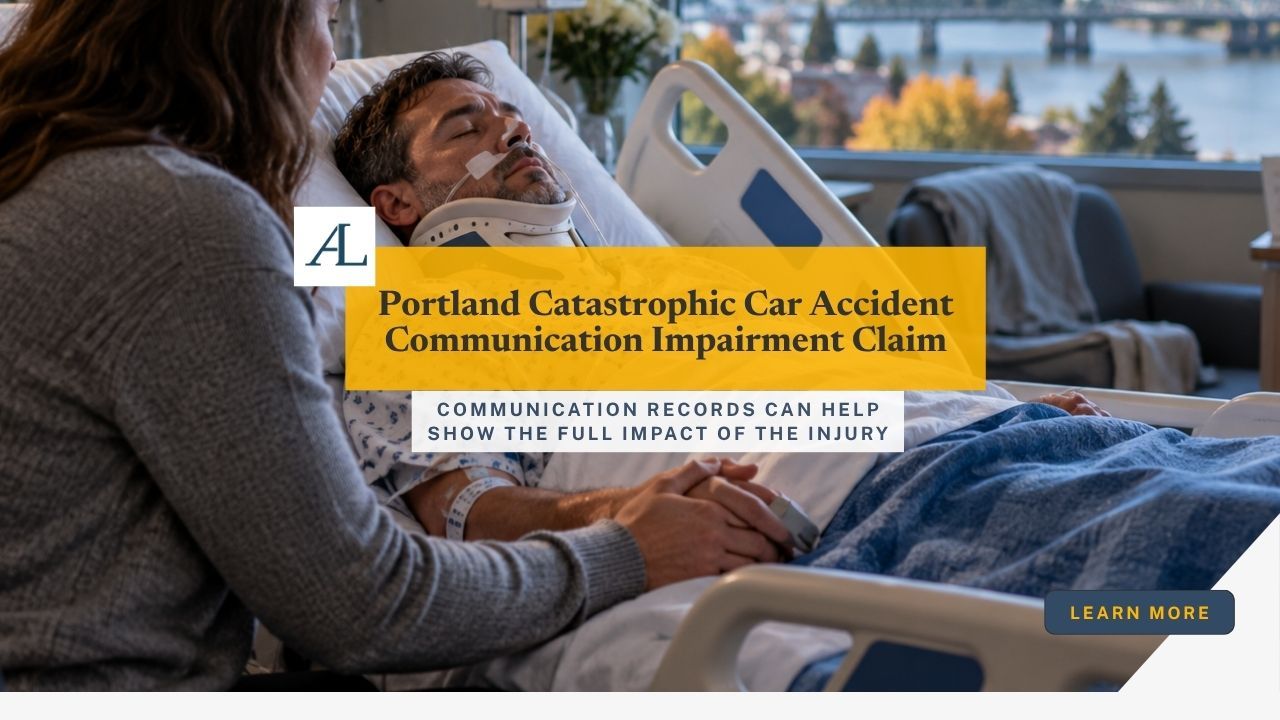
A Portland catastrophic car accident communication impairment claim can become complicated quickly because the injured person may not be able to describe pain, answer questions clearly, remember details, or communicate daily needs on their own after the crash. That does not mean the claim is weak. It usually means the injury is serious enough to affect speech, cognition, hearing, movement, or overall independence. In those cases, the evidence has to come from medical records, therapy notes, family observations, and the other information the injured person can no longer provide alone.
When a severe crash leaves you or someone you love facing this kind of recovery, choosing the right legal representation matters. An experienced Portland car accident lawyer at Avrek Law Firm can help preserve records, document the limitations, and pursue the compensation needed for treatment, recovery, and long-term care.
Call 866-598-5548, start a live chat, or request a free case review today. There are no upfront fees, and you do not pay unless we win.
How Communication Limitations Affect Claim Documentation
A Portland catastrophic car accident communication impairment claim often requires more than the injured person’s own description of what happened. If the crash caused difficulty speaking, confusion, memory loss, hearing problems, or motor limitations that make communication hard, the claim has to be built around the records that show those limitations clearly. That may include hospital notes, therapy records, caregiver logs, and observations from people who assist with daily care.
This matters because insurers often expect a claimant to provide a clean, detailed account of the crash and recovery. When the person cannot do that independently, the insurer may question the claim unless the communication impairment is documented carefully. The focus should be on what the injured person can do now, what they could do before the crash, and what the providers observed during treatment.
Speech, Cognitive, Hearing, or Motor Limitations Identified by Providers
In a Portland catastrophic car accident communication impairment claim, the first major issue is whether providers identified a speech, cognitive, hearing, or motor limitation after the crash. A person may have trouble forming words, following questions, understanding instructions, or expressing pain clearly. A provider may document confusion, aphasia, slowed speech, hearing loss, memory issues, or difficulty using the hands or arms in ways that make communication harder.
These findings matter because they establish the communication problem as a medical issue, not just a family concern. If the records show the injured person could not respond normally, that can help explain why later claim communication may have to come through caregivers or legal representatives.
Difficulty Describing Pain, Symptoms, and Daily Needs
A Portland catastrophic car accident communication impairment claim often includes difficulty describing pain, symptoms, and daily needs. The injured person may not be able to explain where it hurts, how intense the pain is, whether the pain changed, or what makes it worse. They may also struggle to explain how they get dressed, eat, move around the house, or attend appointments.
That is important because insurers sometimes assume a person who cannot clearly describe symptoms is exaggerating. In reality, the person may simply have severe injuries that make communication difficult. The claim should preserve examples of how the limitation affects everyday life, not just the accident itself.
Why Family Observations Should Be Kept Separate From Medical Conclusions
Family observations can be very helpful in a Portland catastrophic car accident communication impairment claim, but they should be kept separate from medical conclusions. A spouse, parent, child, or caregiver may notice the injured person repeating questions, forgetting names, missing appointments, or needing help to make decisions. Those observations can show how communication changed after the crash.
At the same time, family members should not be treated as medical experts. Their role is to describe what they see and what assistance they provide, while the providers explain the diagnosis and recovery plan. Keeping those roles separate makes the claim clearer and more credible.
Medical and Therapy Records That May Show Communication Needs
A Portland catastrophic car accident communication impairment claim should be built around medical and therapy records because those records show the injury’s effect on communication over time. Hospital records may show the initial impairment, rehabilitation records may show how long the limitation lasted, and speech therapy or neurology notes may show whether the person improved, plateaued, or needed ongoing assistance.
The outline for this blog focuses on hospital, neurology, rehabilitation, and speech-therapy notes, assistive devices, and changes in communication ability across the recovery timeline.
Hospital, Neurology, Rehabilitation, and Speech-Therapy Notes
Hospital, neurology, rehabilitation, and speech-therapy notes are central in a Portland catastrophic car accident communication impairment claim because they show the person’s communication ability from the beginning of treatment through recovery. A hospital chart may note confusion, trouble speaking, or difficulty following commands. Neurology notes may address brain injury, cognitive deficits, or neurological symptoms. Rehabilitation notes may document daily function. Speech therapy notes may show whether the person can express thoughts, understand language, or use assistive communication methods.
These records help show the communication impairment is not temporary frustration. It is part of the injury and the recovery process.
Assistive Communication Devices and Technology Recommendations
Assistive communication devices can also matter in a Portland catastrophic car accident communication impairment claim. A provider may recommend a communication board, tablet-based communication tool, speech-generating device, hearing support, or other adaptive technology. Those recommendations show the impairment is significant enough to require practical support.
If the injured person needs technology to communicate basic needs, that detail should be preserved. It may also affect future care and settlement value.
Changes in Communication Ability Across the Recovery Timeline
The communication ability timeline is important in a Portland catastrophic car accident communication impairment claim. The injured person may start out unable to communicate independently, then slowly improve with therapy, or remain limited for a long time. The claim should preserve records showing each stage of that recovery.
If the ability to speak, understand, or respond changed over time, that progression can help explain why the person needed help with decisions, appointments, medication, or daily care. It also matters for future treatment planning.
Family and Caregiver Evidence of Daily Impact
A Portland catastrophic car accident communication impairment claim often depends on family and caregiver evidence because those people may be the ones who handle appointments, medications, transportation, meals, and communication with doctors or insurers. Their records can help show how much support the injured person needs and whether the communication limitation is affecting daily life in a measurable way.
This evidence can make the claim much stronger when paired with the medical records.
Help With Appointments, Decisions, Medications, and Personal Care
In a Portland catastrophic car accident communication impairment claim, help with appointments, decisions, medications, and personal care may be one of the clearest signs of impairment. If a caregiver has to schedule visits, attend appointments, remind the injured person about medication, or help with bathing, dressing, or eating, that says a lot about the injury’s severity.
Those tasks should be documented. A calendar, care log, or message thread may show how often help was needed and how long the support lasted.
Communication Logs, Care Schedules, and Transportation Records
Communication logs and care schedules are especially useful in a Portland catastrophic car accident communication impairment claim because they show the practical effect of the injury over time. The logs may show when the injured person could not answer phone calls, when family members had to relay information, or when caregivers had to speak with providers on the person’s behalf.
Transportation records also matter if the injured person cannot safely travel alone. A caregiver may need to drive them to therapy, medical appointments, or follow-up evaluations. Those records help show the claim is about more than one visit; it is about ongoing dependence.
Prior Work, Messages, and Daily Routines Showing the Person’s Baseline
A Portland catastrophic car accident communication impairment claim becomes much stronger when there is proof of the person’s baseline before the crash. Prior work records, messages, emails, and daily routine evidence can show how the person communicated before the injury. That may include work texts, email history, appointment scheduling, or normal family communication.
Those records help establish what changed after the crash. If the person used to manage calls, work tasks, or home logistics independently and can no longer do that, the impairment is easier to prove.
Insurance Communication and Settlement Concerns
A Portland catastrophic car accident communication impairment claim can become difficult because insurance companies often want direct communication from the injured person. If the person cannot communicate independently, the insurer may ask family members to answer questions, request broad authorizations, or push for a quick settlement before the long-term condition is understood. Those situations need to be handled carefully.
The goal is to prevent insurers from using the communication limitation against the claim.
Requests for Statements From a Person With Communication Limitations
Insurers may ask for a statement in a Portland catastrophic car accident communication impairment claim even when the injured person is not able to answer clearly. That can create problems if the person is confused, fatigued, medicated, or unable to speak easily. A rushed statement may be incomplete or inaccurate simply because the communication limitation is real.
The claim should not be judged by whether the person can give a perfect statement right away. It should be judged by the medical evidence and the actual recovery needs.
Broad Authorizations or Forms Presented to Family Members
Broad authorizations can be risky in a Portland catastrophic car accident communication impairment claim because family members may be asked to sign forms before they fully understand the records being requested. Those forms may allow insurers to collect more information than necessary or to pull records out of context.
Family members should be careful about signing documents without review. The claim should preserve only the information needed to prove the injury, not open the door to unnecessary disputes.
Settlement Discussions Before Long-Term Communication Needs Are Clear
Settlement should not happen too early in a Portland catastrophic car accident communication impairment claim because the long-term communication needs may still be changing. The injured person may need ongoing speech therapy, cognitive rehabilitation, assistive devices, or caregiver support that is not yet fully understood. If the insurer wants to settle before that picture is clear, the offer may be too low.
A serious catastrophic claim should reflect future care, not only the first round of medical bills.
Deadlines in a Portland Catastrophic Injury Claim
A Portland catastrophic car accident communication impairment claim should be reviewed quickly because evidence and deadlines are not the same thing. The legal deadline may still be months or years away, but the records that matter can disappear far earlier. Medical staff may rotate, therapy notes may be scattered across providers, and family members may stop keeping informal logs if no one tells them those details matter.
Oregon generally gives two years for many personal injury claims under ORS 12.110, but waiting is still risky because a catastrophic claim may require a lot of documentation. If a public body may be involved, Oregon’s tort claim notice rules may require action sooner under ORS 30.275.
Frequently Asked Questions About a Portland Catastrophic Injury Claim
What if the injured person cannot talk to the insurer directly?
That is common in a Portland catastrophic car accident communication impairment claim. Family members, caregivers, and legal counsel may need to help coordinate communication while the medical records show the extent of the impairment.
Does communication impairment have to be permanent?
No. The impairment may improve, stay limited for a long time, or become permanent. The key is documenting the limitation across the recovery timeline.
What evidence helps most in these cases?
Hospital records, neurology notes, rehabilitation records, speech-therapy notes, caregiver logs, medication records, appointment schedules, and prior communication examples are often the most useful.
Can family observations help prove the claim?
Yes. Family observations are helpful when they describe what changed after the crash, but they should be kept separate from medical conclusions.
How long do I have to file a claim in Oregon?
Many Oregon personal injury claims are subject to the two-year period in ORS 12.110, but public-entity claims may require notice much sooner under ORS 30.275.
Do I need a lawyer for a catastrophic communication-impairment claim?
Yes, especially when the injured person cannot communicate independently, the insurer is asking for statements, or the future care needs are still unfolding. A Portland personal injury lawyer can help organize the evidence and protect the claim.
Call or Contact Avrek Law Firm 24/7 for a Free Consultation and Pay Nothing Unless We Win
A Portland catastrophic car accident communication impairment claim can become difficult when the injured person cannot communicate clearly, the insurer questions the limitations, or the long-term care needs are still being evaluated. These cases often depend on hospital records, therapy notes, caregiver logs, communication examples, and a clear picture of how the injury changed daily life.
Avrek Law Firm helps injured people and families after serious crashes throughout Portland. Our team can move quickly to preserve evidence, organize the medical and family records, track insurance communications, and pursue compensation for medical bills, lost income, future care, and long-term recovery needs.
If you or someone you love was injured in a Portland crash and cannot communicate independently, Avrek Law Firm is ready to help.
Call 866-598-5548, start a chat, or complete our online form today for a free, no-obligation consultation. There are no upfront fees, and you do not pay unless we win.
Serving the Portland Community
Avrek Law Firm represents injured people throughout Portland and surrounding communities. Local context matters in a Portland catastrophic car accident communication impairment claim because the crash location often shapes the evidence, the hospital response, and the caregiving needs.
A severe crash in Downtown Portland, the Pearl District, Old Town/Chinatown, South Waterfront, Lloyd District, Northwest Portland, or along major commuter routes may involve trauma response, specialist care, rehabilitation placement, and family coordination that should be documented early. If the person was transferred between facilities, the communication record should show who handled the decisions and how the recovery changed over time.
A Portland car accident lawyer can help make sure that evidence is preserved before it is lost, and a Portland personal injury lawyer can help document the full impact of the injuries on work, mobility, and daily life.
- 📩 Submit a request through our online form
- 📞 Call 866-598-5548 now to speak with our team
- 💬 Start a live chat for immediate assistance
There are no upfront fees, and you don’t pay unless we win.