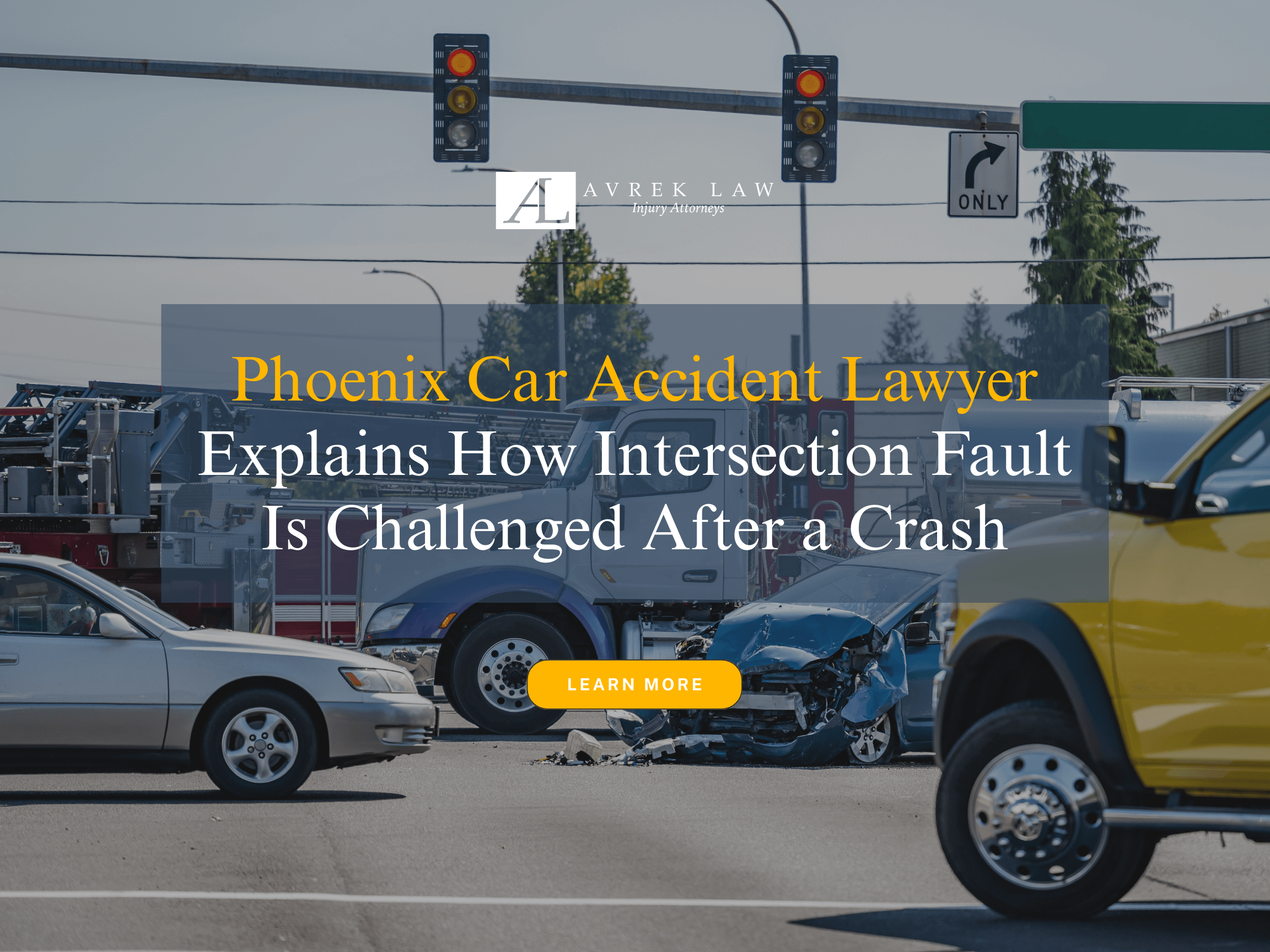
Intersection crashes in Phoenix often look straightforward at first. One vehicle turns. The other continues straight. Someone ends up in the emergency room.
But the legal version of what happened is rarely that simple.
A Phoenix car accident lawyer quickly learns that intersection cases tend to turn into credibility contests. Both drivers believe they had the right of way. Both may insist the light was green. In busy areas such as Camelback Road, Bell Road, and intersections feeding the 101 and I 17 corridors, signal timing, speed, and visibility all become part of the story.
At Avrek Law, we represent injured drivers across Phoenix and Maricopa County. With more than two billion dollars recovered nationwide, we know that the outcome of an intersection case often depends on how early the evidence is preserved and how clearly fault is framed.
Call 866-598-5548 today for a free case review. There are no upfront fees and you only pay if we win.
Why Intersection Accidents Become Fault Disputes
Unlike rear end collisions, intersection crashes do not always present a clear liability picture. The question is not simply who hit whom. It becomes a question of timing.
Was the left turn protected or permissive?
Did the through driver enter on a late yellow?
Was speed a contributing factor?
Did glare affect visibility?
Phoenix drivers are familiar with harsh sunlight, especially during certain times of day. Insurers sometimes use sun glare as part of a defense narrative. Yet glare does not relieve a driver of the duty to operate cautiously.
These details matter because Arizona applies a comparative fault system. Even if one driver is primarily responsible, the other driver’s conduct will be examined for any potential contribution to the collision.
For general civil procedure guidance in Arizona, see Courts Civil Overview.
How Signal Timing Changes Everything
Signal timing is often overlooked by accident victims. A few seconds can determine fault.
In left turn crashes, the central question is whether the turning driver misjudged oncoming traffic or whether the oncoming driver accelerated into the intersection after the light changed.
Traffic engineers design signal phases with specific clearance intervals. Those intervals are measurable. In serious cases, timing records can be requested to evaluate whether a driver entered lawfully.
A Phoenix car accident lawyer may also look at intersection camera footage, private business surveillance, and dash camera recordings. The physical angle of impact and braking patterns can support or contradict what the drivers claim.
Why Insurance Companies Push Shared Fault
Shared fault reduces exposure. It is that simple.
If damages are valued at 200,000 dollars and a driver is assigned twenty percent fault, the recovery drops significantly. That percentage becomes a powerful negotiation tool.
Insurers may argue that a through driver was speeding or that a turning driver was already committed to the intersection. These arguments are often presented early in the claim, before medical stabilization is complete.
Once internal fault percentages are assigned, they influence reserve calculations and settlement posture.
Injury Severity in T Bone Collisions
Side impact crashes often produce injuries that are not immediately obvious. Concussions, rib fractures, internal organ trauma, and shoulder injuries are common in intersection collisions.
The side of a vehicle offers less structural protection than the front. Even moderate speed crashes can create long term impairment.
For that reason, settlement discussions should not begin before the full medical picture is understood.
Frequently Asked Questions About Phoenix Intersection Accidents
Is the left turning driver always responsible for the crash
Not automatically. While Arizona law requires left turning drivers to yield to oncoming traffic, the facts matter. If the oncoming driver entered on a red light or accelerated aggressively into the intersection, liability can shift. Investigators review signal timing, vehicle speed, and point of impact before assigning responsibility.
What if both drivers insist they had a green light
That situation is more common than people expect. Independent evidence becomes critical. Traffic cameras, nearby business surveillance, and even event data recorders from the vehicles may help clarify timing. Physical damage patterns can also indicate which vehicle entered first.
Does sun glare excuse a driver from fault
No. Drivers are required to adjust their behavior for road conditions, including bright sunlight. If glare impairs visibility, the expectation is to slow down and proceed cautiously. Glare does not eliminate the duty to yield.
Can I recover compensation if I was partially at fault
Yes. Arizona follows a pure comparative fault system. Your compensation may be reduced in proportion to your assigned fault, but it is not automatically barred unless you are entirely responsible.
How long do I have to file a claim in Arizona
Most personal injury claims in Arizona must be filed within two years of the accident date. Claims involving government entities can involve shorter notice requirements, so early evaluation is important.
Before the Insurance Company Defines the Story
Intersection cases in Phoenix are often decided by narrative framing as much as physical damage. If fault is framed early in a way that disadvantages you, reversing that position becomes harder as negotiations progress.
If you were injured in an intersection crash, speaking with a Phoenix car accident lawyer before accepting a settlement can help ensure the facts are evaluated clearly and fairly.
Call 866-598-5548 today for a free consultation.