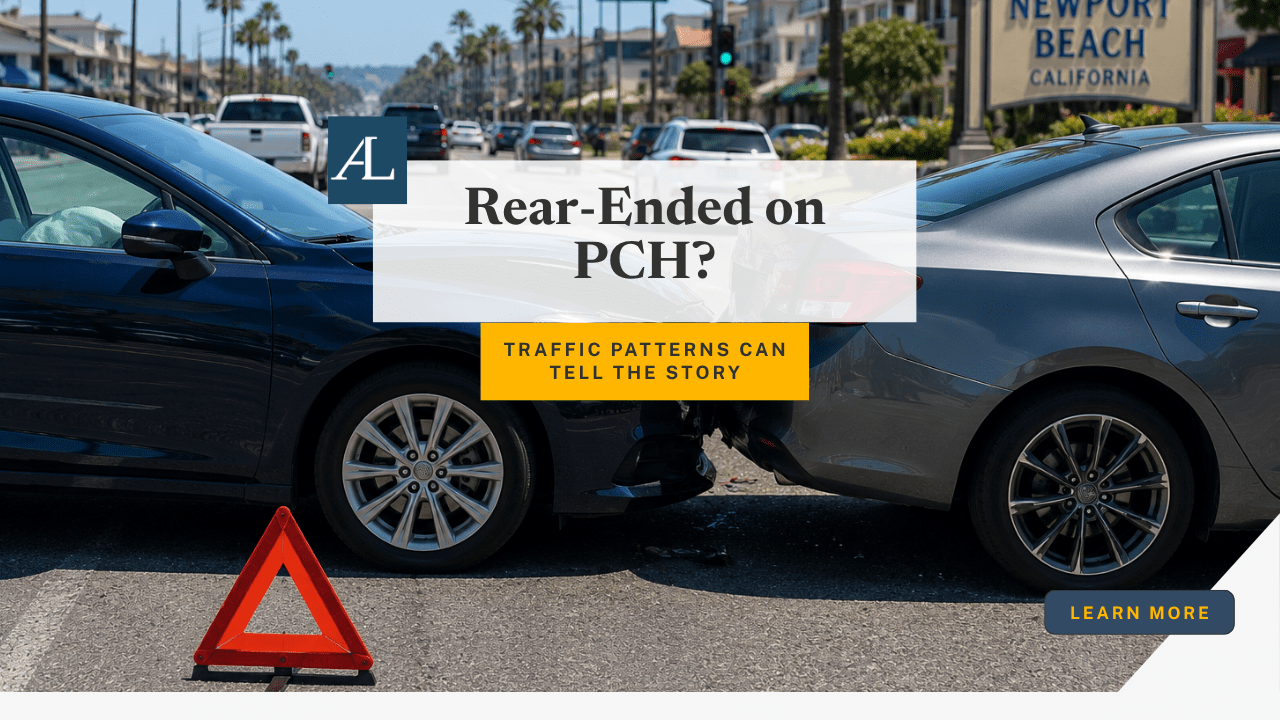
Newport Beach PCH rear-end accident claim cases can seem simple at first. One vehicle strikes the back of another, damage is visible, and the rear driver may be blamed immediately. But crashes on Pacific Coast Highway are not always that straightforward. Sudden stops, turning vehicles, beach traffic, parking lot entrances, valet areas, delivery vehicles, rideshare pickups, tourist congestion, and distracted drivers can all affect how fault is evaluated.
Pacific Coast Highway through Newport Beach carries commuters, visitors, cyclists, pedestrians, rideshare vehicles, commercial traffic, and drivers searching for parking near beaches, restaurants, hotels, and shopping areas. A driver may stop suddenly for a pedestrian, slow for a turning vehicle, brake near a driveway, or hesitate because of traffic ahead. A rear driver may claim the stop was unexpected. An insurance company may argue that the crash was minor because the vehicles were still drivable. The injured person may later develop neck pain, back pain, headaches, shoulder pain, or other symptoms that were not obvious at the scene.
A Newport Beach PCH rear-end accident claim should be reviewed through more than bumper damage alone. Vehicle positions, following distance, traffic flow, brake lights, dashcam footage, police reports, medical records, repair estimates, witness statements, and roadway conditions may all shape the claim. Even when the rear driver appears responsible, insurers may still dispute the injury, the severity of the collision, or whether another factor contributed.
When a rear-end crash leaves you injured, choosing the right legal representation matters. Avrek Law Firm helps injured drivers and passengers preserve evidence, respond to insurance arguments, and pursue compensation after serious Newport Beach car accidents.
Call 866-598-5548, start a chat, or request a free case review today. There are no upfront fees, and you don’t pay unless we win.
Why a Newport Beach PCH Rear-End Accident Claim May Be Disputed
A Newport Beach PCH rear-end accident claim may be disputed because rear-end crashes can involve more than one explanation. The rear driver may say traffic stopped too quickly. The front driver may say they had no choice but to brake. A third vehicle may have cut in, a pedestrian may have stepped into a crossing area, or a turning vehicle may have interrupted traffic flow. Insurance companies often look for details that allow them to reduce responsibility or question the injury claim.
Rear-end cases can also become disputed when property damage looks limited. A bumper may absorb impact while the occupants still experience sudden force to the neck, back, shoulders, and head. A vehicle may show only cosmetic damage, but the person inside may still need medical evaluation, physical therapy, imaging, or time away from work.
Traffic on PCH Can Change Suddenly
Pacific Coast Highway is not a quiet local street. In Newport Beach, traffic can shift quickly because of beach access points, intersections, parking lots, crosswalks, bicycles, pedestrians, delivery vehicles, and cars slowing for turns. A driver who follows too closely may not have enough time to react when traffic ahead stops.
A Newport Beach PCH rear-end accident claim often depends on whether the rear driver maintained a safe following distance. California Vehicle Code Section 21703 states that a driver may not follow another vehicle more closely than is reasonable and prudent, considering speed, traffic, and roadway conditions.
This rule matters because a driver’s duty does not disappear just because traffic stopped unexpectedly. Heavy traffic, coastal congestion, and sudden braking are common conditions drivers should anticipate on busy roads like PCH.
The Rear Driver May Blame a Sudden Stop
A rear driver may argue that the front vehicle stopped suddenly for no reason. Sometimes this argument deserves review. If the lead vehicle made an unsafe maneuver, stopped in a travel lane without cause, reversed, or cut into traffic before braking, those details may affect fault.
However, a sudden stop defense should not be accepted without evidence. A Newport Beach PCH rear-end accident claim should evaluate whether the lead driver stopped because of traffic ahead, a pedestrian crossing, a turning vehicle, a signal change, road hazard, or another reasonable reason. Dashcam footage, witness statements, traffic light timing, and vehicle positions may help explain why the stop occurred.
Insurance companies may use “sudden stop” arguments to pressure injured drivers into accepting partial fault. The better question is whether the rear driver had enough space and attention to stop safely under the conditions.
Low-Speed Rear-End Crashes Can Still Cause Injuries
Insurance adjusters may argue that a low-speed rear-end crash could not have caused serious injury. This is common when the bumper damage looks minor or the vehicle was repaired quickly. That argument can be misleading because injury severity depends on more than repair cost.
A Newport Beach PCH rear-end accident claim may involve whiplash, neck strain, back injuries, headaches, shoulder pain, nerve symptoms, concussion symptoms, aggravation of prior conditions, or soft tissue injuries that worsen over time. Seat position, headrest position, whether the person was braced, impact angle, prior medical history, and body mechanics may all affect the injury.
Medical documentation is critical. Emergency records, urgent care notes, primary care records, imaging, specialist referrals, and therapy records help connect the crash to the symptoms and treatment.
Evidence That Can Help Prove What Happened on PCH
A Newport Beach PCH rear-end accident claim is stronger when evidence is preserved early. The scene may change quickly. Vehicles may be moved. Skid marks may fade. Witnesses may leave. Camera footage may be overwritten. Repair shops may replace damaged parts before anyone photographs them closely.
Evidence should explain both liability and injury. Liability evidence shows how the crash happened. Injury evidence shows what the crash caused.
Vehicle Damage, Impact Points, and Repair Estimates
Vehicle damage can help show the direction and force of impact. Photos should capture the rear of the front vehicle, the front of the rear vehicle, bumper damage, trunk alignment, broken lights, sensors, tow hooks, frame issues, license plate damage, paint transfer, and any visible debris.
In a Newport Beach PCH rear-end accident claim, repair estimates may show hidden damage that photos do not reveal. Modern vehicles often contain sensors, cameras, brackets, impact absorbers, and electronic components behind the bumper. A casual photo may not show the full repair cost or the true force of impact.
Repair records should be saved before settlement discussions. If the insurer claims the crash was minor, the repair estimate and body shop notes may help challenge that argument.
Dashcam Footage, Traffic Cameras, and Nearby Business Video
Video can be important in rear-end crashes because it may show traffic flow before impact. A dashcam may show whether traffic stopped normally or whether the rear driver was following too closely. A nearby business camera may show braking, lane changes, or a vehicle entering from a driveway. A rideshare or delivery vehicle may have camera footage if it was nearby.
A Newport Beach PCH rear-end accident claim may involve camera sources near restaurants, hotels, shops, parking lots, gas stations, apartment buildings, and intersections. These systems may overwrite footage quickly. If video may exist, preservation requests should be sent as soon as possible.
Video does not need to capture the full crash to be useful. Even partial footage showing traffic speed, brake lights, lane position, or vehicle spacing can help explain fault.
Witness Statements and Passenger Accounts
Witnesses may help explain why traffic stopped and whether the rear driver had time to react. A passenger may remember seeing the rear vehicle approaching quickly. Another driver may have seen the rear driver looking down, following too closely, or failing to brake until the last second.
A Newport Beach PCH rear-end accident claim may become stronger when witness information is collected at the scene. Names, phone numbers, emails, and short statements can help preserve what people observed before memories fade.
Witnesses may also help rebut unfair defenses. If the rear driver claims the front vehicle stopped for no reason, a witness may confirm there was traffic ahead, a red light, a pedestrian, or a turning car.
Reports and Records After a Newport Beach Rear-End Crash
A Newport Beach PCH rear-end accident claim may require several official records. These can include a police report, DMV SR-1 report, insurance claim records, repair documents, medical records, and correspondence from adjusters. Keeping these records organized helps protect the claim.
Police Reports and Newport Beach Collision Records
If Newport Beach police investigated the crash, the collision report may contain driver information, insurance details, statements, diagrams, witness names, and officer observations. The Newport Beach Police Department states that traffic collision reports are generally not available until at least 14 days after the collision and that not all report requests will be approved because each request is reviewed for release criteria.
A police report is not always perfect, but it can be an important starting point. If the report contains errors about vehicle positions, statements, or injuries, those issues should be reviewed quickly.
H3: California DMV SR-1 Reporting Requirements
The California DMV explains that an SR-1 report must be completed and sent to the DMV within 10 days if anyone is injured, no matter how minor the injury, if anyone is killed, or if property damage is over $1,000. The DMV also states that the SR-1 report is required in addition to any report made to police, CHP, or an insurance company.
In a Newport Beach PCH rear-end accident claim, the SR-1 requirement matters because injured drivers may assume that a police report or insurance claim is enough. The DMV requirement is separate. Failing to understand reporting obligations can create unnecessary problems after the crash.
Insurance Letters, Claim Numbers, and Recorded Statement Requests
Insurance companies may contact injured drivers quickly after a rear-end crash. They may request a recorded statement, ask about medical treatment, discuss vehicle repairs, or suggest an early settlement. These communications should be saved.
A Newport Beach PCH rear-end accident claim may be affected by early statements. An injured person may still be in pain, unsure about symptoms, or unaware of all available evidence. If they guess about speed, distance, or injury severity, the insurer may later use those answers to reduce the claim.
It is better to keep communications organized and avoid speculation. Claim numbers, adjuster names, emails, letters, voicemail notes, repair estimates, and medical bills should be saved in one place.
Medical Documentation After a PCH Rear-End Accident
A Newport Beach PCH rear-end accident claim is not only about vehicle damage. The injury record is just as important. Rear-end crashes can cause delayed symptoms, and insurance companies often challenge claims when treatment is delayed or inconsistent.
Neck, Back, Shoulder, and Head Symptoms
Rear-end impacts often cause the body to move suddenly forward and backward. This can strain the neck, back, shoulders, and spine. Headaches, dizziness, memory problems, numbness, tingling, muscle spasms, shoulder pain, and reduced range of motion should be discussed with a medical provider.
A Newport Beach PCH rear-end accident claim may involve symptoms that appear hours or days after the crash. The injured person may feel shaken at the scene but wake up the next day with stiffness or pain. Medical records should clearly document when symptoms began and how they changed.
Emergency Care, Follow-Up Visits, and Specialist Referrals
Emergency room or urgent care records can document the first medical complaints. Follow-up visits may show whether pain improved, worsened, or required further treatment. Physical therapy, orthopedic evaluation, neurology referrals, imaging, pain management, or chiropractic care may become part of the medical timeline.
In a Newport Beach PCH rear-end accident claim, consistent treatment matters because insurers often look for gaps. If a person delays treatment because they hoped the pain would improve, lacked transportation, or had scheduling issues, that explanation should be documented.
Medical records help show that the injury was real, related to the crash, and serious enough to require care.
Work Restrictions, Missed Wages, and Daily-Life Limits
Rear-end crash injuries can affect more than medical bills. The injured person may miss work, reduce hours, avoid driving, need help with childcare, struggle with sleep, or be unable to exercise or complete household tasks.
A Newport Beach PCH rear-end accident claim should include employer notes, pay records, work restrictions, appointment calendars, medication records, mileage, transportation costs, and a simple symptom journal. These records help show how the crash affected daily life.
Insurance companies may focus on repair cost. Injury documentation helps show the human cost.
Common Insurance Disputes in Newport Beach Rear-End Accident Claims
A Newport Beach PCH rear-end accident claim may face several insurance disputes, even when the rear driver appears clearly responsible. Adjusters may dispute injury severity, treatment necessity, prior conditions, vehicle damage, or whether the injured person could have avoided the crash.
Claims That the Crash Was Too Minor to Cause Injury
Insurers often argue that limited bumper damage means limited injury. This argument should be challenged with medical records, vehicle repair documents, and a clear symptom timeline. The cost to repair a bumper is not the same as the force absorbed by a person’s body.
A Newport Beach PCH rear-end accident claim should be valued based on medical evidence, pain, treatment, lost income, future care, and functional limits, not just photographs of the vehicles.
Claims That a Prior Condition Caused the Pain
If the injured person had prior neck pain, back pain, headaches, or another medical history, the insurer may argue the crash did not cause the symptoms. A prior condition does not automatically defeat a claim. The crash may have aggravated the condition, worsened symptoms, or created new limitations.
A Newport Beach PCH rear-end accident claim should compare pre-crash and post-crash function. Medical records, provider opinions, symptom changes, work restrictions, and daily-life evidence may help show what changed after the collision.
Early Settlement Offers Before Treatment Is Complete
Early settlement offers can be risky. A person may accept money before knowing whether symptoms will resolve, whether therapy will be needed, or whether future treatment is recommended. Once a release is signed, the claim may be closed.
A Newport Beach PCH rear-end accident claim should not be resolved before the injured person understands the medical timeline, repair issues, lost income, and long-term effects. Insurance companies may prefer quick settlements because they limit exposure. Injured victims need a full picture before making that decision.
Frequently Asked Questions About a Newport Beach PCH Rear-End Accident Claim
A Newport Beach PCH rear-end accident claim often raises questions because rear-end crashes are common, but not always simple. These answers are designed for injured drivers and passengers researching what matters after a PCH collision.
Is the rear driver always at fault after a rear-end crash?
The rear driver is often found responsible, but fault is not automatic in every case. Evidence may show unsafe following distance, distracted driving, sudden lane changes, unsafe stops, or another contributing factor. A Newport Beach PCH rear-end accident claim should be reviewed through traffic conditions, vehicle damage, witness statements, video footage, and police records.
What evidence helps prove a PCH rear-end accident claim?
Helpful evidence may include vehicle photos, repair estimates, dashcam footage, traffic camera footage, business surveillance video, witness information, police reports, SR-1 records, medical records, work restrictions, and insurance communications. The best evidence is often gathered early.
Can I still have a claim if my car has minor damage?
Yes. Minor vehicle damage does not automatically mean minor injury. People can experience neck pain, back pain, headaches, shoulder injuries, or soft tissue trauma after rear-end impacts. Medical documentation is important when vehicle damage appears limited.
Should I give a recorded statement to the insurance company?
Be careful. Recorded statements may be used to challenge your claim later. In a Newport Beach PCH rear-end accident claim, you should avoid guessing about speed, distance, injury severity, or fault before the evidence and medical picture are clear.
How long should I wait before settling a rear-end accident claim?
You should understand your medical condition, treatment plan, repair costs, lost wages, and future care needs before accepting a settlement. Settling too soon may leave you responsible for later medical bills or ongoing losses.
Call or Contact Avrek Law Firm 24/7 for a Free Consultation and Pay Nothing Unless You Win
A Newport Beach PCH rear-end accident claim can become complicated when the insurance company disputes injury severity, argues the stop was sudden, claims the crash was minor, or pushes for a quick settlement before treatment is complete. Rear-end crashes may involve more than bumper damage. They may involve medical bills, missed work, pain, vehicle repairs, daily-life disruption, and long-term symptoms.
Avrek Law Firm helps injured drivers and passengers investigate Newport Beach car accidents, preserve evidence, and challenge unfair insurance tactics. Our team understands how insurers evaluate rear-end claims and how quickly evidence can disappear after a crash on PCH.
Speaking with a Newport Beach car accident lawyer may help you understand what records should be preserved after a rear-end collision. These cases may also overlap with issues handled by a Newport Beach personal injury lawyer, especially when injuries are serious, treatment is ongoing, or fault is disputed.
If you or someone you love was injured in a rear-end crash on PCH in Newport Beach, Avrek Law Firm is ready to help.
- 📩 Submit a request through our online form
- 📞 Call 866-598-5548 now to speak with our team
- 💬 Start a live chat for immediate assistance
There are no upfront fees, and you don’t pay unless we win.