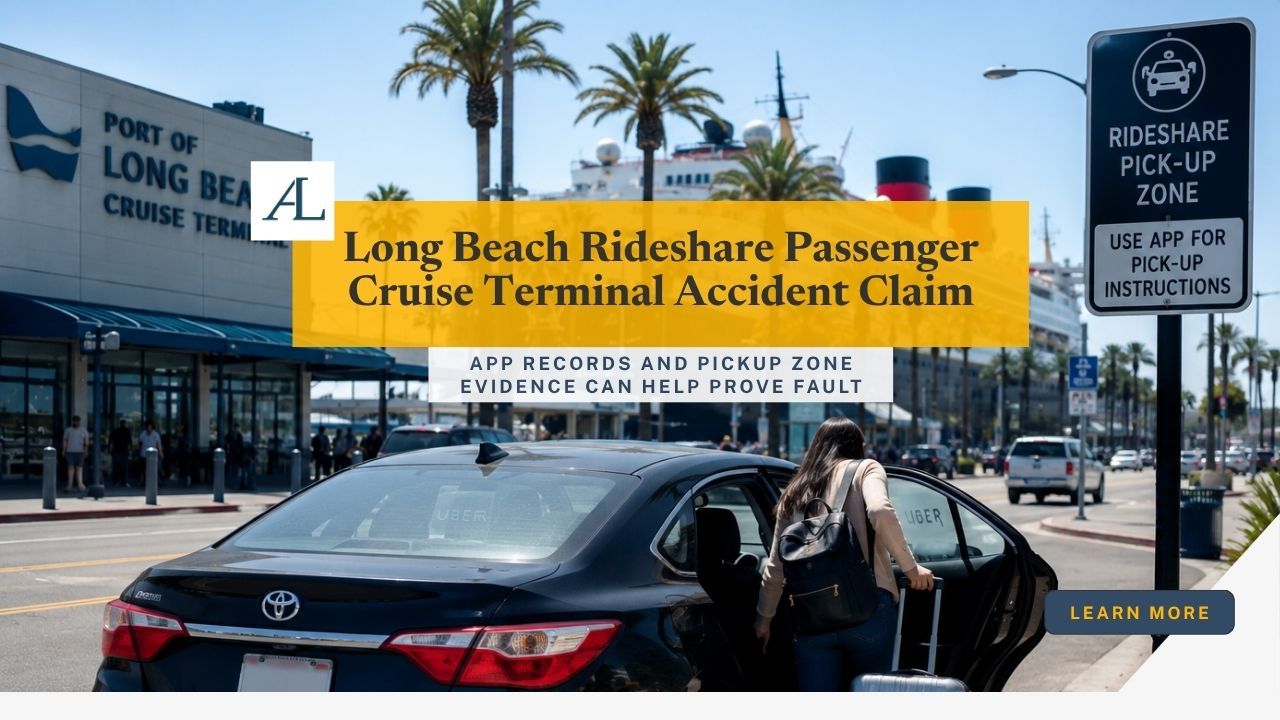
A Long Beach rideshare passenger cruise terminal accident claim can become complicated quickly because cruise terminal pickups, hotel entrances, valet zones, rideshare lanes, shuttle traffic, luggage loading, and tourist activity often overlap in tight curbside spaces. A passenger may be leaving a cruise, heading to a hotel, checking the Uber or Lyft app, confirming a license plate, loading suitcases, stepping off a curb, or entering the vehicle when a crash, fall, sudden stop, or unsafe pickup causes serious injury.
These claims are not always handled like ordinary car accident cases. A Long Beach rideshare passenger cruise terminal accident claim may involve app status, driver route data, pickup messages, rideshare insurance, another driver’s policy, hotel surveillance, cruise terminal traffic, shuttle movements, curbside design, and witness information from people who may leave town the same day. The rideshare driver may say the passenger approached from the wrong side. Another driver may say the rideshare vehicle stopped suddenly. The insurer may argue about whether the ride had been accepted, whether the passenger had entered the vehicle, or whether the injury happened before rideshare coverage applied.
Long Beach has a unique passenger traffic environment because the Long Beach Cruise Terminal is owned and operated by Carnival Corporation and is located beside the Queen Mary. Visit Long Beach also notes that hotels in the greater Long Beach area are only a few minutes from the cruise terminal, and downtown restaurants and nightlife are a short ride away. That local setting matters because rideshare passengers may be moving between the cruise terminal, Queen Mary area, Downtown Long Beach hotels, Shoreline Village, The Pike, Pine Avenue, parking structures, and waterfront attractions with luggage and limited familiarity with the area.
When a rideshare passenger is injured near the Long Beach cruise terminal or a nearby hotel, choosing the right legal representation matters. An experienced Long Beach rideshare accident lawyer at Avrek Law Firm can act quickly to preserve app records, identify insurance coverage, investigate pickup zone evidence, request available video, and pursue compensation for the full impact of your injuries.
Call 866-598-5548, start a live chat, or request a free case review today. There are no upfront fees, and you do not pay unless we win.
Why a Long Beach Rideshare Passenger Cruise Terminal Accident Claim Is Often Disputed
A Long Beach rideshare passenger cruise terminal accident claim is often disputed because rideshare pickup accidents can happen during a short window when the passenger, driver, and surrounding vehicles are all moving at once. The passenger may be watching the app, pulling luggage, standing near a curb, or looking for the correct vehicle. The rideshare driver may be watching navigation, trying to avoid blocking traffic, searching for the passenger, or moving through a busy pickup area. Shuttle drivers, taxis, private vehicles, hotel vans, delivery trucks, and other rideshare drivers may also be competing for the same curb space.
This creates many opportunities for blame-shifting. The rideshare driver may say the passenger was not ready, approached from the wrong lane, opened the door too soon, or took too long to load luggage. The passenger may say the driver stopped in an unsafe place, pulled away before everyone was secure, blocked a travel lane, or forced the passenger to step into traffic. Another motorist may say the rideshare driver stopped suddenly. A hotel or terminal operator may deny responsibility for the pickup layout. A rideshare insurer may focus less on the injury and more on app status.
The strongest Long Beach rideshare passenger cruise terminal accident claim looks at the full pickup environment, not just the moment of impact. That means documenting where the passenger was supposed to wait, where the driver actually stopped, whether the ride had been accepted, whether the passenger had entered the vehicle, whether the driver canceled the ride after the incident, whether luggage was being loaded, whether another vehicle caused the impact, and whether video or witnesses can verify the sequence.
Visit Long Beach Cruise Terminal Information — https://www.visitlongbeach.com/plan-your-trip/cruise-terminal-information/
Cruise Terminal and Hotel Traffic Creates Predictable Pickup Hazards
A Long Beach rideshare passenger cruise terminal accident claim often starts with a predictable hazard. Cruise passengers may have suitcases, carry-ons, mobility devices, children, or travel companions. They may be unfamiliar with the terminal area, trying to follow app instructions, or looking for a specific rideshare vehicle among many similar cars. Hotel guests may be entering or exiting rideshare vehicles near valet stands, porte-cochères, shuttle lanes, parking garage entrances, or curbside loading areas.
Drivers should anticipate those conditions. A rideshare driver near the Long Beach Cruise Terminal or a hotel pickup zone should expect passengers to move more slowly, confirm the vehicle, load luggage, and use the app. A driver should not rush the pickup, stop where passengers must cross active traffic, pull away before doors are closed, or pressure passengers to enter from an unsafe side of the vehicle.
A Long Beach rideshare passenger cruise terminal accident claim should investigate whether the driver treated a busy travel zone like an ordinary street pickup. Cruise and hotel traffic requires more caution, not less. The fact that a pickup area is busy does not excuse careless vehicle movement.
App Status Can Affect Which Insurance Applies
One of the biggest issues in a Long Beach rideshare passenger cruise terminal accident claim is rideshare app status. The driver may have been logged into the app and waiting for a request. The driver may have accepted the passenger’s ride and been approaching the cruise terminal. The driver may have arrived and been waiting while the passenger walked toward the car. The passenger may have been entering the vehicle, loading luggage, already seated, or on the way to a hotel or airport.
California Public Utilities Code Section 5433 requires transportation network company insurance during specific app periods. The statute requires primary $1 million coverage for death, personal injury, and property damage from the moment a driver accepts a ride request until the transaction or ride is complete, and current law also addresses uninsured and underinsured motorist coverage while the passenger is in the vehicle.
That insurance structure is why app evidence matters so much. A passenger should preserve screenshots showing the ride request, driver name, driver photo, vehicle make and model, license plate, pickup pin, route, destination, messages, cancellation notice, receipt, and support chat. If the driver later claims the ride was not active, those records may become central to the Long Beach rideshare passenger cruise terminal accident claim.
Passengers Are Often Blamed for Pickup Confusion
Insurers often try to blame passengers after rideshare pickup accidents. They may say the passenger crossed from the wrong location, walked behind the vehicle, failed to confirm the license plate, opened a door into traffic, delayed the pickup, or dropped luggage in an unsafe place. Those arguments can sound convincing unless the claim explains how cruise terminal and hotel pickups actually work.
Passengers are expected to look at their phones, confirm vehicle details, communicate with the driver, and move with luggage. A passenger checking the app is not automatically careless. A passenger loading suitcases is not automatically delaying the driver. A passenger crossing to the pickup point may be following app instructions or terminal signs. A Long Beach rideshare passenger cruise terminal accident claim should evaluate the passenger’s conduct in context, not through hindsight from an insurance adjuster.
Common Long Beach Rideshare Passenger Accident Scenarios Near Cruise Terminals and Hotels
A Long Beach rideshare passenger cruise terminal accident claim can involve many different accident scenarios. Some involve the rideshare vehicle directly striking another car or object while the passenger is inside. Others involve a passenger being hit while walking toward the rideshare car, falling while entering or exiting, being injured by sudden movement, or getting hurt while loading luggage. The details matter because insurance coverage and liability can change depending on exactly how the injury happened.
The most important issue is whether the driver, another motorist, business, property operator, or other party created a hazard that could have been avoided with reasonable care. Cruise terminal and hotel zones are not quiet residential pickups. Drivers should expect pedestrians, luggage, shuttles, cruise passengers, valet workers, hotel guests, and other vehicles.
Passenger Hit While Walking Toward the Rideshare Vehicle
One common Long Beach rideshare passenger cruise terminal accident claim involves a passenger being hit while walking toward an assigned Uber or Lyft. This may happen when the driver stops across a travel lane, stops where the passenger must cross traffic, pulls into the wrong pickup area, or asks the passenger to meet at a different spot. Another driver may then strike the passenger, or the rideshare driver may move unexpectedly.
In these cases, insurers may argue that the passenger was a pedestrian and not yet covered by rideshare insurance. The rideshare insurer may dispute whether the driver’s accepted trip created coverage. Another driver’s insurer may blame the rideshare driver for the unsafe pickup location. The rideshare driver may claim the passenger chose the route. A strong claim should preserve app messages, pickup pin, driver arrival notice, terminal or hotel photos, vehicle positions, and witness statements.
Passenger Injured While Loading Luggage
A Long Beach rideshare passenger cruise terminal accident claim may also involve a passenger injured while loading luggage. Cruise passengers often travel with multiple bags, and hotel guests may have luggage, strollers, mobility aids, or shopping bags. If the rideshare driver stops too far from the curb, parks in an active lane, opens the trunk in a dangerous location, moves before loading is complete, or pressures the passenger to hurry, injuries can happen quickly.
A passenger may twist a knee, fall against the curb, suffer a back injury, hit their head, or be struck by another vehicle while standing near the trunk. The rideshare driver may say they were only trying to keep traffic moving. That explanation does not answer whether the pickup was handled safely. A Long Beach rideshare passenger cruise terminal accident claim should document the trunk position, curb distance, luggage location, vehicle angle, nearby traffic, and driver statements.
Rear-End Crash While the Passenger Is Inside the Rideshare Vehicle
Some claims involve a passenger already seated in the rideshare vehicle when another driver rear-ends, sideswipes, or strikes the car near the cruise terminal, hotel entrance, or curbside pickup area. The rideshare driver may blame the other driver. The other driver may claim the rideshare vehicle stopped abruptly, double-parked, blocked traffic, or changed lanes without warning. The passenger may be caught between insurers while medical bills grow.
A Long Beach rideshare passenger cruise terminal accident claim should preserve the trip receipt, driver information, insurance details for all vehicles, vehicle damage photos, police or incident report number, witness statements, and medical records. If the passenger was in the vehicle during an accepted rideshare trip, app status and California TNC insurance requirements may be central.
Door, Curb, and Exit Injuries Near Hotels
Hotel rideshare accidents often happen during entry or exit. A passenger may open a door into traffic, step into a puddle or uneven surface, exit near a valet lane, or be told to get out before the car reaches a safe curb. A driver may pull away before the passenger is fully out, fail to stop close enough to the curb, or stop where another vehicle passes too closely.
These cases are often minimized because the crash may not look dramatic. However, a fall from a curb, a twisted knee while stepping out, a shoulder injury from a moving door, or a head injury from a low-speed impact can still cause serious harm. A Long Beach rideshare passenger cruise terminal accident claim should not be dismissed just because the injury happened during a pickup or drop-off rather than a highway crash.
Shuttle, Taxi, or Hotel Vehicle Conflicts
Cruise terminals and hotels often involve shuttles, taxis, tour buses, valet vehicles, hotel vans, delivery trucks, and private cars. A rideshare passenger may be injured when a shuttle cuts through a pickup lane, a taxi blocks visibility, a hotel van backs up, or a delivery vehicle stops where passengers are expected to walk. In these cases, the rideshare driver may not be the only party involved.
A Long Beach rideshare passenger cruise terminal accident claim should identify every vehicle and every insurance policy. If the accident involved a hotel shuttle, private company vehicle, cruise-related transportation provider, or commercial driver, the case may require a broader investigation into employer responsibility, driver training, vehicle movement, and available video.
Evidence That Can Strengthen a Long Beach Rideshare Passenger Cruise Terminal Accident Claim
Evidence is critical in a Long Beach rideshare passenger cruise terminal accident claim because the scene can change fast. Cruise passengers leave. Rideshare drivers accept new trips. Hotel staff changes shifts. Valet lines move. Surveillance footage may be overwritten. App screens update. A vehicle may be repaired before the passenger realizes how badly they were hurt.
The strongest claims preserve the digital timeline and the physical scene. The passenger should try to document not only the crash, but the pickup instructions and driver behavior that led to it. A rideshare accident near a cruise terminal or hotel is often won or lost on details that disappear quickly.
App Screenshots and Digital Trip Records
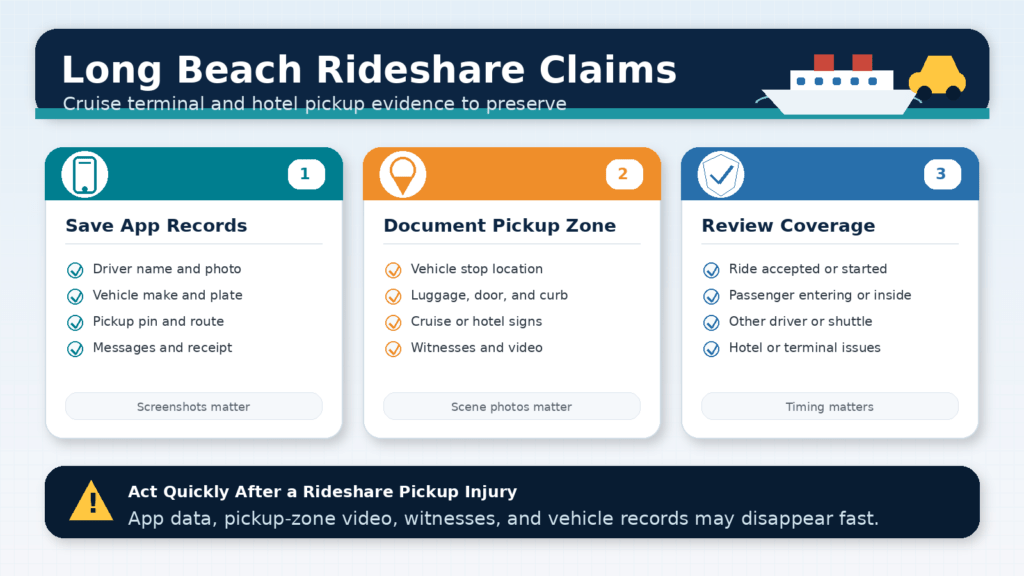
App screenshots are some of the most important evidence in a Long Beach rideshare passenger cruise terminal accident claim. Passengers should save the ride request, driver name, driver photo, vehicle description, license plate, pickup pin, destination, route map, driver messages, arrival notice, cancellation notice, receipt, support chat, and any email from the rideshare company.
These records can show whether the driver accepted the ride, where the driver was supposed to pick up the passenger, whether the driver changed the pickup location, whether the passenger was entering the assigned vehicle, and whether the driver canceled after the incident. If the insurer later disputes coverage, app records may be the clearest proof of the rideshare status.
Photos of the Pickup Zone, Vehicle Position, and Luggage Area
A Long Beach rideshare passenger cruise terminal accident claim should include photos of the exact pickup or drop-off location. Important images may include the rideshare vehicle, license plate, vehicle damage, door position, trunk area, curb, traffic lanes, signs, hotel entrance, cruise terminal signs, parking structure entrance, shuttle lanes, valet stands, sidewalks, crosswalks, and visible injuries.
If the passenger was injured while loading luggage, photos of the trunk and curb distance are important. If the passenger was hit while walking toward the vehicle, photos should show where the passenger started, where the rideshare car stopped, and what traffic lanes or obstacles were between them. If a hotel or cruise terminal camera is visible, take a photo of the camera location so an attorney can send a preservation request.
Surveillance Video and Witness Information
Video can be especially useful near cruise terminals and hotels. Potential sources may include hotel security cameras, parking garage cameras, cruise terminal cameras, shuttle cameras, dashcams, rideshare cameras, valet stand cameras, nearby restaurant cameras, and cameras on commercial vehicles. These recordings may show the driver’s stop, passenger movement, vehicle impact, or another driver’s unsafe action.
Witnesses may include cruise passengers, hotel guests, valet workers, shuttle drivers, taxi drivers, rideshare drivers, security personnel, family members, or bystanders. Get names and phone numbers quickly. Many witnesses near cruise terminals and hotels are travelers who may leave the area within hours.
Medical Records and Injury Documentation
Medical records are essential in a Long Beach rideshare passenger cruise terminal accident claim. Injuries may include concussions, neck injuries, back injuries, fractures, shoulder injuries, knee injuries, wrist injuries, hip injuries, bruising, nerve symptoms, and emotional trauma. Some symptoms may not appear immediately, especially when adrenaline and travel stress mask pain.
Prompt care helps connect the injury to the rideshare incident. Tell medical providers how the injury happened, whether it involved a vehicle impact, fall, sudden stop, door movement, luggage loading, or curbside pickup. Delayed treatment gives insurers an argument that the injuries were not serious or were unrelated to the accident.
Who May Be Liable in a Long Beach Rideshare Passenger Cruise Terminal Accident Claim?
A Long Beach rideshare passenger cruise terminal accident claim may involve several liable parties. The rideshare driver may be responsible, but another driver, hotel operator, shuttle company, commercial vehicle, or property-related party may also contribute to the incident. Identifying every responsible party matters because serious injuries can require long-term treatment, lost income recovery, and compensation for pain and suffering.
The claim should begin with the rideshare trip records, but it should not end there. The physical setting matters. A crash near a cruise terminal or hotel may involve traffic management, curbside congestion, valet activity, shuttle lanes, luggage loading, and passenger flow.
The Rideshare Driver
The rideshare driver may be liable if they stopped in an unsafe location, blocked traffic, pulled away too soon, failed to yield, drove distracted, stopped too far from the curb, rushed the passenger, canceled the ride after the incident, or failed to keep the passenger reasonably safe during pickup or drop-off.
Drivers working near cruise terminals and hotels should expect passengers to have luggage and limited familiarity with the area. If the driver chooses a pickup location that forces the passenger into danger, the driver’s conduct should be investigated carefully.
Uber, Lyft, or the Applicable Rideshare Insurance Policy
A rideshare company may dispute direct responsibility, but applicable rideshare insurance can still be central to the claim. Under California TNC insurance rules, coverage can depend on whether the driver was logged in, waiting for a match, had accepted the ride, or was transporting the passenger. The accepted ride period is especially important in a Long Beach rideshare passenger cruise terminal accident claim because many injuries happen while the driver is arriving, waiting, loading luggage, or beginning the trip.
The passenger should not rely on the driver’s explanation of coverage. App records, receipts, support messages, and trip status help determine which policy may apply.
Another Driver or Commercial Vehicle Operator
Another driver may be responsible if they hit the rideshare vehicle, struck the passenger, backed into the pickup area, failed to yield, or drove through a hotel or cruise terminal zone without care. Commercial vehicles can also play a role, including shuttles, taxis, delivery vans, buses, hotel vehicles, and private transportation services.
A Long Beach rideshare passenger cruise terminal accident claim should identify every vehicle involved. If another vehicle left the scene or did not make contact but created the danger, video and witnesses may be especially important.
A Hotel, Valet Operator, or Property-Related Party
A hotel or valet operator may be relevant if unsafe pickup practices contributed to the injury. For example, a hotel may direct rideshare vehicles into a congested lane, fail to separate valet and rideshare traffic, allow vehicles to block pedestrian paths, or create confusion near the entrance. A valet company may move vehicles unsafely near passengers. A property operator may fail to preserve a safe drop-off area.
Not every hotel injury creates property liability, but a Long Beach rideshare passenger cruise terminal accident claim should review whether the property layout, traffic flow, signage, lighting, or pickup instructions contributed to the crash.
Insurance Issues in a Long Beach Rideshare Passenger Cruise Terminal Accident Claim
Insurance coverage is often the most confusing part of a Long Beach rideshare passenger cruise terminal accident claim. A passenger may assume the rideshare company will handle everything, but the claim may be routed through an insurance administrator. The driver’s personal insurer may deny coverage because the driver was using the vehicle for rideshare work. Another driver’s insurer may blame the rideshare driver. A hotel or shuttle company may deny involvement. These disputes can delay compensation.
California’s TNC insurance structure is important because coverage depends on ride status. The accepted ride period, passenger-in-vehicle period, and post-trip period can affect which insurance policy applies and what benefits may be available. Current California law requires primary TNC insurance during the accepted ride period, and the statute separately addresses uninsured and underinsured motorist coverage while a passenger is in the vehicle.
A Long Beach rideshare passenger cruise terminal accident claim should preserve the timeline carefully. The exact timing of the ride request, driver acceptance, driver arrival, passenger entry, luggage loading, trip start, impact, cancellation, or completion may affect the insurance analysis.
If the Passenger Was Walking Toward the Vehicle
If the passenger was injured while walking toward the rideshare car after the driver accepted the trip, insurers may dispute whether rideshare coverage applies. The passenger may not have entered the vehicle yet, but the driver may already have been on an accepted ride. App records become essential in this situation.
The claim should document whether the driver accepted the ride, where the app told the passenger to go, whether the driver changed the pickup location, whether the driver directed the passenger to cross traffic, and whether the passenger was approaching the assigned vehicle.
If the Passenger Was Entering, Exiting, or Loading Luggage
If the passenger was entering or exiting the rideshare vehicle, or loading luggage into the trunk, coverage disputes may focus on whether the passenger had entered the vehicle or whether the injury was part of the pickup process. These cases can become technical, especially when the driver cancels or changes the trip status after the incident.
A Long Beach rideshare passenger cruise terminal accident claim should preserve photos of the door, trunk, curb, passenger position, luggage, and app status. Witness statements can also help prove that the passenger was actively using the assigned rideshare vehicle at the time of injury.
If Another Vehicle Caused the Crash
If another vehicle caused the crash, the passenger may have claims against that driver’s insurance as well as potential rideshare coverage depending on the circumstances. If the passenger was inside the rideshare vehicle, the rideshare trip records may still matter. If the passenger was outside the vehicle and struck by another driver while approaching the rideshare pickup point, both the other driver and the pickup setup should be investigated.
The goal is to identify every available source of coverage before accepting any settlement. A passenger should not be left with unpaid medical bills because insurers point fingers at each other.
What to Do After a Rideshare Passenger Accident Near the Long Beach Cruise Terminal or a Hotel
After a rideshare passenger accident, medical care comes first. Call 911 or ask someone nearby to call if anyone is hurt. If you are in an active lane, curbside pickup zone, driveway, or hotel entrance, move to safety only if you can do so without worsening your injuries. Cruise terminal and hotel pickup areas can remain dangerous after the initial incident because other vehicles may continue moving around the scene.
If you are able, preserve evidence immediately. Take screenshots of the rideshare app, driver name, license plate, pickup pin, route, trip status, receipt, messages, and cancellation notice. Photograph the vehicle, curb, hotel entrance, cruise terminal area, luggage location, door position, trunk area, traffic lanes, visible injuries, and any nearby cameras. Get the driver’s information, the other driver’s information if another vehicle was involved, and witness contact information.
Report the incident through the rideshare app in writing. Save the support chat, claim number, email confirmation, and any response. Do not rely only on a phone call. If hotel security, cruise terminal personnel, police, or another agency creates an incident report, ask how to obtain the report number.
Avoid giving detailed recorded statements to insurers before speaking with a lawyer. Adjusters may ask questions that make the passenger appear careless, uncertain, or partly responsible. A Long Beach rideshare accident lawyer can help protect the claim while you focus on medical treatment.
Deadlines in a Long Beach Rideshare Passenger Cruise Terminal Accident Claim
A Long Beach rideshare passenger cruise terminal accident claim should be reviewed quickly because legal deadlines and evidence deadlines are different. California Code of Civil Procedure Section 335.1 generally provides two years for an action involving injury to, or death of, an individual caused by another person’s wrongful act or neglect.
Two years may sound like enough time, but rideshare and cruise terminal evidence can disappear much sooner. App screens can update. Driver records may become harder to access. Hotel or terminal video may be overwritten. Witnesses may leave Long Beach. Vehicles may be repaired. A driver may cancel the trip or deny key details. The sooner a claim is investigated, the stronger the evidence may be.
Some claims can involve special deadlines, especially when public property, public transportation, or government-related entities may be involved. Because the facts can change the deadline analysis, early legal review is important.
Frequently Asked Questions About a Long Beach Rideshare Passenger Cruise Terminal Accident Claim
Who pays if an Uber or Lyft passenger is injured near the Long Beach cruise terminal?
Who pays depends on the ride status, who caused the injury, and where the passenger was when the accident happened. A Long Beach rideshare passenger cruise terminal accident claim may involve the rideshare driver’s TNC coverage, another driver’s insurance, the rideshare company’s insurer, a hotel or shuttle operator, or another responsible party.
If the rideshare driver had accepted the trip or the passenger was inside the vehicle, California TNC insurance rules may be important. If another driver caused the crash, that driver’s insurance may also apply. A full investigation should identify every available policy before settlement.
What evidence should I save after a Long Beach rideshare passenger accident?
Save app screenshots, driver name, driver photo, license plate, vehicle description, pickup pin, destination, route map, trip status, cancellation notice, receipt, support messages, vehicle photos, curb photos, luggage photos, injury photos, witness names, medical records, and insurance communications.
A Long Beach rideshare passenger cruise terminal accident claim can depend heavily on app status and pickup location. Evidence that seems small, such as a driver message or cancellation timestamp, may later become important.
Does rideshare insurance apply before I get into the car?
It can, depending on the facts. If the driver accepted the ride and was on the way to pick you up, California TNC insurance rules may be relevant. However, insurers may dispute coverage if you were not yet inside the vehicle. That is why screenshots and pickup messages are so important.
If you were walking toward the assigned rideshare vehicle near the cruise terminal or a hotel, preserve proof that the ride had been accepted and that you were following the app or driver’s instructions.
What if the rideshare driver canceled the trip after the accident?
If the driver canceled the trip after the accident, screenshot everything immediately. Save the cancellation notice, driver information, messages, route map, support chat, and any receipt or email. A cancellation after an incident can make the claim more complicated because the driver or insurer may later argue that the ride was not active.
A Long Beach rideshare passenger cruise terminal accident claim should investigate when the cancellation happened and whether the driver canceled to avoid documenting the incident through the app.
What if I was injured while loading luggage into the rideshare vehicle?
You may still have a claim if the driver’s stop location, vehicle movement, trunk position, curb distance, traffic conditions, or pickup setup contributed to the injury. Cruise passengers and hotel guests often need time and space to load luggage safely. A driver should not pull away, rush the passenger, or stop in a location that forces luggage loading into traffic.
Photos of the trunk, curb, luggage, vehicle position, and surrounding traffic can help prove what happened.
What if another driver hit the rideshare car while I was a passenger?
You may have a claim against the at-fault driver and potentially other available coverage depending on the ride status and insurance facts. Save the rideshare receipt, trip records, driver information, vehicle damage photos, other driver’s insurance information, and any police or incident report details.
A passenger should not be forced to sort out coverage disputes alone. Multiple insurers may be involved, and each may try to reduce responsibility.
Can a hotel or shuttle company be responsible for a rideshare passenger injury?
Possibly, depending on the facts. A hotel, valet operator, shuttle company, or transportation provider may be responsible if it created or contributed to an unsafe pickup area, blocked pedestrian access, failed to manage traffic, or caused a vehicle conflict. These claims require careful review of video, witness statements, property layout, and vehicle movement.
Not every hotel-area crash creates hotel liability, but the issue should be investigated when the location or traffic management contributed to the injury.
How long do I have to file a Long Beach rideshare passenger accident claim?
Many California personal injury claims are subject to a two-year deadline, but evidence may disappear much sooner. A Long Beach rideshare passenger cruise terminal accident claim should be investigated quickly because app records, video footage, witness information, and vehicle evidence may become harder to obtain with time.
Early legal review helps preserve evidence and identify the correct insurance policies.
Do I need a lawyer for a rideshare passenger accident near the Long Beach cruise terminal?
Yes, especially if you were injured, the driver canceled the ride, coverage is disputed, another vehicle was involved, or the injury happened during pickup or luggage loading. Rideshare passenger claims can involve app records, TNC insurance, hotel or terminal evidence, multiple insurers, and disputed fault.
A Long Beach rideshare accident lawyer can preserve records, request video, identify coverage, communicate with insurers, and pursue compensation for medical bills, lost income, pain and suffering, future care, and long-term recovery needs.
Call or Contact Avrek Law Firm 24/7 for a Free Consultation and Pay Nothing Unless We Win
A Long Beach rideshare passenger cruise terminal accident claim can become difficult when the driver cancels the ride, the app status is disputed, another vehicle is blamed, or insurers argue over who should pay. These cases often depend on evidence that disappears quickly, including trip screenshots, GPS records, messages, receipts, hotel video, cruise terminal pickup photos, witness statements, and medical records.
Avrek Law Firm helps injured rideshare passengers, cruise travelers, hotel guests, pedestrians, workers, and families investigate serious pickup-zone and passenger injury claims. Our team can move quickly to preserve evidence, identify every available insurance policy, determine whether the rideshare driver, another motorist, hotel-related operator, shuttle company, or other party may be responsible, and pursue compensation for the full impact of your injuries.
Speaking with a Long Beach rideshare accident lawyer may help you understand whether your case also involves a Long Beach personal injury lawyer, depending on the injury, location, and number of responsible parties involved.
If you or someone you love was injured during an Uber, Lyft, or other rideshare pickup near the Long Beach Cruise Terminal, Queen Mary area, hotel entrance, parking structure, or waterfront pickup zone, Avrek Law Firm is ready to help.
Call 866-598-5548, start a chat, or complete our online form today for a free, no-obligation consultation. There are no upfront fees, and you do not pay unless we win.
Serving the Long Beach Community
Avrek Law Firm represents injured rideshare passengers and accident victims throughout Long Beach and surrounding communities. Local context matters in a Long Beach rideshare passenger cruise terminal accident claim because the pickup location often shapes the evidence, the insurance issues, and the parties involved.
A rideshare passenger injury near the Long Beach Cruise Terminal may involve cruise luggage, terminal traffic, shuttle movement, Queen Mary-area access, parking structure traffic, and app-based pickup confusion. A hotel rideshare injury in Downtown Long Beach, the Waterfront, Shoreline Village, The Pike, Pine Avenue, Belmont Shore, East Village Arts District, or near convention and event areas may involve valet zones, curbside congestion, rideshare staging, shuttle traffic, pedestrians, and commercial vehicles.
A Long Beach rideshare passenger cruise terminal accident claim should be handled with urgency, precision, and attention to the local pickup-zone details that insurers often minimize. Avrek Law Firm can meet with injured clients by phone, video, or in person, and our team can assist clients who are unable to travel because of their injuries.
- 📩 Submit a request through our online form
- 📞 Call 866-598-5548 now to speak with our team
- 💬 Start a live chat for immediate assistance
There are no upfront fees, and you don’t pay unless we win.