An Irvine protected bike lane accident claim can arise when a driver turns across a designated bicycle facility and strikes a cyclist traveling through an intersection, driveway, or commercial entrance. Protected bike lanes are designed to provide greater separation between bicycles and moving vehicles, but that separation can become complicated at locations where motorists must cross the bicycle route to make a turn. A driver may believe the intersection is clear, begin turning, and fail to recognize a cyclist approaching from within the protected lane. The resulting collision can cause serious injuries and create disputes about visibility, right-of-way, bicycle positioning, and the driver’s responsibility.
These accidents are different from collisions involving bicycles traveling directly beside ordinary vehicle lanes. Protected facilities may include flexible posts, painted buffers, curbs, parking separation, or other design elements intended to organize traffic movements. At intersections, the protective barrier may end or change configuration to allow vehicles to turn. An Irvine protected bike lane accident claim should establish how the facility was designed, where the cyclist was traveling, and whether the driver crossed the bicycle’s intended path without taking reasonable precautions.
Consider a cyclist traveling straight through a protected lane while a motorist prepares to turn right into a shopping center. The driver may focus on vehicles approaching from behind or pedestrians crossing the entrance and overlook the bicycle traveling within the separated facility. In another scenario, a vehicle may turn left across an intersection and enter the cyclist’s path. The driver may later claim that the cyclist appeared unexpectedly, was traveling too quickly, or should have yielded. These competing explanations make roadway evidence and the sequence of movements especially important.
California law establishes responsibilities for both drivers and cyclists. Under California Vehicle Code Section 22107, drivers must ensure that turning or moving right or left can be accomplished with reasonable safety and must signal when another vehicle may be affected. Vehicle Code Section 21209 also restricts driving in bicycle lanes, subject to specified exceptions. An Irvine protected bike lane accident claim may require evaluating these provisions alongside traffic signals, lane markings, and other applicable rules.
The presence of a protected bike lane does not automatically determine fault. A cyclist may be traveling lawfully through the facility, but investigators must still examine signal indications, direction of travel, speed, visibility, and the actions of both parties. Likewise, a driver who is permitted to cross a bicycle lane for a turn must still exercise reasonable care and comply with applicable traffic controls.
An Irvine protected bike lane accident claim should be supported by photographs, video, witness statements, bicycle damage, vehicle damage, medical documentation, and records showing how the intersection operated at the time of the collision. These details can help establish whether the driver failed to recognize the cyclist, whether the bicycle facility created a visibility challenge, and whether the collision could reasonably have been avoided.
An experienced Irvine personal injury lawyer and bicycle accident lawyer at Avrek Law Firm can help investigate the collision, preserve relevant evidence, identify responsible parties, and document the cyclist’s medical and financial losses.
Call 866-598-5548, start a live chat, or request a free injury consultation today. There are no upfront legal fees, and you do not pay unless we win.
Reconstructing the Protected-Lane Conflict in an Irvine Protected Bike Lane Accident Claim
An Irvine protected bike lane accident claim should begin with a detailed reconstruction of the roadway and the movements of the cyclist and turning vehicle. The investigation must identify where the protected bicycle facility begins and ends, how it connects through the intersection, and which traffic controls apply to the different movements.
Protected bike lanes are not identical. Some use painted buffers and flexible delineators, while others use curbs, landscaping, parked vehicles, or other physical separation. The design may affect what drivers can see and how cyclists are expected to travel through intersections. An accurate reconstruction should reflect the actual facility rather than assume every protected bike lane operates the same way.
Bike-Lane Design, Buffers, Posts, Intersections, and Turning Paths
A protected bicycle facility may provide a clearly defined travel path along most of a roadway but change near intersections to accommodate turning vehicles. A driver may encounter a bicycle crossing area, a painted conflict zone, or a break in the physical separation.
An Irvine protected bike lane accident claim should document these transitions through wide-angle photographs, roadway measurements, and video when available. Investigators may examine whether the driver crossed painted bicycle markings, whether flexible posts or curbs affected the turning path, and whether traffic signs identified the bicycle facility.
The relationship between the bicycle lane and nearby parking or landscaping can also matter. A row of parked vehicles may separate cyclists from traffic along a block but limit visibility as the cyclist approaches an intersection. Landscaping, utility boxes, signs, and other objects may create similar sightline questions.
A protected lane does not necessarily give cyclists unrestricted priority in every situation. Traffic signals, intersection design, and applicable laws still govern movements. The investigation should identify the controls in place before determining whether the driver failed to yield.
The Cyclist’s Direction, Speed, and Position Before the Turn
The cyclist’s position before impact is one of the most important facts in an Irvine protected bike lane accident claim. The rider may have been traveling straight through the intersection, approaching a driveway, slowing for a signal, or navigating a transition between bicycle facilities.
Photographs and video should establish the cyclist’s direction of travel and the area intended for bicycle movement. The investigation may also examine whether the rider was traveling in the designated direction and whether the bicycle was visible to the turning driver.
Speed allegations should be supported by evidence. An insurer may argue that the cyclist approached too quickly, but a general impression of speed is not the same as a reliable measurement. Video timing, known distances, witness accounts, and other evidence may help evaluate the rider’s approach.
An Irvine protected bike lane accident claim should also consider whether the cyclist had a reasonable opportunity to recognize and respond to the vehicle’s turn. A rider approaching an intersection may reasonably expect other road users to comply with applicable traffic controls, but the complete circumstances must be evaluated.
The Vehicle’s Approach, Signal Use, and Entry Into the Bicycle Lane
A driver turning across a bicycle facility may begin the maneuver from a vehicle lane, a parking area, a driveway, or another roadway. The driver’s position and movement before the turn can help determine whether the cyclist was visible and whether the turn was reasonably safe.
An Irvine protected bike lane accident claim should document whether the driver signaled, slowed, checked mirrors, looked toward the bicycle facility, and entered the intersection or driveway at an appropriate time.
A turn signal does not automatically establish that the movement was safe. Similarly, a driver who claims to have checked for bicycles may still face questions about the timing and adequacy of that observation.
California Vehicle Code Section 22107 requires reasonable safety when making turning or lateral movements. The evidence should establish whether the driver complied with that requirement under the circumstances.
Evidence That Can Show the Travel Paths
An Irvine protected bike lane accident claim may depend on evidence that establishes the exact movements of both road users. The cyclist may remember traveling straight within the protected lane, while the driver may claim that the bicycle entered the intersection unexpectedly.
These disputes should be evaluated through objective records whenever possible. Photographs, video, roadway measurements, physical damage, and witness statements can provide information that neither participant could fully observe during the collision.
Traffic Cameras, Helmet Cameras, Dashcams, and Business Video
Video may show when the cyclist approached the intersection, when the driver began turning, and whether the two travel paths overlapped. An Irvine protected bike lane accident claim may involve bicycle-mounted cameras, helmet cameras, vehicle dashcams, or surveillance from nearby commercial properties.
The original footage should be preserved when possible, including the moments before and after impact. A short clip showing only the collision may omit important context concerning signal timing, vehicle positioning, or the cyclist’s approach.
Nearby businesses and property managers should be identified promptly because surveillance recordings may be overwritten. Not every traffic camera records footage, and the existence of a camera does not guarantee that a usable recording is available.
When several recordings exist, their timestamps should be checked before comparing the movements. Differences between device clocks can create apparent inconsistencies that do not reflect the actual sequence.
Bicycle and Vehicle Contact Points, Debris, and Final Positions
Physical damage can help establish how a bicycle and vehicle contacted each other. An Irvine protected bike lane accident claim may involve damage to the bicycle’s front wheel, fork, handlebars, frame, pedals, or other components.
Vehicle damage may include dents, scratches, broken mirrors, paint transfer, or contact marks along the side or front of the car. These details should be documented before repairs.
The location of debris, tire marks, bicycle components, and other physical evidence may help identify the initial collision area. However, the final resting positions of the cyclist and bicycle do not necessarily establish where the first contact occurred.
A bicycle can rotate, slide, or be thrown after impact. The rider may also move away from the original collision point. Technical analysis may be necessary when the parties dispute the mechanics of the crash.
Signal Timing, Lane Markings, Witnesses, and GPS Data
An Irvine protected bike lane accident claim should document the traffic controls operating at the intersection. Depending on the location, the bicycle facility may use ordinary traffic signals, bicycle-specific signals, crossing markings, or other controls.
The relevant signal phase should be established through video, witness accounts, and appropriate records when available. A photograph taken after the collision showing a green light does not necessarily establish which signal was displayed at the moment of impact.
GPS information from a cycling computer, fitness application, or smartphone may help establish the rider’s route and approximate movement. However, consumer GPS records can contain location or timing inaccuracies and should be compared with other evidence.
Witnesses may provide independent information about the vehicle’s turn, the cyclist’s approach, and the traffic signal. Their accounts should be preserved separately and evaluated according to what each person actually observed.
Visibility and Right-of-Way Disputes
An Irvine protected bike lane accident claim may involve disagreements about whether the driver could see the cyclist before turning. The driver may argue that the bicycle was hidden by parked vehicles, landscaping, or another obstruction. The cyclist may respond that the protected lane was clearly marked and that the driver should have checked before crossing it.
Both accounts require examination of the actual roadway and visibility conditions. A protected bicycle lane may organize traffic movements, but it does not eliminate the need for careful observation at intersections.
Driver Statements About Seeing the Cyclist
A driver may tell police or an insurer that the cyclist appeared suddenly or was not visible before impact. An Irvine protected bike lane accident claim should compare that statement with the driver’s approach, available sightlines, vehicle position, and the cyclist’s location.
The investigation may consider whether the driver was looking toward oncoming traffic, pedestrians, the destination driveway, or another part of the intersection.
A driver who did not see the cyclist may still have had an opportunity to observe the bicycle with reasonable care. Conversely, an actual obstruction or unusual roadway configuration may affect the analysis.
The claim should rely on evidence rather than assume that every failure to see a cyclist proves negligence.
Parked Vehicles, Landscaping, Signs, and Intersection Geometry
Physical objects can affect visibility near protected bicycle lanes. Parked vehicles may block the view between a cyclist and turning driver, while landscaping, traffic signs, utility equipment, or buildings may create additional sightline limitations.
An Irvine protected bike lane accident claim should document the driver’s perspective and the cyclist’s perspective separately. Photographs taken from one viewpoint may not show what the other person could see.
The intersection geometry also matters. A sharp turn, wide driveway, setback crossing, or unusual lane transition can change when a cyclist becomes visible.
If a roadway design or maintenance condition may have contributed to the collision, additional legal questions could arise. However, the existence of a visibility challenge does not automatically establish that a public entity or property owner was negligent.
Insurer Allegations About Cyclist Speed or Lane Use
An insurer may argue that the cyclist was traveling too fast, failed to observe the turning vehicle, or used the bicycle lane improperly.
An Irvine protected bike lane accident claim should evaluate these allegations under California law and the available evidence. Vehicle Code Section 21208 establishes rules concerning bicycle-lane use and identifies exceptions that may permit cyclists to leave a lane in specified circumstances.
The cyclist’s position should be evaluated alongside the lane design, traffic controls, and reason for any movement outside the designated facility.
California generally follows pure comparative negligence principles in ordinary negligence actions. A cyclist’s recovery may be reduced when evidence establishes that the rider contributed to the collision, but an insurer’s allegation does not independently prove fault.
An Irvine protected bike lane accident claim should therefore document the conduct of both parties rather than rely on assumptions about how cyclists are expected to travel.
Injury, Property, and Insurance Documentation
An Irvine protected bike lane accident claim may involve significant injuries because a cyclist has limited physical protection when struck by a turning vehicle. Even a collision at relatively low vehicle speed can cause the rider to fall onto the pavement, strike the vehicle, or collide with another object.
The injury claim should be supported by qualified medical findings, while property losses should be documented through photographs, purchase records, and appropriate repair estimates.
Emergency Care, Therapy, and Mobility Restrictions
Bicycle collisions may cause fractures, head injuries, concussions, shoulder injuries, wrist trauma, knee injuries, road rash, and other conditions depending on the impact.
An Irvine protected bike lane accident claim should preserve emergency treatment records, diagnostic imaging, specialist evaluations, prescriptions, rehabilitation notes, and work restrictions.
The cyclist should explain the collision accurately to healthcare providers, including the direction of impact, whether the rider was thrown, and how the body contacted the vehicle or ground.
Medical documentation may also establish continuing mobility limitations. A rider may have difficulty walking, driving, working, lifting, or completing ordinary household activities during recovery.
Future treatment needs should be determined by qualified professionals rather than estimated solely from the initial diagnosis.
Bicycle, Helmet, Gear, Battery, and Accessory Damage
The bicycle itself may sustain substantial damage even when the vehicle has relatively minor visible marks. An Irvine protected bike lane accident claim should document the frame, wheels, fork, handlebars, drivetrain, brakes, and other affected components.
Electric bicycles may require additional inspection of batteries, wiring, motors, and electronic controls. A damaged lithium-ion battery can present safety concerns and should be handled according to qualified professional guidance rather than charged or tested casually after a significant impact.
Helmets, lights, cycling computers, bags, clothing, and other accessories may also require replacement.
Preserve purchase records, photographs, repair estimates, and professional inspection findings. If the bicycle is declared unsafe to repair, retain the written explanation and replacement valuation.
Statements, Comparative Fault, and Early Settlement Offers
An Irvine protected bike lane accident claim may involve an insurer arguing that the cyclist approached too quickly or failed to anticipate the vehicle’s turn.
The injured person should preserve all written communications and avoid guessing about technical questions, such as precise vehicle speed or stopping distance, when those facts are unknown.
An early settlement offer may not account for continuing medical treatment, hidden bicycle damage, lost income, or future recovery needs. The cyclist should understand the terms of any release before accepting payment.
The California Department of Insurance provides consumer information about insurance claims and coverage. When a claim involves several policies or disputed responsibility, the actual insurance documents and supporting evidence should be reviewed.
Irvine Bicycle Safety and Local Intersection Conditions
An Irvine protected bike lane accident claim should consider the city’s bicycle infrastructure and the specific intersection where the collision occurred. Irvine includes residential communities, commercial corridors, university-related travel, recreational bicycle routes, and streets connecting employment centers and shopping destinations.
Bicycle facilities may vary from painted lanes to physically separated routes and off-street paths. The fact that a location is part of a bicycle network does not establish the design or traffic controls that existed at the time of a particular collision.
Protected Bicycle Routes Near Commercial and Residential Areas
Irvine’s planned street network includes intersections where cyclists may travel beside turning traffic or cross entrances serving commercial and residential properties.
An Irvine protected bike lane accident claim may require investigation of a vehicle turning into a shopping center, office complex, apartment community, or parking facility.
Relevant evidence may include driveway design, bicycle-lane markings, traffic signs, landscaping, nearby cameras, and the location where the physical separation ends.
The investigation should establish whether the cyclist was traveling through an area intended for bicycle movement and whether the driver crossed that path safely.
University, Employment, and Shopping-Center Traffic
Travel near the University of California, Irvine, business districts, and commercial destinations may involve a mix of cyclists, commuters, pedestrians, and motorists unfamiliar with the immediate intersection.
An Irvine protected bike lane accident claim should consider whether the driver was entering or leaving a parking area, navigating a busy intersection, or turning across a bicycle crossing.
The driver’s familiarity with the area may be relevant to the factual background, but unfamiliarity does not automatically excuse unsafe driving.
Surveillance from commercial properties, nearby vehicles, and other sources may help establish the turning movement and the cyclist’s approach.
November Visibility and Changing Daylight Conditions
November brings earlier sunsets following the end of daylight saving time. Some Irvine cyclists may therefore travel during dusk or darkness on commutes that previously occurred in daylight.
An Irvine protected bike lane accident claim involving evening travel should document the actual lighting, bicycle lights, vehicle headlights, roadway illumination, and visibility.
Autumn weather may also introduce occasional rain or wet pavement, although Southern California conditions vary and should not be assumed.
Seasonal context should be included only when it genuinely relates to the collision. The central investigation remains the turning movement, cyclist’s path, and available evidence.
What to Do After a Protected Bike Lane Accident in Irvine
After a bicycle collision, prioritize safety and medical care. Move away from active traffic when possible and seek emergency assistance when injuries or dangerous roadway conditions require it.
An Irvine protected bike lane accident claim should be documented through photographs of the bicycle, vehicle, intersection, lane markings, traffic signals, physical barriers, and surrounding conditions.
Obtain the driver’s identifying and insurance information and preserve witness contacts. Identify nearby cameras and retain original recordings when available.
Keep the bicycle, helmet, damaged protective equipment, and accessories available for inspection when practical. Do not repair or discard important components before documenting their condition.
Continue appropriate medical care and preserve treatment records, wage documentation, transportation expenses, and other losses.
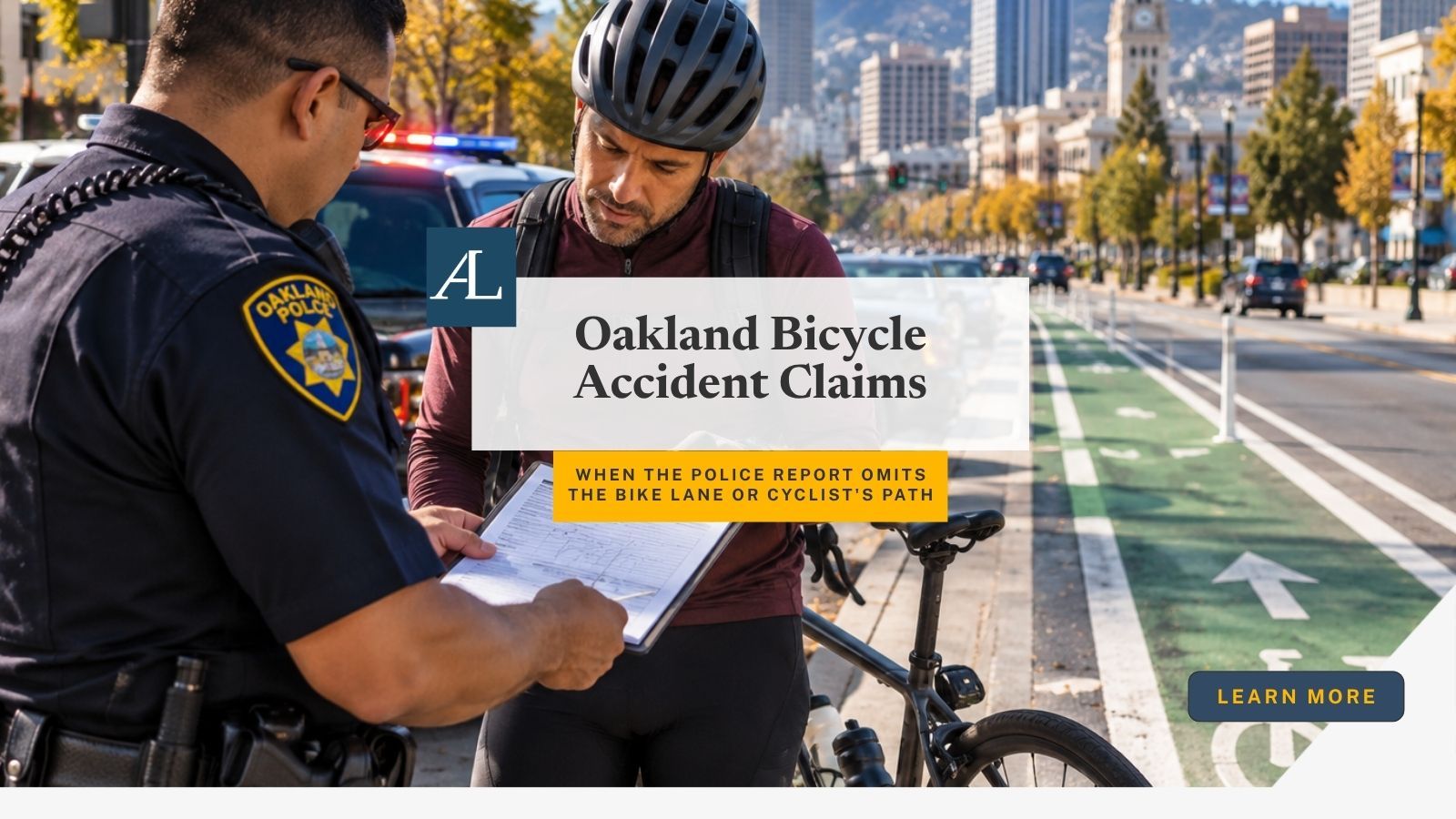
If the police report omits the protected bicycle lane or incorrectly describes the cyclist’s path, preserve independent roadway evidence and ask the investigating agency about its procedure for supplemental information.
California Filing Deadlines for Irvine Bicycle Accident Claims
An Irvine protected bike lane accident claim may be subject to California’s general personal injury limitations period.
Under California Code of Civil Procedure Section 335.1, many personal injury actions generally have a two-year filing period, subject to exceptions.
When a public entity may be responsible, different procedures and shorter deadlines can apply. California Government Code Section 911.2 generally requires certain personal injury claims against public entities to be presented within six months of accrual, subject to statutory rules and exceptions.
The evidence-preservation timeline can be considerably shorter. Video may be overwritten, roadway configurations may change, and vehicles or bicycles may be repaired.
An Irvine protected bike lane accident claim should therefore receive prompt attention when liability or the roadway design is disputed.
Frequently Asked Questions About an Irvine Protected Bike Lane Accident Claim
Who is responsible when a driver turns across a protected bike lane?
Responsibility depends on the driver’s actions, the cyclist’s movements, traffic controls, and applicable California law. An Irvine protected bike lane accident claim may be supported when evidence establishes that a driver made an unsafe turn across the cyclist’s path and caused the collision.
Does a driver have to yield to a cyclist in a protected bicycle lane?
Drivers must comply with applicable right-of-way rules, traffic controls, and duties concerning safe turning movements. A protected bicycle lane does not automatically determine priority in every situation. The intersection’s design and traffic signals matter.
Can a driver legally cross a protected bicycle lane to turn?
Certain turning movements across bicycle facilities may be permitted, depending on the roadway design and applicable law. However, the driver must still make the movement safely and comply with relevant traffic controls. An Irvine protected bike lane accident claim should establish exactly where and how the vehicle crossed the bicycle facility.
What if the driver says they never saw the cyclist?
The driver’s statement should be evaluated against available visibility, roadway geometry, the cyclist’s position, and other evidence. Failing to see a cyclist does not automatically excuse an unsafe turning movement.
Does California Vehicle Code Section 21209 apply?
Section 21209 restricts motor-vehicle operation in bicycle lanes, subject to specified exceptions. Its application depends on the facility and circumstances. An Irvine protected bike lane accident claim may also require analysis of turning laws and other traffic rules.
What if the cyclist was traveling too fast?
Speed allegations should be evaluated using available evidence, including video, distance, roadway conditions, and witness observations. An insurer’s assertion that the cyclist was traveling too quickly does not independently establish fault.
What if the bicycle lane was separated by flexible posts?
Flexible posts and other protective elements may help establish the bicycle facility’s configuration. An Irvine protected bike lane accident claim should document where the posts were located, where the separation ended, and how the driver entered the crossing area.
Can a cyclist recover compensation if the driver was turning into a driveway?
Potentially. A driver entering a commercial or residential driveway must comply with applicable traffic laws and exercise reasonable care. Liability depends on the complete circumstances.
What if the police report does not show the protected bicycle lane?
Preserve photographs, video, roadway measurements, and witness information. An Irvine protected bike lane accident claim may require supplemental evidence to establish the cyclist’s actual travel path.
Can helmet-camera footage help establish fault?
Yes. Helmet-camera footage may show the cyclist’s approach, the vehicle’s turning movement, traffic signals, and the collision. Preserve the original recording whenever possible.
Can I recover compensation for a damaged e-bike?
Potentially, when another party is legally responsible and the losses are supported by evidence. An Irvine protected bike lane accident claim may include documented damage to the frame, battery, motor, accessories, and protective equipment.
What if the driver blames the bicycle-lane design?
Roadway design may be relevant, but it does not automatically eliminate driver responsibility. A claim involving an alleged dangerous public property condition requires separate statutory analysis.
What injuries can result from a turning-vehicle bicycle collision?
Depending on the impact, injuries may include fractures, concussions, shoulder trauma, spinal injuries, joint injuries, road rash, and other conditions. Medical professionals should determine diagnosis and treatment.
Does California comparative negligence apply to bicycle accidents?
Yes. In ordinary negligence actions, fault may be allocated among responsible parties, and the injured person’s recovery may be reduced according to their share of responsibility.
How long do I have to file an Irvine bicycle accident claim?
Many California personal injury actions generally have a two-year filing period, but exceptions and shorter public-entity claim deadlines may apply.
Do I need a lawyer after a protected bike lane collision?
Legal assistance may be useful when a driver disputes right-of-way, video must be preserved, serious injuries occurred, or an insurer blames the cyclist. An Irvine bicycle accident lawyer can help investigate those issues.
Call or Contact Avrek Law Firm 24/7 for a Free Consultation and Pay Nothing Unless We Win
An Irvine protected bike lane accident claim can become difficult when a driver insists that the cyclist appeared unexpectedly, the insurer disputes right-of-way, or the intersection’s design creates conflicting interpretations of the collision. These cases may require detailed evidence concerning bicycle-lane markings, protective barriers, traffic signals, driver movements, visibility, and the cyclist’s approach.
Avrek Law Firm can help injured cyclists preserve photographs, video, witness statements, bicycle damage, medical records, and other evidence. Our team can also investigate potentially responsible parties, evaluate insurance coverage, and document medical treatment, lost income, property damage, and other legally recoverable losses.
If you or someone you love was injured when a vehicle turned across a protected bicycle lane in Irvine, contact Avrek Law Firm today. Call 866-598-5548, start a live chat, or complete our online consultation form. Your consultation is free, and you do not pay unless we win.
Serving Injured Cyclists Throughout Irvine and Orange County
An Irvine protected bike lane accident claim may arise at intersections, commercial driveways, residential entrances, or other locations where motor vehicles cross bicycle facilities. Irvine’s mix of employment centers, university-related travel, residential neighborhoods, and shopping destinations creates varied environments for cyclists and drivers.
Roads and corridors near Irvine Center Drive, Culver Drive, Jamboree Road, University Drive, and other local routes may involve bicycle traffic and turning vehicles. The presence and design of bicycle facilities vary by location, so the actual roadway configuration should always be documented.
A local investigation should identify the traffic controls, bicycle markings, protective elements, intersection geometry, and nearby cameras. When visibility or roadway design is disputed, contemporaneous photographs and video can be especially valuable.
Avrek Law Firm’s Irvine personal injury lawyers and bicycle accident lawyers can help injured riders evaluate their legal options while they focus on treatment and recovery.
An Irvine protected bike lane accident claim should ultimately establish where the cyclist was traveling, how the driver turned, whether the movement was reasonably safe, and how the collision affected the rider’s health and financial stability.
- 📩 Submit a request through our online form
- 📞 Call 866-598-5548 now to speak with our team
- 💬 Start a live chat for immediate assistance
There are no upfront fees, and you don’t pay unless we win.