A Houston commercial vehicle construction zone accident claim can become complicated immediately because work zones change the normal flow of traffic. Lanes narrow, barriers appear, signs redirect drivers, and commercial vehicles may have less room to maneuver safely. When a delivery truck, box truck, construction vehicle, utility vehicle, dump truck, freight carrier, or company vehicle causes a crash in or near a construction zone, the case often involves more than one driver making one mistake.
Houston already has heavy traffic across I-10, I-45, I-69, Loop 610, the Sam Houston Tollway, industrial corridors, downtown streets, and routes leading toward the Port of Houston. When road work, lane shifts, temporary barriers, commercial traffic, and distracted drivers combine, the risk of serious crashes increases. TxDOT reported more than 28,000 Texas work zone crashes in 2025, resulting in 203 deaths, and most people killed in work zone crashes were drivers or passengers rather than workers.
When a construction zone crash leaves you injured, choosing the right legal representation matters. An experienced Houston truck accident lawyer at Avrek Law Firm can investigate the driver, employer, motor carrier, work zone layout, crash report, commercial vehicle records, dashcam footage, construction company records, and every available insurance policy.
Call 866-598-5548, start a chat, or request a free case review today. There are no upfront fees, and you don’t pay unless we win.
Why a Houston Commercial Vehicle Construction Zone Accident Claim Is More Complex
A Houston commercial vehicle construction zone accident claim is more complex than a standard crash because the roadway itself may be part of the liability analysis. In an ordinary collision, the focus may be on speed, following distance, distraction, or failure to yield. In a construction zone, the investigation must also examine whether temporary lane markings were clear, whether cones and barricades were properly placed, whether warning signs gave enough notice, whether traffic was forced into an unsafe merge, and whether commercial vehicles were allowed or directed into lanes that increased crash risk.
Commercial vehicles also create unique dangers in work zones. A large truck may need more stopping distance when traffic slows suddenly. A delivery van may block visibility near cones or barriers. A dump truck may swing wide during a turn because the lane is narrowed. A utility vehicle may stop or enter traffic unexpectedly. When these vehicles are operating for a company, the employer’s route instructions, driver training, safety policies, and vehicle data may become just as important as the driver’s statement.
Texas Transportation Code Section 472.022 addresses warning signs and barricades in construction or maintenance work zones. The statute describes offenses involving disobeying warning signs, signals, markings, or driving around barricades, and it defines a construction or maintenance work zone as a marked portion of a highway or street where construction or maintenance is being performed and where required signs indicate the beginning and end of the zone.
How Construction Zones Create Serious Commercial Vehicle Crash Risks
Construction zones often compress traffic into fewer lanes. Drivers may have less shoulder space, fewer escape routes, and less time to react when traffic slows. A commercial vehicle that would normally have room to brake, turn, or merge safely may become much harder to control when the lane narrows or traffic is redirected through a temporary pattern.
A Houston commercial vehicle construction zone accident claim may involve a truck driver who failed to slow for a lane shift, followed too closely before traffic stopped, crossed temporary lane markings, ignored a flagger, or entered a closed lane. It may also involve a driver who blamed the work zone for the crash when the evidence shows the driver failed to adjust to the conditions.
Work zone crashes also raise visibility problems. Temporary signs may compete with regular traffic signs. Barriers may block sight lines. Dust, nighttime lighting, heavy traffic, and large vehicles can make it harder to see lane changes or stopped vehicles ahead. That does not automatically excuse a commercial driver. Professional and commercial drivers are expected to adjust to changing conditions, especially when operating larger vehicles that can cause severe injuries.
Commercial Vehicle Lane Restrictions and Work Zone Rules May Matter
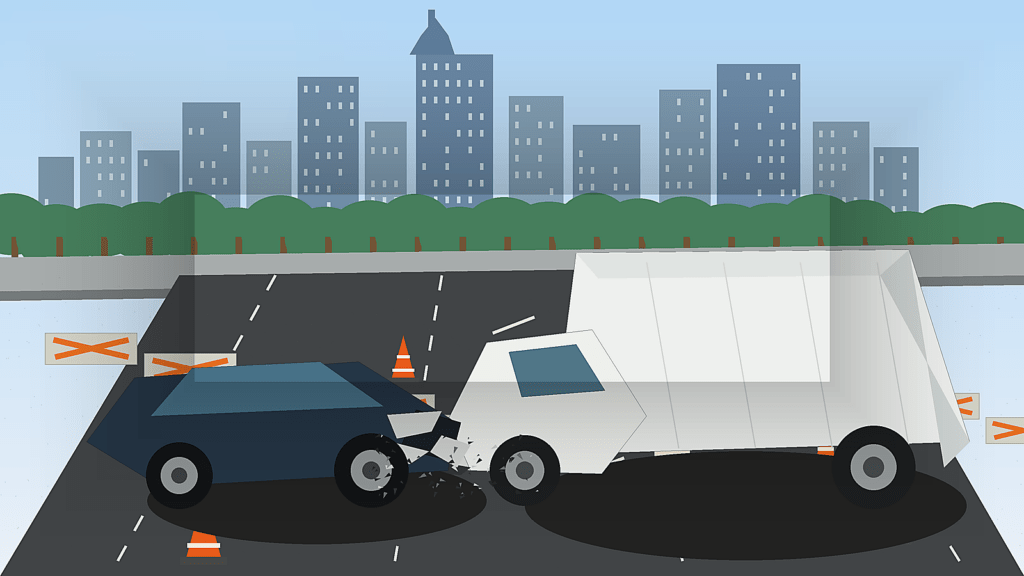
A Houston commercial vehicle construction zone accident claim may also involve commercial vehicle lane restrictions. Texas Transportation Code Section 545.0653 allows TxDOT to restrict commercial motor vehicles to a specific lane in a construction or maintenance work zone on certain state highways when a traffic study determines the restriction is necessary to improve safety. The statute also requires official traffic control devices before a lane restriction can be enforced.
This can matter if a commercial vehicle was traveling in a restricted lane, crossed a lane boundary, ignored work zone signage, or entered an area where commercial vehicle movement was limited for safety reasons. The issue is not simply whether a citation was issued. The issue is whether the commercial vehicle was being operated safely under the rules and conditions that applied at that location.
For example, if a box truck enters a lane that was restricted for safety or a commercial driver ignores a posted lane-shift warning, that violation may help show how the crash happened. If a driver says the construction zone was confusing, the investigation should still ask whether the driver slowed down, followed signs, obeyed lane restrictions, and left enough space to avoid a collision.
Who May Be Liable After a Houston Commercial Vehicle Construction Zone Crash?
Liability in a Houston commercial vehicle construction zone accident claim may extend beyond the commercial driver. If the driver was working at the time of the crash, the employer, motor carrier, contractor, logistics company, utility company, or vehicle owner may need to be investigated. A company may be responsible for unsafe schedules, inadequate training, poor supervision, failure to maintain the vehicle, or pressure that caused the driver to rush through a work zone.
The construction company or road contractor may also need review in certain cases. If the crash was connected to missing signs, confusing lane shifts, poor lighting, unsafe barricade placement, dangerous merge patterns, or a failure to maintain the work zone safely, the company responsible for traffic control may have relevant records. This does not mean every construction company is automatically liable after a work zone crash. It means the layout and traffic-control plan should be examined before responsibility is limited to one driver.
Government entities may also be involved if the roadway, project design, traffic control plan, or public construction project contributed to the crash. Claims involving government entities can involve shorter notice requirements and additional procedural issues, so these cases should be reviewed quickly. A work zone crash should never be evaluated based only on the police report or the commercial driver’s explanation.
Evidence That Can Strengthen a Houston Construction Zone Accident Claim
A Houston commercial vehicle construction zone accident claim depends heavily on evidence because the scene can change quickly. Cones may be moved. Barriers may be adjusted. Lane markings may be repainted. Warning signs may be removed. The commercial vehicle may be repaired. The construction zone may look completely different days later.
Scene photos should show the full construction zone, not just the damaged vehicles. The strongest photos document lane shifts, cones, barricades, work zone signs, closed lanes, shoulder width, merge points, lighting, skid marks, debris, vehicle positions, and the direction each vehicle was traveling. Photos from the commercial driver’s viewpoint may be especially important because they can show whether the lane change or obstruction should have been visible earlier.
Video may be even more important. Dashcam footage, nearby business cameras, traffic cameras, construction site cameras, truck cameras, and footage from another driver may show how traffic moved before impact. A video may show whether the commercial vehicle entered a closed lane, failed to slow, ignored a flagger, or forced another vehicle into a barrier.
Company records may also matter. A commercial vehicle may have GPS data, dispatch records, delivery schedules, driver logs, telematics, dashcam footage, maintenance records, inspection documents, and employer communications. These records can show whether the driver was speeding, distracted, fatigued, behind schedule, or operating a vehicle with unresolved safety issues.
Crash Reports and Official Records After a Houston Work Zone Accident
A police or crash report can help identify the involved drivers, vehicles, insurance information, location, witnesses, citations, and the responding officer’s observations. TxDOT explains that it is the custodian of crash records for Texas, and Texas Transportation Code Section 550.062 requires law enforcement officers who investigate crashes involving injury, death, or apparent property damage of $1,000 or more to submit a written crash report to TxDOT no later than the 10th day after the crash.
In a Houston commercial vehicle construction zone accident claim, the crash report is important but rarely enough by itself. The report may not include the full traffic-control plan, commercial vehicle data, construction contractor records, dashcam footage, or proof that signs and lane closures were properly placed. Injured victims should keep the crash report number, responding agency information, officer name if available, and any details about citations or work zone observations.
If the crash happened on a freeway, state highway, frontage road, downtown construction corridor, or near a major project, multiple agencies or contractors may have records. The sooner those records are identified, the harder it becomes for insurers to argue that the only evidence is the commercial driver’s version of events.
Common Insurance Defenses in Commercial Vehicle Construction Zone Claims
Commercial insurers often defend construction zone crashes aggressively. They may argue that the work zone caused the crash, that traffic shifted unexpectedly, that another driver merged too late, or that the injured person failed to adjust to construction conditions. In other cases, they may blame a contractor, flagger, road crew, or government entity to reduce the commercial driver’s share of fault.
Texas follows a proportionate responsibility rule. Texas Civil Practice and Remedies Code Section 33.001 states that a claimant may not recover damages if their percentage of responsibility is greater than 50 percent.
This makes fault allocation critical. If an insurer can shift enough blame onto the injured person, another driver, a construction contractor, or a work zone operator, it may reduce or eliminate what the commercial vehicle insurer has to pay. That is why a Houston commercial vehicle construction zone accident claim must be built with evidence from the beginning. The claim should not rely only on verbal statements. It should use photos, video, vehicle data, company records, crash reports, medical documentation, and work zone records to show what actually happened.
Injuries After a Houston Commercial Vehicle Work Zone Crash
Commercial vehicle construction zone crashes can cause serious injuries because impacts often happen at awkward angles, near barriers, or in traffic patterns where vehicles have limited room to avoid secondary collisions. Injured victims may suffer traumatic brain injuries, spinal injuries, fractures, crush injuries, internal injuries, burns, neck and back trauma, shoulder injuries, knee injuries, or psychological trauma after being trapped in a chaotic work zone crash.
Medical documentation should begin as soon as possible. Emergency records, urgent care notes, imaging, specialist referrals, physical therapy records, prescriptions, work restrictions, and follow-up appointments help connect the crash to the injuries. Delayed symptoms should also be documented because adrenaline can mask pain immediately after a crash.
Commercial insurers may argue that a person’s injuries were pre-existing, exaggerated, or unrelated to the construction zone accident. Strong medical records help respond to those defenses. A proper claim evaluation should include current medical bills, future treatment, lost wages, reduced earning capacity, pain and suffering, and the long-term effect of the injury on daily life.
What to Do After a Houston Commercial Vehicle Construction Zone Crash
After a work zone crash, safety comes first. If you can move out of active traffic without putting yourself in more danger, do so carefully. Call 911 and request medical help if anyone is injured. If a commercial vehicle is involved, make sure the responding officer documents the company name, vehicle number, license plate, insurance information, and driver details.
If you are able, photograph the scene before the work zone changes. Capture signs, cones, barriers, lane markings, skid marks, vehicle damage, and the commercial vehicle’s position. If a driver, worker, or witness says something important, write it down as soon as possible. Witness names and phone numbers can become extremely valuable if the commercial driver later changes their story.
Avoid giving detailed recorded statements to insurers before the evidence is reviewed. Insurance adjusters may ask questions designed to shift blame, especially in construction zone cases where multiple parties may be involved. A Houston commercial vehicle construction zone accident claim should be investigated before any insurer defines the story.
Frequently Asked Questions About a Houston Commercial Vehicle Construction Zone Accident Claim
Who may be liable after a commercial vehicle crash in a Houston construction zone?
Liability may involve the commercial driver, the driver’s employer, the motor carrier, a vehicle owner, a maintenance provider, a construction contractor, a traffic-control company, another driver, or a government entity depending on the facts. A Houston commercial vehicle construction zone accident claim should review every party connected to the driver, vehicle, route, and work zone layout.
For example, if a company driver failed to slow for a lane shift, the employer may need to be investigated. If the commercial vehicle had bad brakes, a maintenance provider or fleet owner may be involved. If cones, signs, or barricades were placed in a confusing or unsafe way, the contractor responsible for traffic control may have relevant records. These cases should not be narrowed to one driver until the full evidence is reviewed.
What evidence matters most in a construction zone crash?
Important evidence may include scene photos, dashcam footage, commercial vehicle data, GPS records, dispatch logs, driver logs, construction zone signs, barricade placement, lane closure plans, crash reports, witness statements, medical records, and company safety policies. In work zone cases, evidence can disappear faster than in normal crashes because the roadway setup changes as construction progresses.
Photos of the scene should show more than vehicle damage. They should show the lane shift, warning signs, cones, barriers, merge points, shoulder space, lighting, and where the vehicles ended up after the crash. If the crash involved a truck or commercial vehicle, black box data, telematics, dashcam footage, and employer records may be just as important as the police report.
What if the commercial driver blames the construction zone?
That defense should be investigated, not accepted automatically. Construction zones can be confusing, but commercial drivers still have a duty to adjust to reduced lanes, temporary markings, warning signs, slower traffic, and changing roadway conditions. A driver who claims the work zone caused the crash may still be responsible if they were speeding, following too closely, distracted, fatigued, or ignoring posted warnings.
At the same time, the construction zone itself may need review. If signs were missing, lane shifts were unclear, barricades blocked visibility, or traffic was forced into a dangerous merge pattern, contractors or public entities may need to be investigated. A strong claim looks at both sides: whether the driver acted safely and whether the work zone was properly designed and maintained.
Does a work zone citation prove liability?
A citation can help, but it does not automatically prove civil liability. A citation may show that a driver violated a traffic rule, ignored a sign, or drove improperly through the construction zone. However, civil claims still require evidence showing that the violation caused or contributed to the crash and the injuries.
The strongest Houston commercial vehicle construction zone accident claim usually combines the citation with other proof, such as photos, video footage, witness statements, vehicle data, commercial driver records, medical documentation, and expert analysis. If no citation was issued, that also does not mean there is no claim. Police may not have had access to all video, company data, or construction records at the scene.
Can I still recover compensation if I was partly at fault?
Possibly. Texas follows proportionate responsibility rules. Under Texas Civil Practice and Remedies Code Section 33.001, a claimant may not recover damages if their percentage of responsibility is greater than 50 percent. If the injured person is 50 percent or less at fault, compensation may still be possible, but it can be reduced by the person’s percentage of responsibility.
This is why insurers fight so hard over fault percentages. A commercial insurer may argue that the injured driver merged too late, failed to slow, missed a sign, or reacted improperly to the work zone. Evidence matters because even a small shift in fault can affect the value of the claim. Photos, video, work zone records, and truck data can help push back against unfair blame.
How long do I have to file a claim after a Houston construction zone crash?
Texas Civil Practice and Remedies Code Section 16.003 generally requires personal injury lawsuits to be filed within two years after the cause of action accrues. Wrongful death actions also generally must be brought within two years after the date of death.
However, waiting is risky even if the lawsuit deadline seems far away. Construction zones change, vehicles get repaired, dashcam footage may be overwritten, and company records may become harder to obtain. If a public entity may be involved, special notice rules may apply. Speaking with a Houston truck accident lawyer early can help preserve evidence and protect deadlines before the claim becomes harder to prove.
Do I need a lawyer for a commercial vehicle construction zone accident?
Yes. These cases can involve multiple companies, commercial insurers, construction contractors, road agencies, maintenance providers, and technical records that injured victims usually cannot access alone. Commercial vehicle insurers often begin investigating immediately, and they may try to frame the crash in a way that protects their insured.
An attorney can send preservation letters, request truck data, review construction zone records, identify all responsible parties, and handle insurer communications. This is especially important when the crash involves serious injuries, disputed fault, or a commercial vehicle that was operating for a business at the time of the accident.
Call or Contact Avrek Law Firm 24/7 for a Free Consultation and Pay Nothing Unless We Win
A Houston commercial vehicle construction zone accident claim can become complicated when commercial insurers, trucking companies, contractors, and other parties each try to shift responsibility. These cases may depend on evidence that can disappear quickly, including dashcam footage, work zone layouts, lane closure records, commercial vehicle data, GPS records, driver logs, and contractor documents.
Avrek Law Firm helps injured victims investigate commercial vehicle and construction zone crashes, preserve critical records, identify all responsible parties, and pursue compensation for medical bills, lost income, pain, future care, and long-term recovery needs.
Speaking with a Houston truck accident lawyer may help you understand what evidence should be preserved after a construction zone crash involving a commercial vehicle. These cases may also overlap with issues handled by a Houston traffic accident lawyer or Houston personal injury lawyer, especially when multiple vehicles, companies, or insurers are involved.
If you or someone you love was injured in a Houston construction zone crash involving a commercial vehicle, Avrek Law Firm is ready to help.
- 📩 Submit a request through our online form
- 📞 Call 866-598-5548 now to speak with our team
- 💬 Start a live chat for immediate assistance
There are no upfront fees, and you don’t pay unless we win.