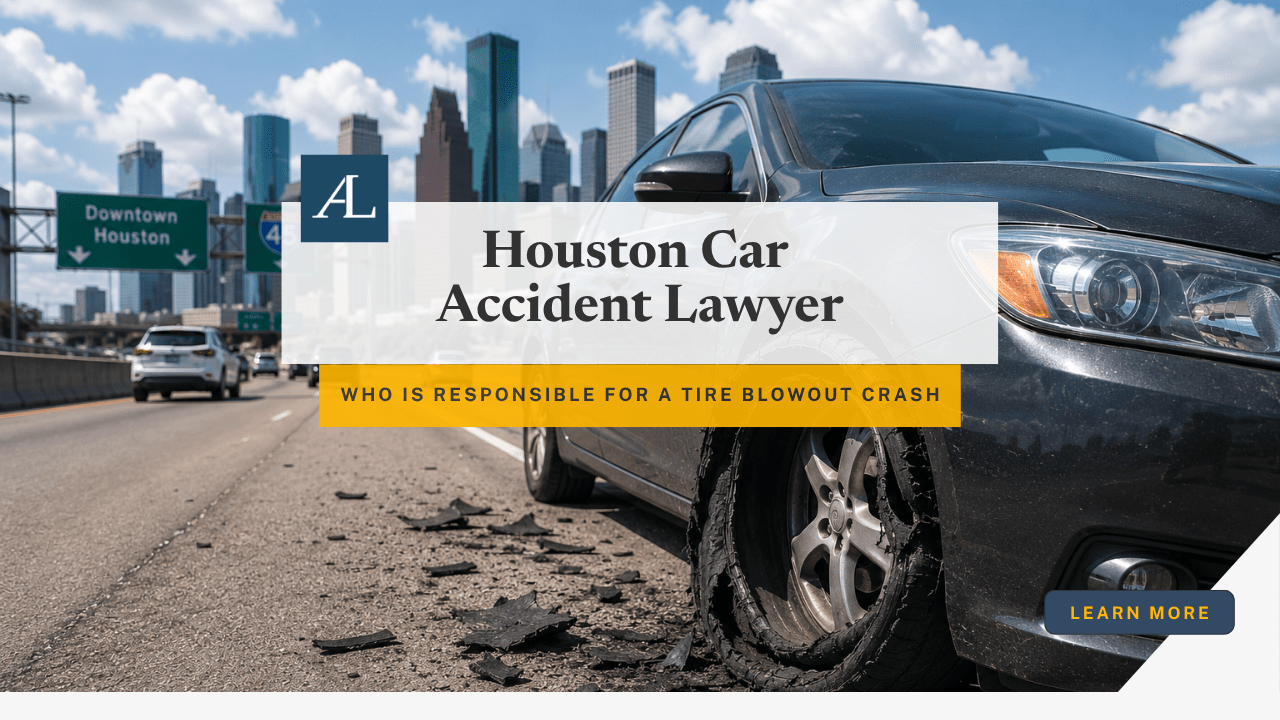
A Houston car accident lawyer often handles cases where the cause of a crash is not immediately obvious. When a tire blowout leads to a collision, the situation can quickly become more complex than a typical accident claim.
At first, it may seem like an unavoidable mechanical failure. Drivers often assume that no one is at fault when a tire suddenly fails. In reality, these cases frequently involve questions about maintenance, manufacturing defects, and vehicle responsibility that require closer examination.
In Houston, where high temperatures, heavy freeway traffic, and long driving distances put additional stress on vehicles, tire-related incidents are more common than many people realize. When a blowout results in a crash, understanding who may be responsible becomes the central issue.
At Avrek Law, we regularly work with individuals who are injured in these types of accidents. A Houston car accident lawyer evaluates not only what happened at the moment of the blowout, but what led to it.
📞 Call 866-598-5548, start a chat, or request a free case review today. You don’t pay unless we win.
How a Houston Car Accident Lawyer Investigates Tire Blowout Crashes
A Houston car accident lawyer begins by examining whether the blowout was truly sudden or whether it developed over time.
Many tire failures are not random. They are often the result of wear, improper inflation, or damage that went unnoticed. In other cases, the issue may be linked to how the tire was manufactured or maintained.
Understanding this difference is critical. If the blowout was preventable, liability may extend beyond the driver. A Houston car accident lawyer looks at maintenance history, vehicle condition, and external factors to determine how the failure occurred.
We often see that the cause of the blowout becomes the foundation for the entire claim.
What Causes Tire Blowouts on Houston Roads
Houston presents unique conditions that contribute to tire failures.
Extreme heat is one of the most significant factors. High temperatures increase tire pressure and can weaken the internal structure over time. Combined with long periods of highway driving, this creates conditions where blowouts are more likely to occur.
Road conditions also play a role. Debris, potholes, and uneven surfaces can damage tires, sometimes without immediate signs. Over time, this damage can lead to sudden failure.
Maintenance is another factor. Underinflated or worn tires are more vulnerable to blowouts. When regular inspections are missed, small issues can develop into serious hazards.
A Houston car accident lawyer considers all of these factors when evaluating the cause of a crash.
Who Could Potentially Be Responsible After a Blowout Crash
Liability in a tire blowout accident is rarely limited to one party.
The driver or vehicle owner may be responsible if the tire was not properly maintained. Failing to replace worn tires or ignoring warning signs can contribute to the failure.
In some cases, responsibility may extend to manufacturers. Defective tires or design flaws can lead to unexpected blowouts, even when the vehicle is properly maintained.
Maintenance providers may also be involved. If a service shop failed to identify or address a problem during an inspection, their role may become part of the claim.
A Houston car accident lawyer evaluates each of these possibilities to ensure that all sources of liability are considered.
What Evidence Helps Determine the Cause of a Blowout
Evidence plays a critical role in these cases because the cause of the blowout is not always immediately clear.
The condition of the tire itself is often one of the most important pieces of evidence. Tread wear, sidewall damage, and internal defects can all provide insight into what caused the failure.
Maintenance records are also important. These documents show whether the vehicle was properly serviced and whether any issues were identified before the accident.
Photos from the crash scene can help establish how the vehicle behaved after the blowout. Debris patterns and damage can indicate whether the tire failed before or during the collision.
A Houston car accident lawyer uses this evidence to build a clear understanding of how the accident occurred.
Why Blowout-Related Claims Are Often Disputed
Tire blowout cases are frequently challenged by insurance companies.
Because the failure may appear sudden, insurers often argue that the accident was unavoidable. This allows them to reduce or deny liability.
At the same time, they may question maintenance records or suggest that the driver failed to properly care for the vehicle. In cases involving manufacturers, disputes may focus on whether the defect can be proven.
We often see that delays in preserving evidence make these disputes more difficult to resolve. A Houston car accident lawyer works to secure critical information early before it is lost or altered.
How Insurance Companies Evaluate These Claims
Insurance companies evaluate tire blowout cases by focusing on risk and responsibility.
They look for ways to determine whether the failure could have been prevented. If they can argue that the driver or another party contributed to the issue, they may reduce the amount they are willing to pay.
In some cases, insurers may attempt to classify the blowout as an unavoidable event. This shifts the focus away from liability and toward minimizing compensation.
A Houston car accident lawyer understands these strategies and works to counter them with evidence and analysis.
How Liability Can Affect Compensation
The determination of liability directly impacts how compensation is calculated.
If the blowout is linked to negligence, the responsible party may be required to cover damages related to medical costs, lost income, and other losses. If liability is shared, compensation may be reduced accordingly.
Understanding how responsibility is assigned is essential to ensuring that the claim reflects the full impact of the accident.
Texas Law and Accident Responsibility
In Texas, liability is based on fault and the actions that contributed to the accident.
For general civil case guidance, see Texas Courts
https://www.txcourts.gov
This means that even in cases involving mechanical failure, the focus remains on whether the situation could have been prevented.
Frequently Asked Questions About Tire Blowout Accidents
Is a tire blowout always considered an unavoidable accident with no one at fault
No. While tire blowouts can appear sudden, many are preventable when examined more closely. Courts and insurance companies look at whether the tire failure could have been avoided through proper maintenance, inspection, or manufacturing standards. For example, worn tread, improper inflation, or ignored damage can indicate negligence. A Houston car accident lawyer will focus on whether the blowout developed over time rather than treating it as an isolated event.
Can a driver still be held responsible even if the tire failed unexpectedly
Yes, depending on the circumstances. Drivers are expected to maintain their vehicles in a reasonably safe condition. If the tire showed signs of wear, damage, or improper inflation before the crash, responsibility may still apply. Even if the driver did not notice the issue, failure to perform routine inspections can become a factor. These cases often hinge on whether a reasonable person would have identified the problem before it led to a failure.
When can a tire manufacturer be held liable for a blowout accident
A manufacturer may be responsible if the tire had a defect in its design, materials, or production process. This can include issues such as weak internal structure, poor bonding of components, or failure under normal driving conditions. These claims often require expert analysis to determine whether the tire failed due to a defect rather than external factors. In those cases, liability shifts from the driver to the company that produced or distributed the tire.
Can a repair shop or mechanic be responsible for a tire blowout
Yes. If a repair shop recently serviced the vehicle and failed to identify or correct a problem, they may share responsibility. For example, improper installation, failure to detect damage, or incorrect tire pressure adjustments can all contribute to a blowout. These situations are often evaluated by reviewing service records and determining whether the shop met standard inspection practices.
What happens if the blowout was caused by road debris or poor road conditions
If debris or road hazards caused the blowout, liability may shift depending on how the conditions developed. In some cases, responsibility may fall on a government entity if the roadway was not properly maintained. However, these claims are more complex and often involve additional legal requirements and shorter deadlines. A Houston car accident lawyer evaluates whether the road condition was foreseeable and whether reasonable steps were taken to address it.
Why are tire blowout claims often disputed by insurance companies
Insurance companies frequently challenge these claims because the cause of the blowout is not always immediately clear. They may argue that the failure was unavoidable or that there is not enough evidence to assign responsibility. They may also attempt to shift blame to the driver, maintenance providers, or even external conditions. Because these cases involve technical factors, insurers rely on uncertainty to reduce payouts.
What evidence is most important in proving the cause of a blowout accident
The condition of the tire itself is one of the most important pieces of evidence. This includes tread wear, sidewall damage, and signs of internal failure. Maintenance records, service history, and inspection reports also play a critical role. In addition, photos from the accident scene and debris patterns can help reconstruct what happened. Because this evidence can degrade quickly, preserving it early is essential.
Can more than one party be responsible for a tire blowout crash
Yes. These cases often involve multiple parties. For example, the driver may be responsible for maintenance, while the manufacturer may be responsible for a defect, and a service provider may be responsible for improper inspection. Liability can be divided among these parties based on their contribution to the failure. This is why these cases are often more complex than standard accident claims.
How does Texas law handle fault in tire blowout accidents
Texas applies a comparative fault system, which means responsibility can be shared between parties. Even if more than one party contributed to the accident, each may be assigned a percentage of fault. This percentage directly affects how compensation is calculated. Understanding how fault is distributed is a key part of evaluating the claim.
What is the biggest mistake people make after a blowout accident
The biggest mistake is assuming that the accident was unavoidable and not investigating further. Many people do not preserve the tire or document the condition of the vehicle, which makes it harder to determine the cause later. Without evidence, insurers are more likely to deny or reduce the claim. Taking the situation seriously from the beginning helps ensure that all potential causes are properly evaluated.
Before the Cause Is Misinterpreted
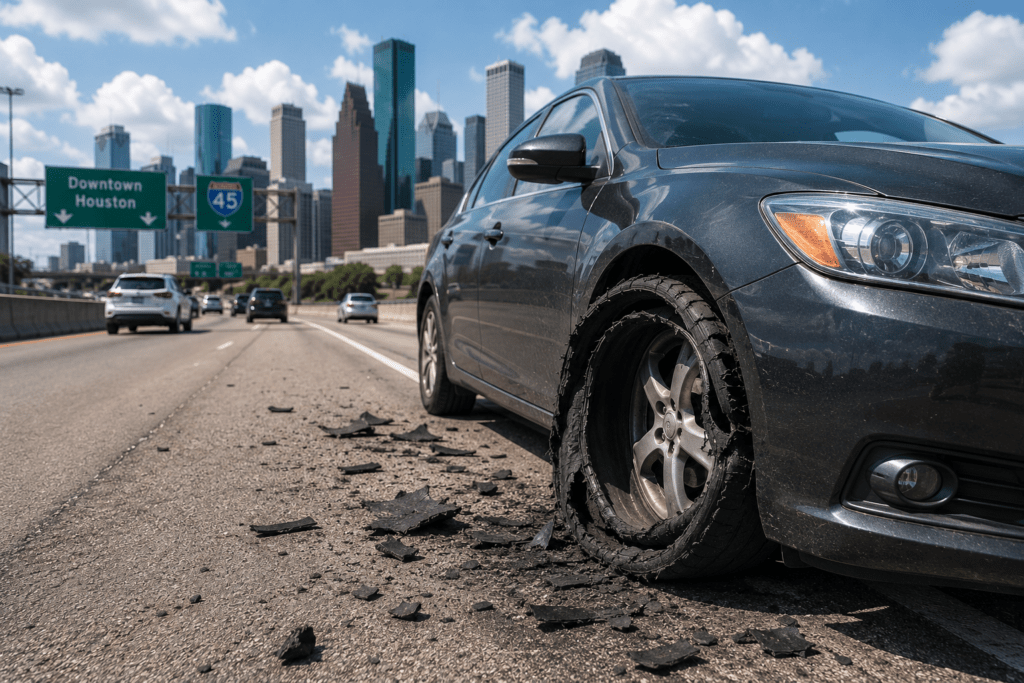
Tire blowout accidents are not always as simple as they appear. What seems like a sudden failure may involve factors that developed over time.
If those factors are not properly evaluated, the claim may not reflect the true cause of the crash.
If you were injured in a blowout-related accident, speaking with a Houston car accident lawyer can help ensure your case is evaluated accurately.
📞 Call 866-598-5548, start a chat, or request a free case review today.