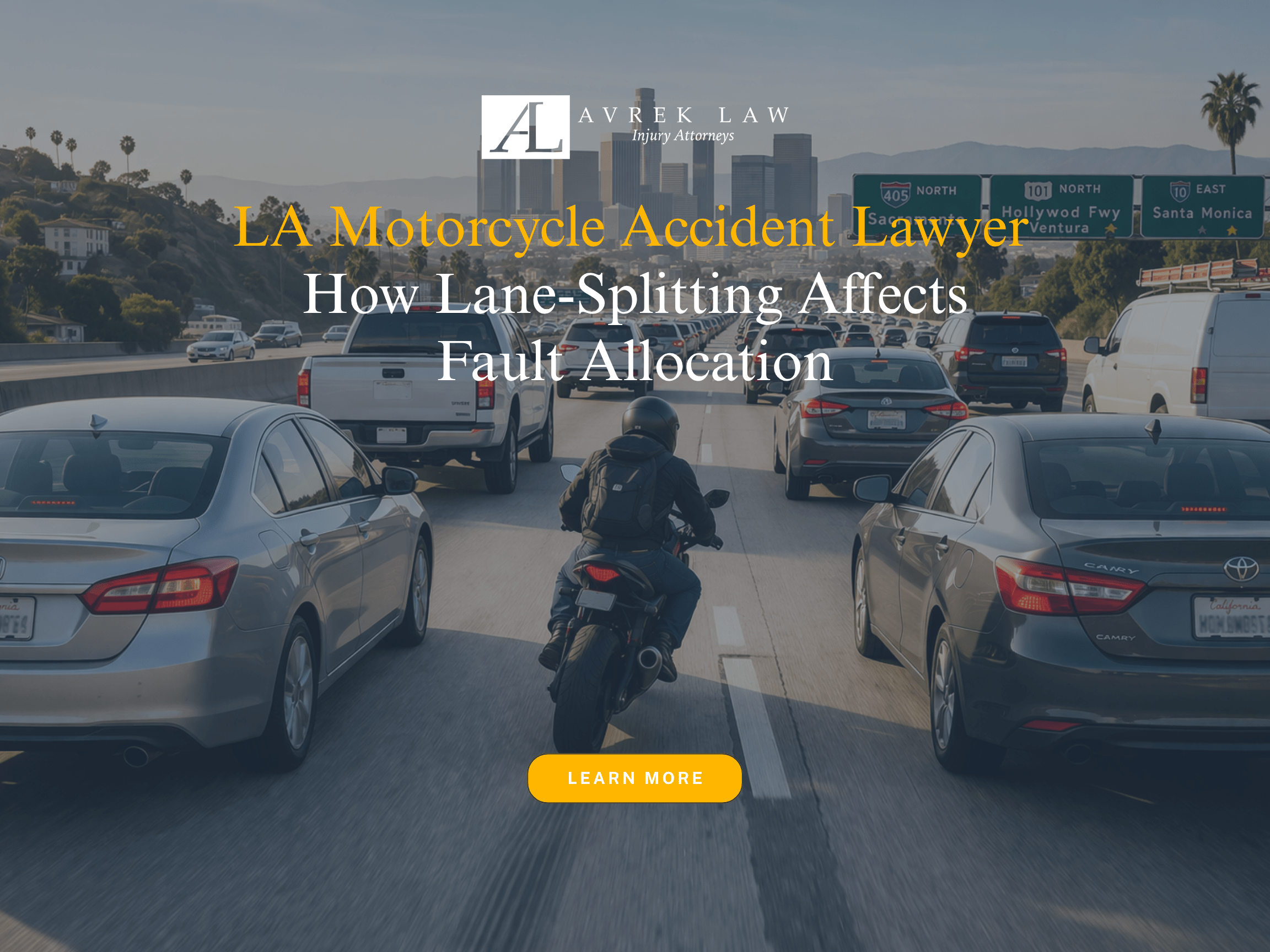
A Los Angeles motorcycle accident lawyer often handles cases where the central issue is not whether a crash occurred—but how lane-splitting affects who is considered at fault.
Lane-splitting is common on Los Angeles freeways, especially in heavy traffic on the 405, 101, and I-10. Unlike most states, California allows motorcycles to travel between lanes when done safely. However, when a crash occurs, this legal practice often becomes the focus of liability disputes.
At Avrek Law, we represent injured riders throughout Los Angeles County. With more than $2 billion recovered nationwide, we understand how lane-splitting is evaluated—and how insurers use it to influence fault allocation.
📞 Call 866-598-5548, start a chat, or request a free case review today. You don’t pay unless we win.
Is Lane-Splitting Legal in California?
Yes. California permits lane-splitting when performed safely and prudently. However, legality does not automatically determine fault.
After a crash, insurers often examine:
- Rider speed
- Distance between vehicles
- Traffic conditions
- Whether the maneuver was safe
Even when lane-splitting is legal, it may still be used to assign partial fault.
How Lane-Splitting Becomes a Liability Issue
In many cases, drivers claim:
- They did not expect a motorcycle between lanes
- The rider approached too quickly
- There was insufficient space
- The maneuver was unsafe
At the same time, riders may argue:
- Traffic was stopped or slow-moving
- Lane-splitting was performed cautiously
- The driver changed lanes without checking
These competing narratives make fault allocation more complex.
California Comparative Fault Rule
California follows a pure comparative negligence system.
This means:
- You can recover compensation even if partially at fault
- Your recovery is reduced by your percentage of responsibility
For general civil case guidance, see California Courts – Civil Case Overview: https://selfhelp.courts.ca.gov/civil-lawsuit
In lane-splitting cases, even a small percentage of assigned fault can significantly impact compensation.
Why Lane-Splitting Cases Are Often Misunderstood
Lane-splitting is often misunderstood by drivers and insurers.
Common misconceptions include:
- That it is always dangerous
- That it automatically places fault on the rider
- That drivers are not responsible when they “don’t see” a motorcycle
In reality, drivers still have a duty to check blind spots and ensure safe lane changes.
How Fault Is Evaluated in Lane-Splitting Crashes
Determining fault may involve:
- Traffic flow at the time of the crash
- Vehicle movement and lane changes
- Speed of both parties
- Road conditions
- Witness statements or video evidence
These factors help establish whether the maneuver was performed safely.
Why Insurers Use Lane-Splitting to Reduce Claims
Insurance companies often use lane-splitting to:
- Assign partial fault
- Reduce payout
- Frame the rider as taking additional risk
- Influence settlement negotiations
This is especially common in serious injury cases where damages are higher.
What Changes When a Lawyer Gets Involved Early
When a Los Angeles motorcycle accident lawyer becomes involved:
Settlement strategy is structured
Fault allocation is analyzed
Lane-splitting conditions are evaluated
Evidence is preserved
Liability arguments are challenged
Frequently Asked Questions — Los Angeles Motorcycle Accident Claims
Is lane-splitting automatically considered the rider’s fault?
No. Lane-splitting is legal in California when done safely. Fault depends on how the maneuver was performed and the actions of other drivers.
Can I still recover compensation if I was lane-splitting?
Yes. California’s comparative fault system allows recovery even if you are partially responsible.
Why do drivers say they didn’t expect a motorcycle between lanes?
Drivers may not anticipate lane-splitting, but they are still required to check blind spots and ensure safe lane changes.
How is fault determined in a lane-splitting accident?
Fault is based on traffic conditions, speed, lane position, and driver behavior at the time of the crash.
What evidence is important in these cases?
Video footage, witness statements, and vehicle positioning are often key in determining liability.
Can insurance companies reduce my claim because I was lane-splitting?
Yes. Insurers may attempt to assign partial fault, which reduces compensation.
How long do I have to file a motorcycle accident claim in California?
Most personal injury claims must be filed within two years.
Before Lane-Splitting Defines Your Case
In Los Angeles motorcycle accident claims, lane-splitting is often used as a starting point for assigning fault.
But these cases are not decided by assumptions—they are decided by evidence.
If you were injured in a motorcycle accident, speaking with a Los Angeles motorcycle accident lawyer early can help ensure your case is evaluated fairly and accurately.
📞 Call 866-598-5548, start a chat, or request a free case review today. You don’t pay unless we win.